How to Use Herodotus' Method to Navigate the Misinformation Age
How Herodotus' 2,500-year-old skepticism can help us navigate the Misinformation Age today.
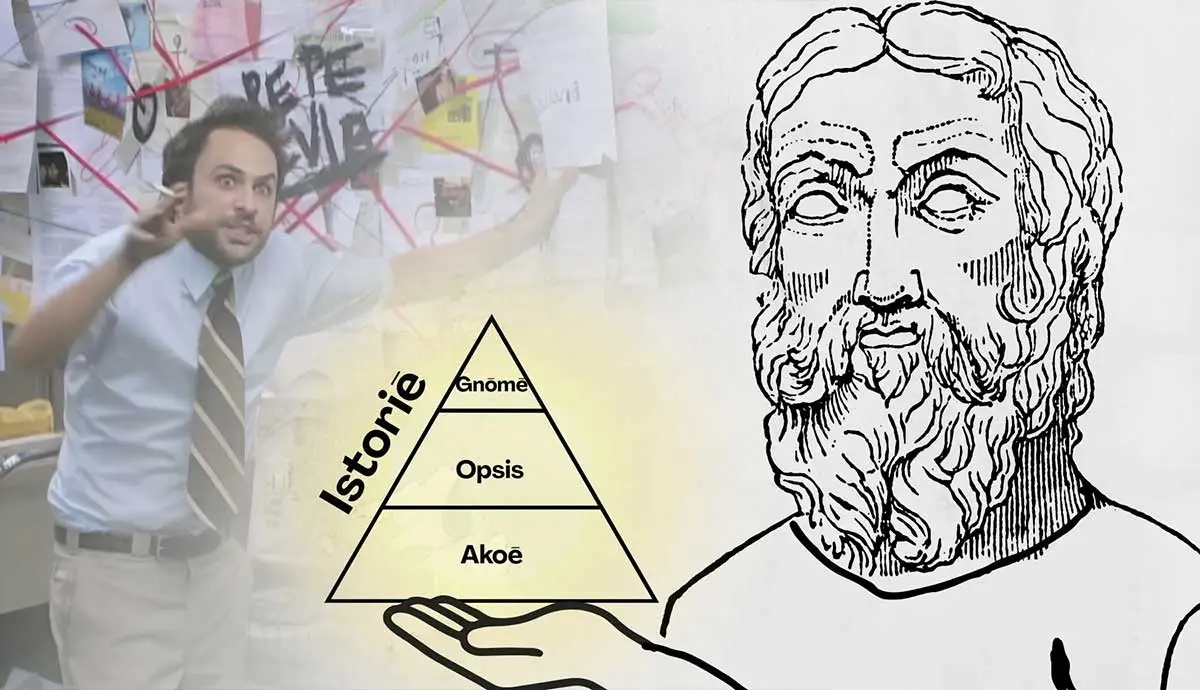
Summary
- The Method: Herodotus balanced personal observation with hearsay and used critical judgment to filter truth from legend, where possible.
- Tranparency: He famously reported accounts without always endorsing them, while being transparent about his sources.
- His skepticism provides a blueprint for the Misinformation Age, teaching us to scrutinize sources and motives before accepting "fake news."
Herodotus of Halicarnassus sought to separate fact from fiction by employing a method of enquiry that might still be worthwhile. While critics like Thucydides and Plutarch dismissed him as a teller of myths, Herodotus’ transparent approach to sources and his skepticism offer a useful toolkit for navigating our own era of misinformation.
Who Was Herodotus, the "Father of History"?
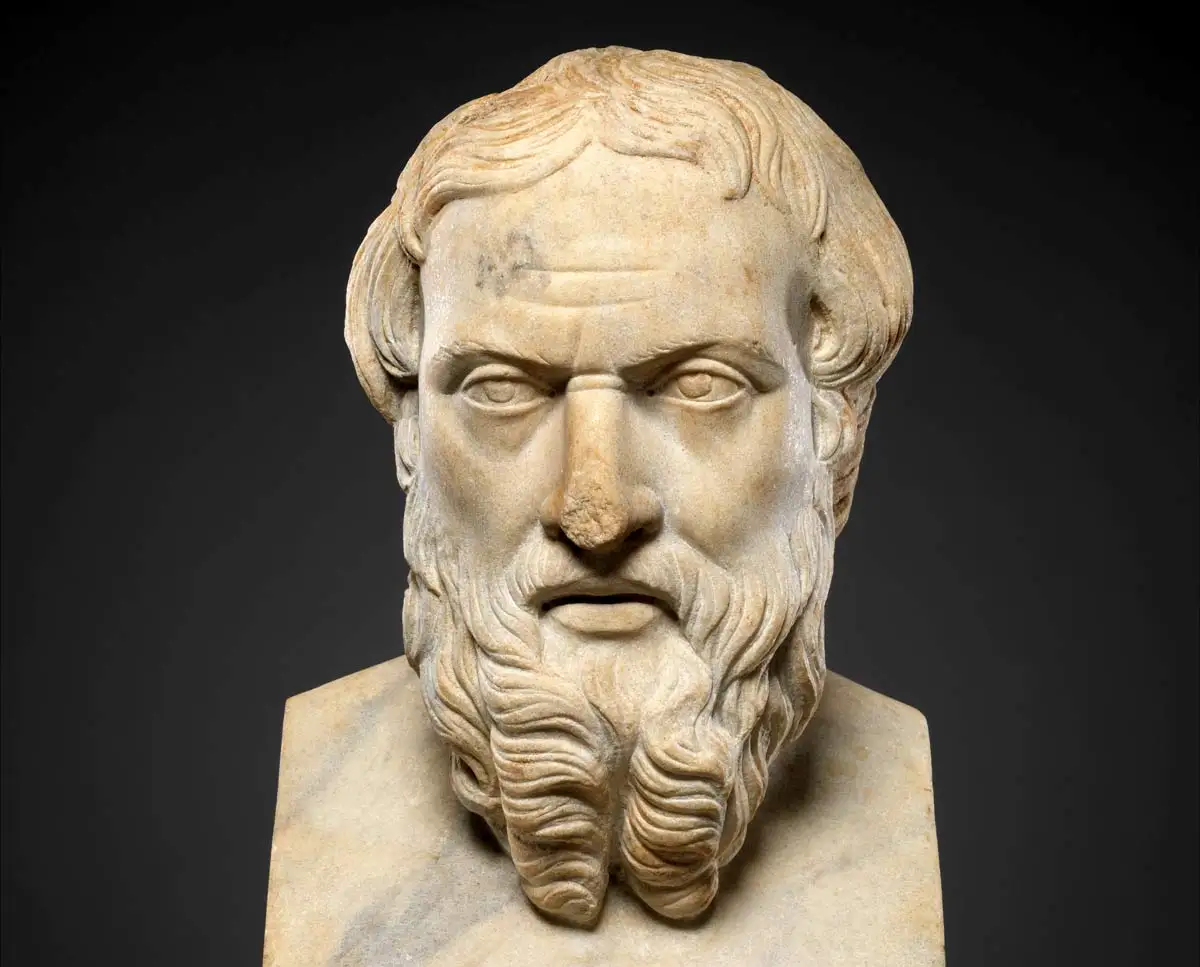
Herodotus was a Greek historian born in the city of Halicarnassus sometime in the 5th century BC. He is known for his monumental literary work the Histories where he wrote about the Greco-Persian Wars, the conflict between the Greek city-states of mainland Greece and the Persian Empire under the Achaemenid dynasty.
Herodotus' work is not a strict history but takes the shape of an ethnological account, involving descriptions of different ancient peoples and their cultures, such as the Persians, the Lydians, the Egyptians, and more.
His work was both revered and attacked by subsequent ancient historians. Cicero called him "the father of history" (On Laws, 1.5) while Thucydides blamed him for including myths and legends in his history. Plutarch wrote a particularly influential critique titled Of Herodotus' Malice which later earned Herodotus the moniker "the father of lies".
Herodotus' History as an Inquiry
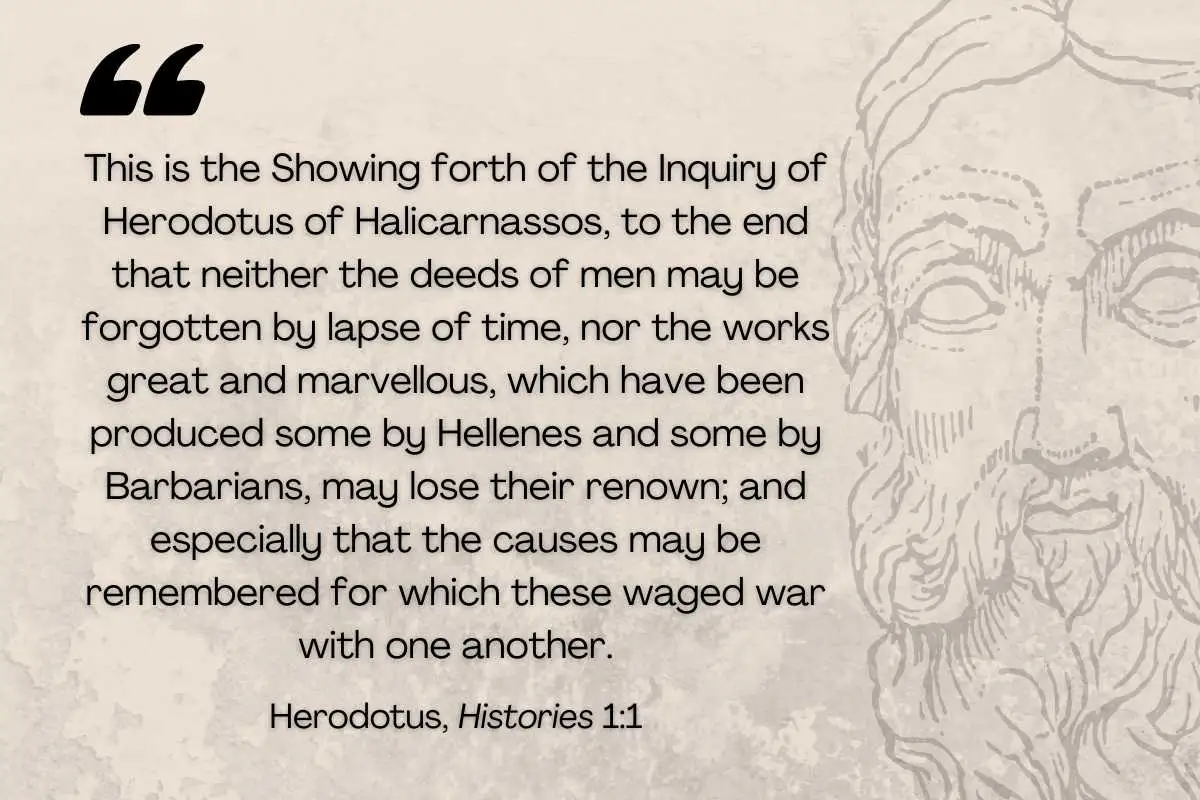
In the opening passage of his Histories, Herodotus explains why he chose to write a history of the Greco-Persian Wars.
The first reason is to preserve the memory of the wars as well as the great deeds performed by Greeks and barbarians alike.
A second reason is that he seeks to understand why the conflict between Greeks and Persians took place.
Consequently his work takes the shape of an inquiry into the realm of myth and history alike, where Herodotus seeks the causes of what he perceives as a war between two worlds: the Greek and the barbarian.
The selection of the word inquiry here is not random. Herodotus named his work "Histories", but, in his time, when the field of history was still not developed, history (istoria) meant inquiry. So, right from the start, Herodotus tells us that his work is a bit more nuanced than a simple recording of events.
"I will report it, but I am not bound to believe it"
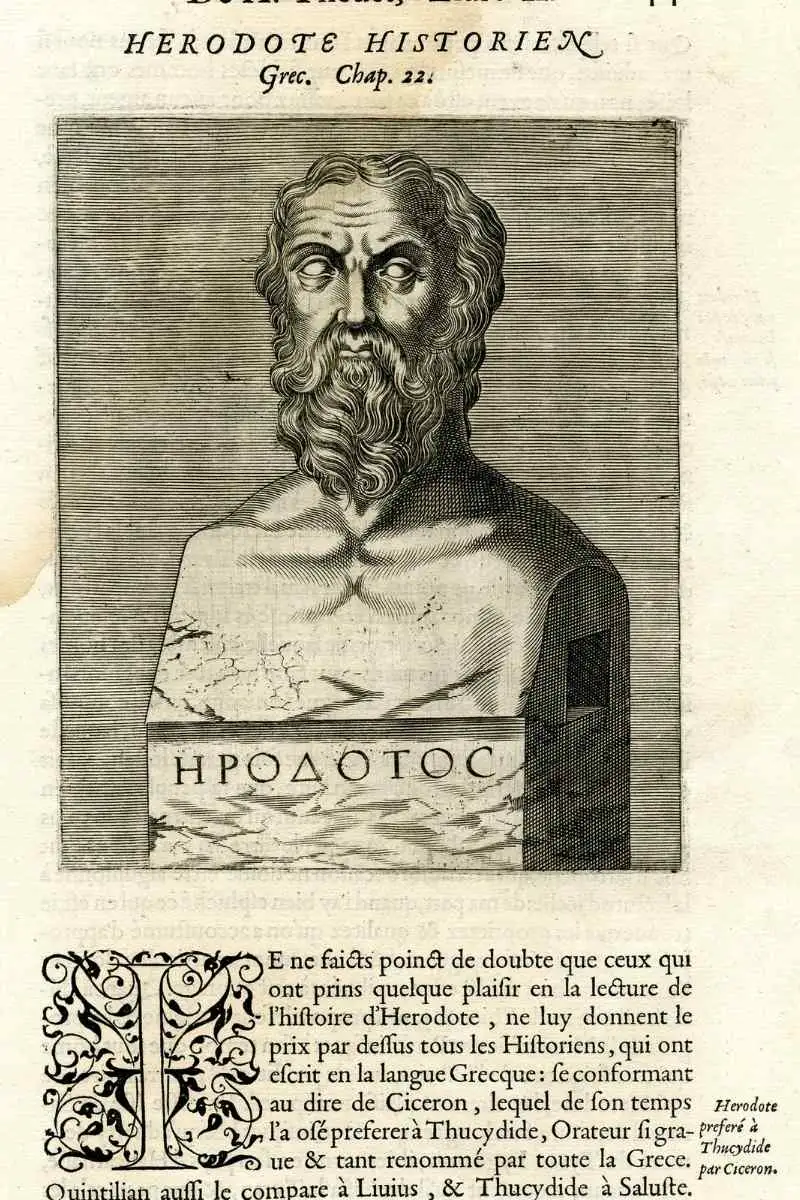
Herodotus is not picky when it comes to gathering data. His work is a grand assemblage of diverse narrations which is precicely what makes it so fun to read. The Greek historian equally collects far-fetched myths he heard from strangers and reliable first-hand accounts.
However, this does not mean that he trusts everything and everyone equally. At some point he writes:
I however am bound to report that which is reported, though I am not bound altogether to believe it; and let this saying be considered to hold good as regards every narrative in the history. (7.152)
The fact that he reports what people say happened does not mean that he has to believe it is true. Just like a good reporter, Herodotus is conscious that not everything is equally true.
Example: At one point, his judgment tells him that all humans are equally ignorant when it comes to how the gods look like and act. Still, he records a few stories he considers fictional because his inquiry demands him to record everything related to the story.
Those of their narrations which I heard with regard to the gods I am not earnest to relate in full, but I shall name them only, because I consider that all men are equally ignorant of these matters: and whatever things of them I may record, I shall record only because I am compelled by the course of the story. (2.3)
How Herodotus Separated Lie from Truth
Throughout his work, Herodotus is reasonably transparent about his sources. He tells us who (e.g. a priest) said what (e.g. a myth about a god) and where (e.g. the temple of Hephaestus-Ptah in Memphis).
He also often visits the sites where certain events took place to gather more testimonies and observe the evidence himself.
As we saw, he did not trust all of his sources equally. The person he trusts the most is... himself. He values what he has seen with his own eyes first and foremost.
Second, come the oral testimonies, what other people tell him. When it comes to these second-hand "hearsay" stories, Herodotus is rather careful depending on the issue.
At some point in his famous account of Egypt, the historian asks his audience to be cautious what will follow:
Hitherto my own observation (opsis) and judgment (gnōmē) and inquiry (istoriē) are the vouchers for that which I have said; but from this point onwards I am about to tell the history of Egypt according to that which I heard, to which will be added also something of that which I have myself seen. (2.99)
Here, we get the two conflicting elements of his research: things he has seen and things he has heard from others. Herodotus reports both but uses his judgment to filter everything.
The result is an inquiry (istoriē).
The Method of Herodotus
In a nutshell, we could argue that Herodotus' method looks something like this:
- Gathering Data
- What he has seen (Opsis)
- What he has heard
2. Record data without endorsements.
3. Use Judgment (Gnōmē) to filter narratives, and separate what seems more plausible from what seems less plausible.
4. The result is an Inquiry (Istoriē).
Example: The floods and source of the Nile
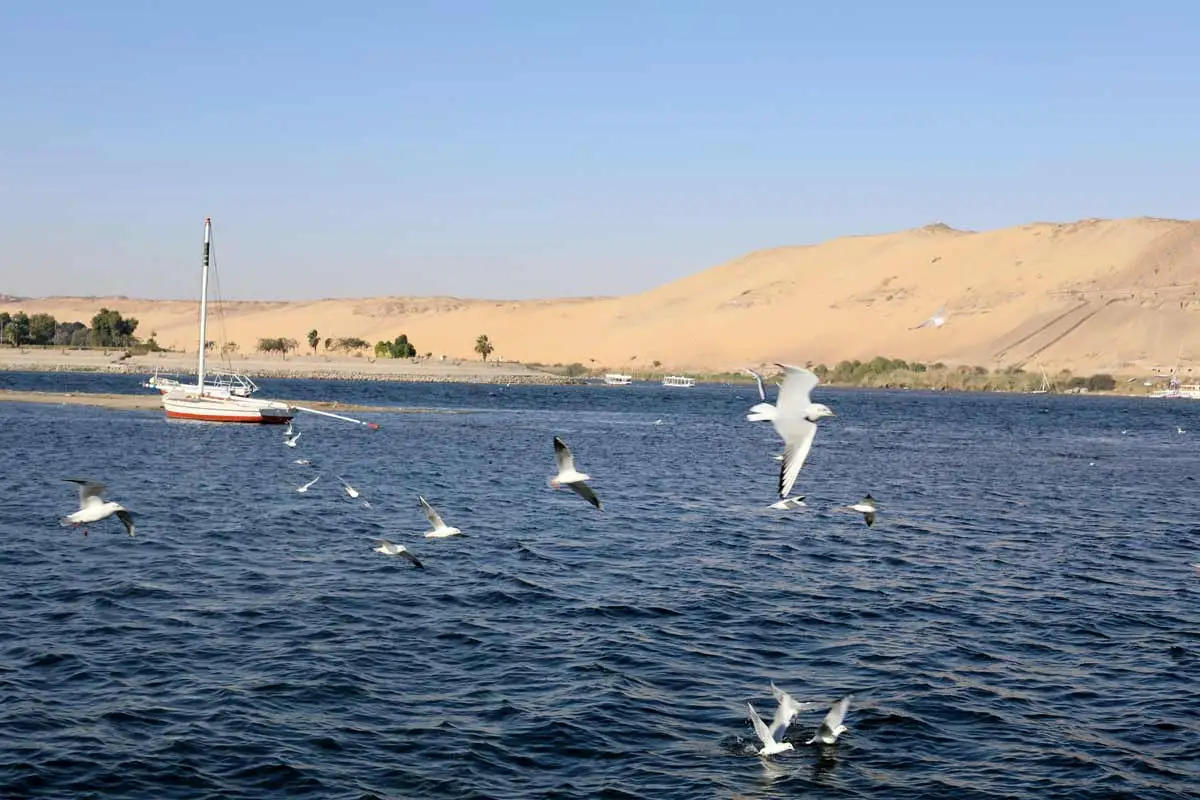
Searching for the reason that causes the Nile to overflow each year and the river's source, Herodotus embarks into a great quest to solve one of antiquity's great mysteries. The exploration takes place in 2.19-34.
The overflowing of the Nile
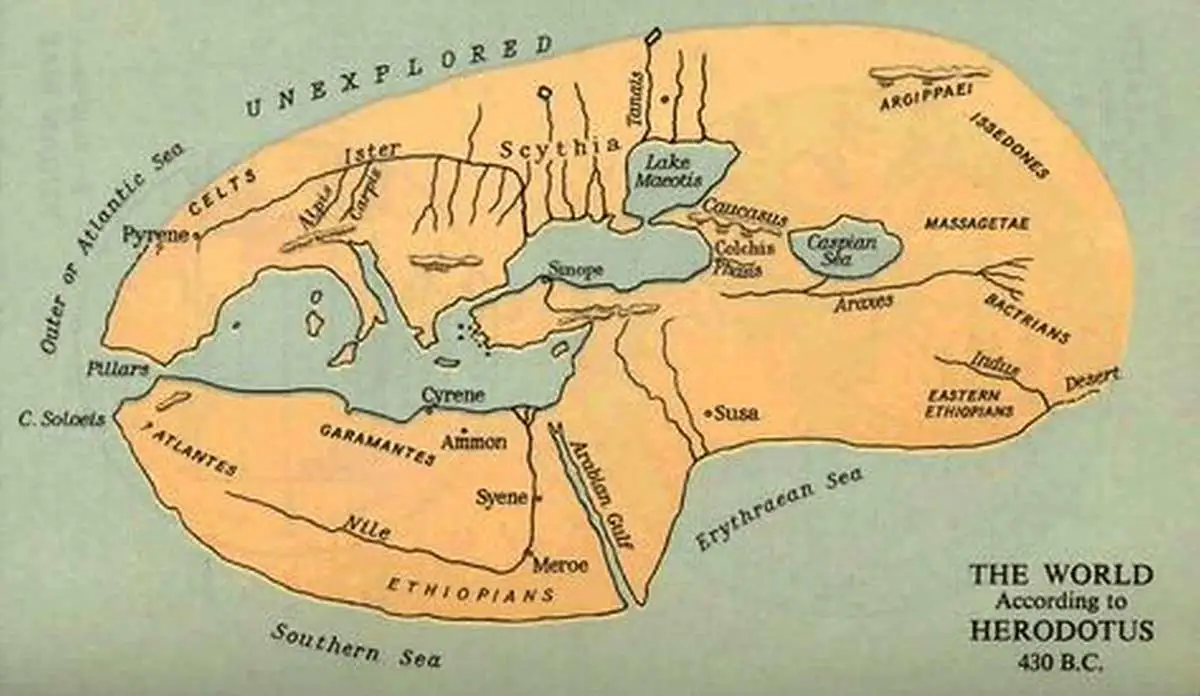
During his inquiry he offers a great example of his method.
First he exposes three popular Greek theories that sought to explain the floods of the Nile:
Theory 1: The Etesian winds blow against the river and stop it from flowing into the sea.
Theory 2: The Nile flows from the "Ocean River" that surrounds the earth.
Theory 3: The Nile comes from melting snow in the mountains of Africa.
But...
Rebuttal 1: The Nile still floods even when the wind doesn't blow. So, this theory is not logical.
Rebuttal 2: Herodotus dismisses this as "poetic myth" without evidence.
Rebuttal 3: Herodotus argued that the parts of Africa where the Nile flows from are hot, so there could not be snow there.
Herodotus' theory about the flooding of the Nile: during winter, the sun changes its position and places itself above Libya where, according to Herodotus, the Nile flows and causes its waters to evaporate. When the sun returns to its former position in the summer, the river returns to its former state and overflows.
The Origins of the Nile
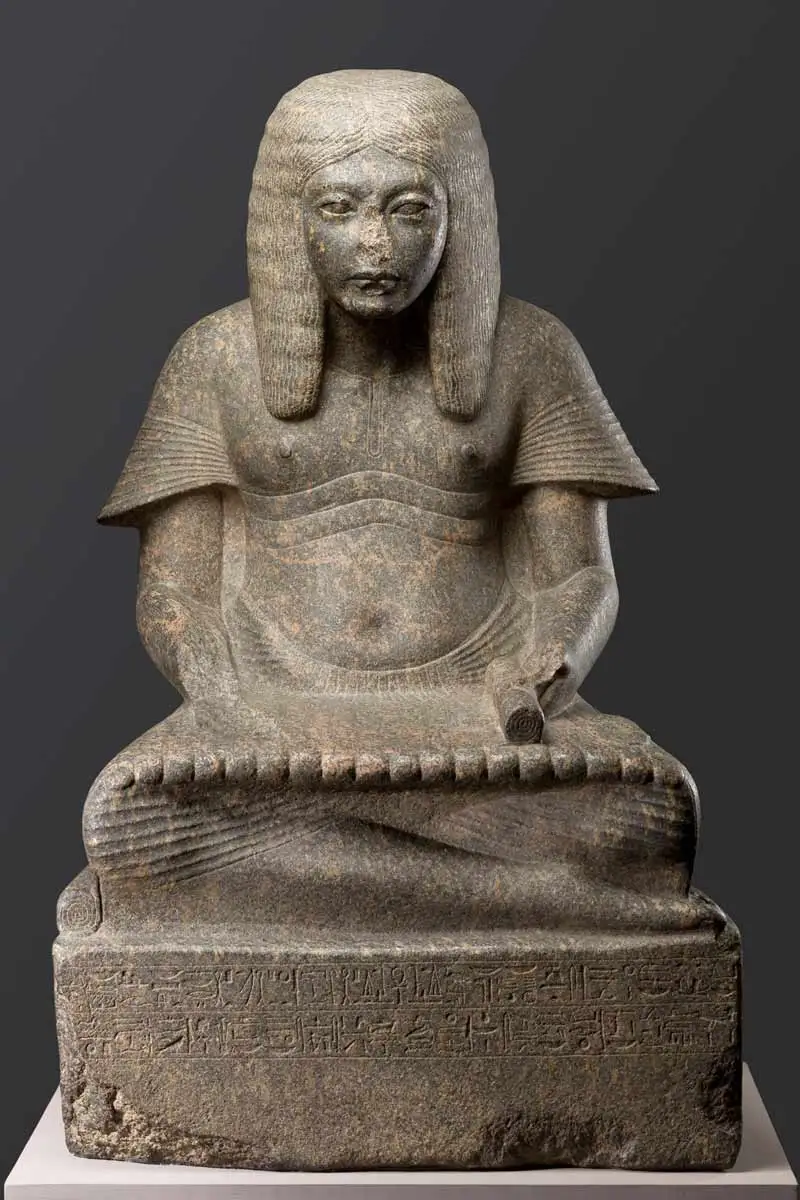
Believing that he has answered the issue of the flooding, he turns his attention to the issue of the river's source recording a story he heard from a scribe at the temple of Neith (whom Herodotus identified with Athena) in the city of Sais.
Theory 4: The scribe claimed that the Nile comes from two peaks, Crophi and Mophi, located near Elephantine island (Aswan).
The scribe, however, probably meant that the Nile enters Egypt at that location, not that its source is there (see Wainwright 1953).
To test Theory 4, Herodotus travels to Elephantine and finds this to be impossible. The mountains are too close for them to be the Nile's source.
Herodotus' theory about the Nile's source: Unable to look for the Nile's source himself, Herodotus proceeds with a description of the Nile's course as it passes through Ethiopia, based on various tales he heard while in Egypt. After a detailed series of observations and logical arguments, Herodotus formulates:
"thus I think that the Nile passes through the whole of Libya and is of equal measure with the Ister."
Of course, Herodotus was wrong. The Nile is not of equal measure with the Ister and does not pass through Libya. To clarify, by Libya Herodotus referred to the whole of Africa lying to the West of Egypt. So, for him, the Nile started from the Atlas mountains, in present-day Morocco.
Herodotus could not have known how diverse the continent really was. In reality, Theory 3 was the closest to truth (the Nile begins near Jinja, Uganda), but, still, Herodotus using the data and knowledge he had at his disposal, he came to a logical conclusion. By recording all theories however, and being transparent about the way he reached his conclusions, he allowed the readers to decide for themselves.
Important clarification about Herodotus' method
Herodotus is by no means perfect. He often cherry-picks and suppresses narratives and it is among his priorities to make his an entertaining read, as his ancient critics argued. For more on the matter see Lateiner (1989).
Misinformation and Fake News
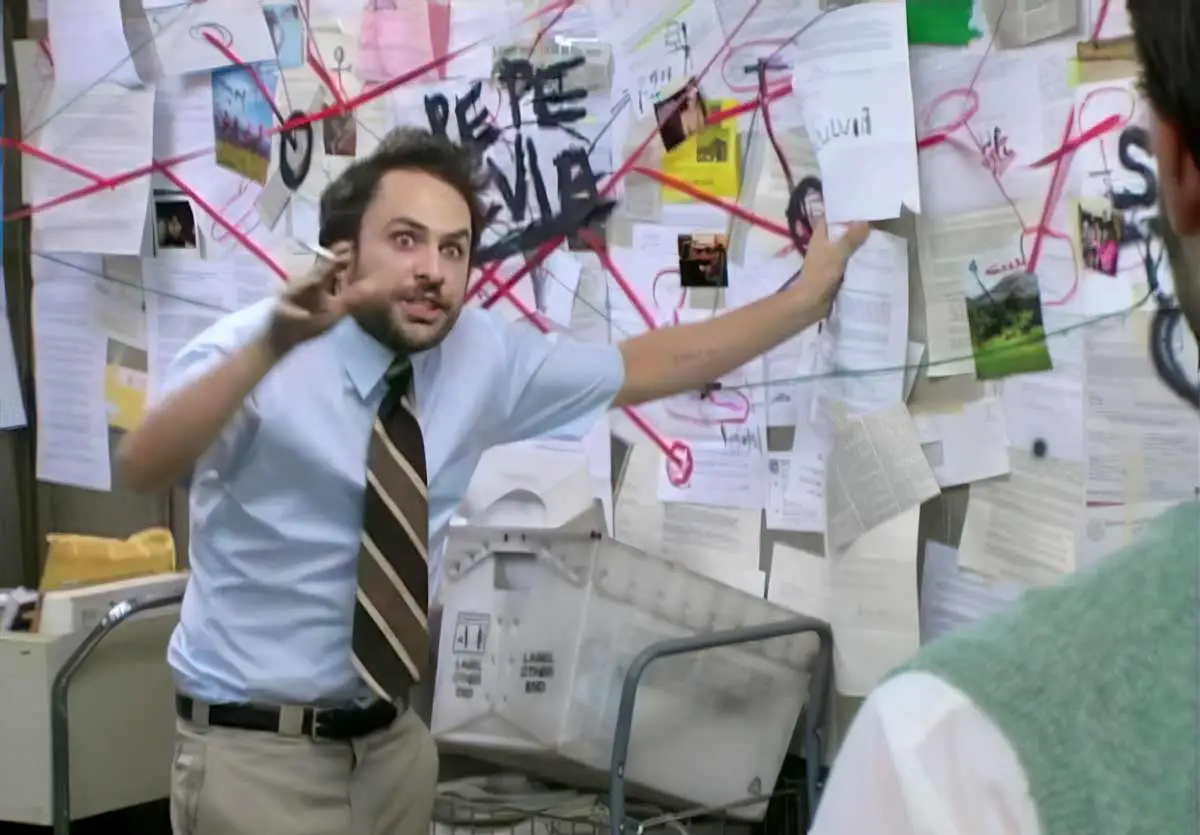
It is commonplace to say that we live in the misinformation age, a time where fake news travel rapidly through traditional and non-traditional means of communication. A fake story on X can get millions of shares within a few hours after its release, and even if its deleted, the damage is done: the false information has spread.
Our social feeds are overflowing with information and it is not possible to stop and fact check everything. So, how can Herodotus help us navigate the misinformation age, as this article's title promised you?
Herodotus is not perfect himself. He also made mistakes (quite a few), but he did his best to use his critical thinking to evaluate narratives and come to logical conclusions. But that is not the only noteworthy component of his method. What he was really good at, was telling the reader who said what, what were their motives, and comparing to other things he heard elsewhere. That's one thing that public dialogue on social media is lacking: sources.
So next time someone on the internet, let's say an influencer, tells you to buy something, let's say an energy drink, use your judgment to evaluate the information. Is the influencer getting paid to sell you the drink? Is the influencer benefiting in any other way from this? Even if the influencer has good intentions, is that the best person to offer you dietary advice? What do other people, like nutrition experts, say about the drink?
Bibliography
- Herodotus. Histories. Translated by George Campbell Macaulay.
- Wainwright, G. A. (1953). Herodotus II, 28 on the Sources of the Nile. The Journal of Hellenic Studies, 73, 104–107. https://doi.org/10.2307/628240
- Lateiner, E. 1989. The Historical Method of Herodotus. University of Toronto Press