Walter Benjamin's Aura: Authenticity in the Age of Mechanical Reproduction
A breakdown of Walter Benjamin's "The Work of Art in the Age of Mechanical Reproduction," explaining concepts such as expressive authenticity, cult value, and the aura.
Key Takeaways
- Walter Benjamin’s Aura: An original artwork possesses a unique, irreproducible presence in time and space.
- Mechanical Reproduction: Mass-copying technologies depreciate an artwork's aura, extracting it from historical contexts, replacing authentic experiences with mass plurality.
- Cult vs. Exhibition Value: Modernity shifted art's primary function from concealed ritualistic cult value to wide-scale exhibition value, permanently transforming how authenticity is perceived.
Walter Benjamin's concept of the aura of the authentic is one of the key ideas when it comes to issues of authenticity. Benjamin developed this concept in his most celebrated essay "The Work of Art in the Age of Mechanical Reproduction".
Useful definitions
Authenticity
Encompasses two distinct dimensions.
- Nominal authenticity refers to an artwork's verifiable provenance and unique physical journey through time and space.
- Expressive authenticity relates to an artwork's capacity to remain faithful to its genuine, inherent qualities and self-originating authority.
Aura
- The exclusive, irreproducible presence of an original artwork in time and space.
- This encompasses the object's historical testimony, physical alterations, and the visible marks left by wear and tear throughout its existence.
Mechanical Reproduction
- A method of mass-copying (such as photography or film).
- By substituting a singular, unique experience with a plurality of copies, it extracts the object from its traditional ritualistic context and systematically depreciates its aura.
Now let's break down Benjamin's essay.
Nominal and expressive authenticity
The term authenticity may be used to describe two separate things: nominal and expressive authenticity.
Benjamin mostly refers to nominal authenticity in his essay, although he brings up issues addressing both.
Expressive authenticity
Expressive authenticity refers to the ability to be faithful in ones own self, to express genuine qualities and possess inherent and self originating authority.
This authenticity is the one that Hegel, Heidegger and many existential philosophers have much struggled to define and understand.
Nominal authenticity
Nominal authenticity stands on the other side of forgery and fakery. It is related to the provenance of an object, ie., its unique path through time and space. As such, this authenticity is particularly relevant to works of art.
The aura of the authentic
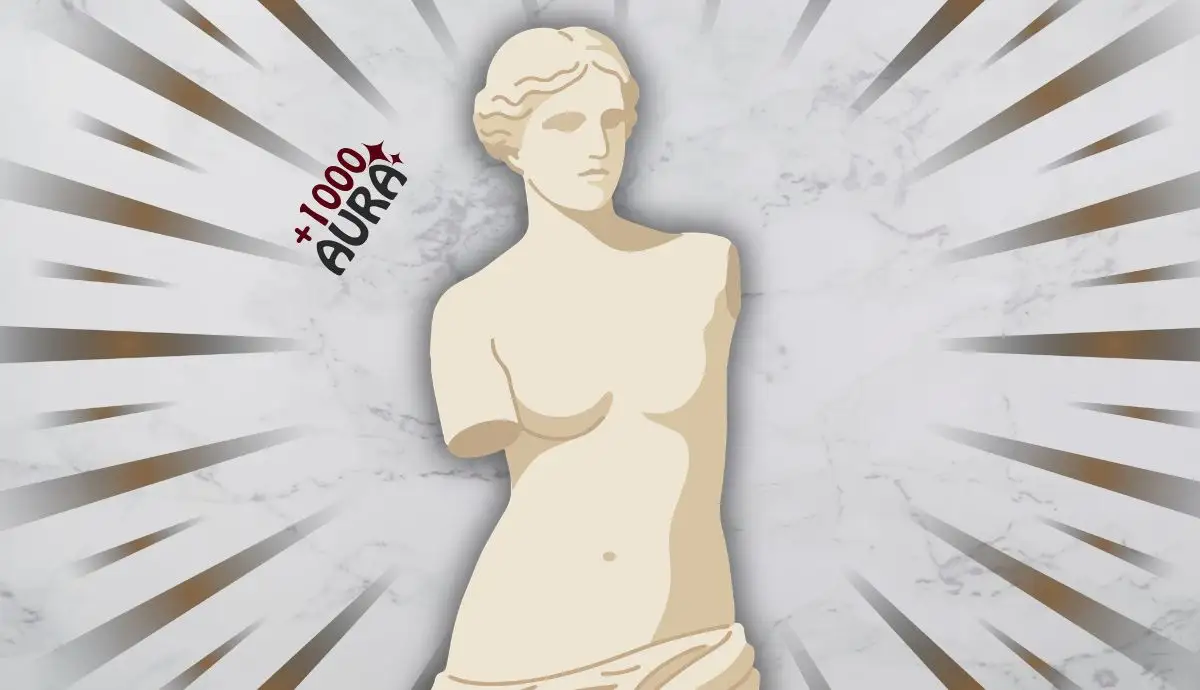
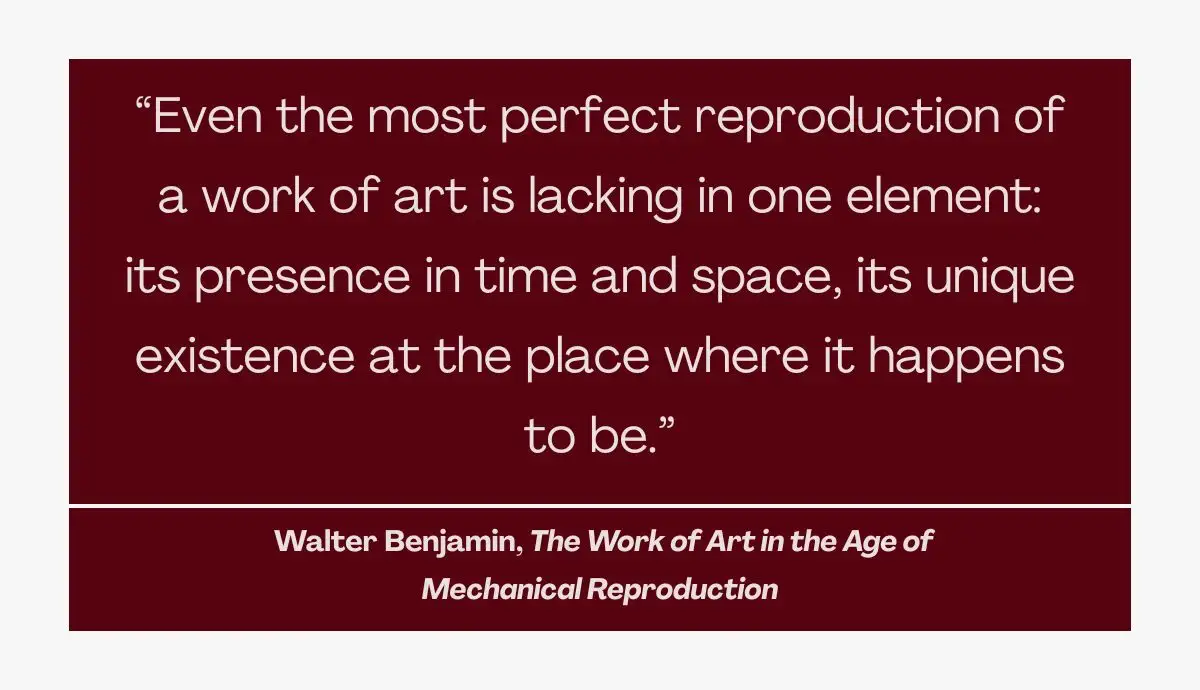
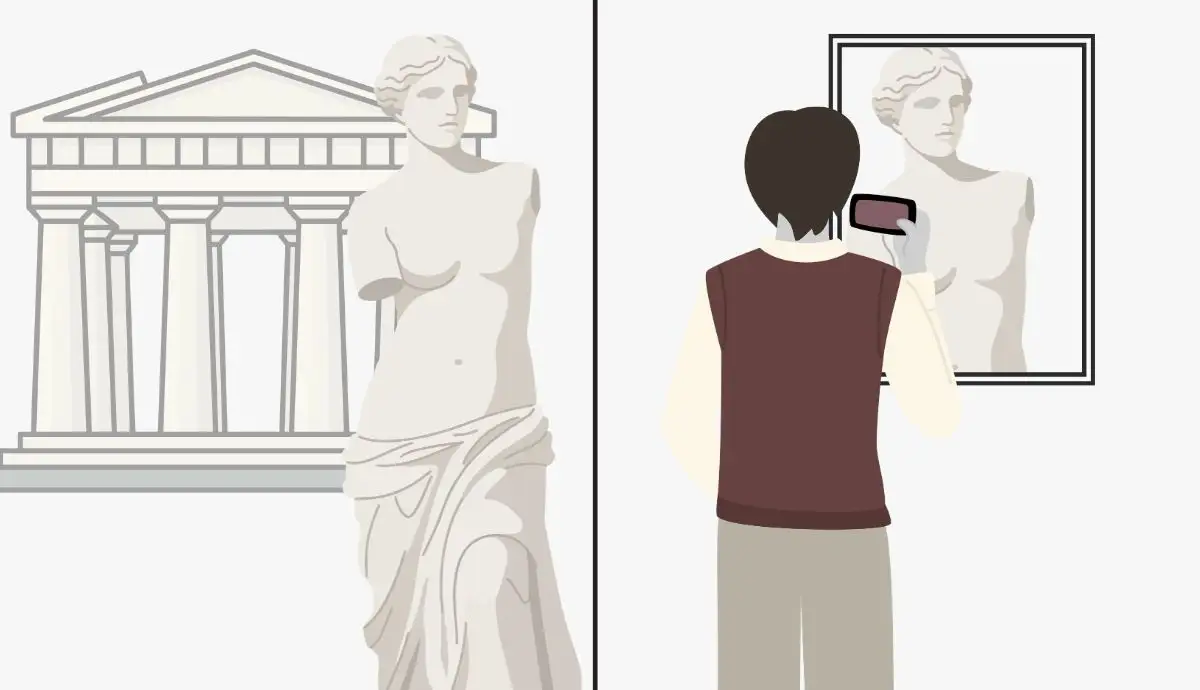
Benjamin's position is that every original has an element which no reproduction can ever capture, no matter how faithfully it copies the original image.
This element is the aura, is the original's unique presence in time and space. It entails the visible marks left by the passage of time and the history of which the object has been subjected to throughout its existence.
These qualities can be retrieved with scientific methods and would never be found on any reproduction.
Example: The Mona Lisa dates to 1503, and no reproduction can ever replicate that.
Because of this exclusive characteristic of the original, Benjamin claims that
"the whole sphere of authenticity is outside technical- and, of course not only technical- reproducibility."
The difference between manual and mechanical reproduction
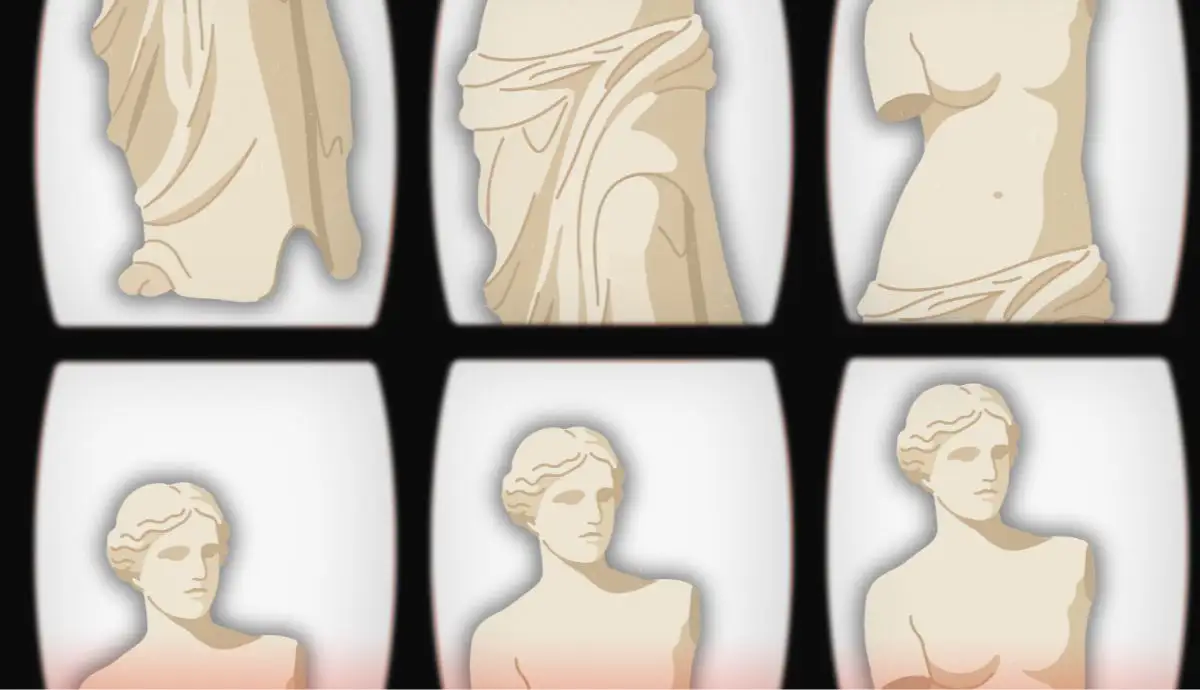
Manual reproduction (forgery) has always allowed the original to retain its authority as it heavily depends on the original's qualities and existence.
- Example: A copy of the Mona Lisa.
Mechanical reproduction is largely independent from the original.
- Example: A photograph can focus on qualities of an original that are unattainable to the naked eye and through certain processes, like slow motion and enlargement, can also capture a world beyond natural vision.
Why mechanical reproduction challenges the original
Mechanical reproduction degrades the original's authority because the copy can become something that the original would never be.
Example: the photo of a cathedral can become part of a personal collection, the sound of its choir can be heard in open air or in a drawing room etc.
Benjamin clarifies that mechanical reproduction does not usually alter the physical presence of the original but almost always depreciates the quality of its presence.
Essentially, mechanical reproduction harms the authenticity of the art object contesting its authority on transmitting meaning. As the historical testimony of an object is also based on its authenticity, the former is too jeopardised.
Benjamin expresses with the term "aura" the element of the authentic that suffers. He then proceeds to his main argument that:
"that which withers in the age of mechanical reproduction is the aura of the work of art".
But why? Benjamin is clear:
"by making many reproductions it [mechanical reproduction] substitutes a plurality of copies for a unique experience".
Mechanical reproduction also takes the object out of its context and essentially shatters the tradition it embodies.
Example: In photography, there is no reason to look for the original (the negatives) because its purpose is to serve as the matrix for a series of identical copies. This means that modernity has practically eliminated authenticity, by making the original work of art, which is the prerequisite of authenticity, completely irrelevant.
Art based on ritual vs. art based on politics
Another important idea is that of art based on ritual as opposed to art based on politics.
Art based on rituals
- Since prehistoric times, art has been integrated in rituals, initially of magic and later of religion. The aura of the authentic was part of this ritualistic function of art.
- In the Renaissance, secular rituals of art and beauty gained prominence.
- In the 19th century photography and socialism attempted to root art out of its ritual context under the doctrine of "l'art pour l'art" (art for art's shake).
Art based on politics
- This theological understanding of art finally gave rise to its negative: a theology that denied art its social function and categorisation by subject matter.
- Benjamin hails art based on politics as a liberation of art from the constraints of ritual.
Cult and exhibition value
Benjamin distinguishes between two ways of valuing art. The first is based on the cult value of an artwork and the second on its exhibition value.
Cult value
When art was part of rituals, says Benjamin, its cult value was of extreme importance.
Decorated pottery laid buried in graves, paintings hidden in temples were accessible only to priests, and statues carefully concealed were only unveiled on special occasions.
Exhibition value
With modernity the cult value of art is now second to its exhibition value. Art is now created to be exhibited as widely as possible.
Frescoes in christian temples had a limited exhibit value as only travellers could witness them. Stage actors were seen only by those lucky enough to pay a ticket to access the theatre. Today a photograph can travel wherever needed and cinema can make the performance of the film actor accessible to audiences all over the world.
Long story short, the exhibit value today has overshadowed the cult value of art. This emphasis on exhibiting has led to an accessible art that is exposed to criticism. In contrast, cult art could not bear criticism which diminished its authority and function.
A way to manufacture authenticity

Returning to the concept of authenticity, I would like to present an alternative to Benjamin's. Disagreeing with Benjamin, Cornelius Holtorf (2013) has claimed that authenticity is a quality of a historical object that can be easily reproduced in the present.
Holtorf's understanding of authenticity focuses on historical objects and the way we experience authenticity threw an object's 'pastness'.
"Pastness is the result of a particular perception or experience. It derives from, among others, material clues indicating wear and tear, decay, and disintegration" Holtorf 2013, 427.
The idea is simple, if something looks and feels old, we will mistake it for authentic. So in this sense, it's rather easy to manufacture "authentic" experiences as well as "authentic" objects. Authenticity in this sense is not a metaphysical, inherrent quality of an object but a phenomenologicaly reproducible aspect.
This is something that the elites of the Early Modern Era understood very well, and it's the basis behind all the invented traditions that Eric Hobsbawm exposed with his monumental work Invented Tradition (1983).
Conclusion
Benjamin's essay explores multiple issues such as the evolving reactions of the masses against art, Dadaism, and most importantly the concept of the optical unconscious.
Benjamin's The Work of Art in the Age of Mechanical Reproduction may not be perfect and certainly has problematic aspects such as the idea that art is no longer experienced as part of rituals, which is certainly incorrect.
Nevertheless, Benjamin's essay remains a central text in understanding authenticity; a point of reference whose ideas are often contested and discussed.
Bibliography
- Benjamin, W. 1999. The Work of Art in the Age of Mechanical Reproduction. In Illuminations. Translated by Harry Zorn and edited by Hannah Arendt. London: Pimlico
- Dutton, D. 2009. Authenticity in Art. In Levinson, J. The Oxford Handbook of Aesthetics. New York: Oxford University Press.
- Hobsbawm, E., & Ranger, T. (Eds.). 2000. The invention of tradition. Cambridge University Press. (Original work published 1983).
Holtorf, C. 2013. On Pastness: A Reconsideration of Materiality in Archaeological Object Authenticity. Anthropological Quarterly,86(2), 427-443.