Foucault's Theory of Heterotopia Explained (6 Principles & Examples)
What is a heterotopia? Explore Michel Foucault’s concept of "other spaces," from mirrors and cemeteries to prisons and understand its six principles.
Key Takeaways
- Definition: Heterotopias are "effectively enacted utopias", real places that simultaneously represent, contest, and invert every other site within a culture.
- Framework: Foucault outlines six principles, including "heterochronies" (temporal disruptions) and systems of opening/closing that regulate social access and exclusion.
- Power Dynamics: These "other spaces" expose hidden power structures, offering imaginative "lines of flight" and the potential to envision alternative worlds.
We have all heard of the term Utopia; the "perfect" place that doesn't actually exist. But what do we call the spaces that do exist, yet feel like a completely different world?
In Of Other Spaces (French: Des Espaces Autres), French philosopher Michel Foucault called them heterotopias. These are the "counter-sites" of our world: the cemeteries, the prisons, the museums, the psychiatric institutions. These are spaces that reflect the real back to us in distorted, often unsettling ways.
The quotes in this article are from the English translation of Michel Foucault's Of Other Spaces (link in the bibliography).
Where Did Foucault Write About Heterotopias?
Foucault describes the concept of heterotopia on three occasions:
- In his preface to Les Mots et les choses (The Order of Things) published in 1966.
- A radio broadcast in 1966.
- A lecture presented to a group of architects in 1967.
The present article is a break down of the third one, which was translated and published in English 1984 as Of Other Spaces (French: Des Espaces Autres).
What's interesting about Foucault's theory is that unlike Marc Augé's non-places, spaces of pure transcience where social relations disappear (highways, gas stations, etc), heterotopias offer the glimpse of a different world.
Also read: Hellas as a Heterotopia: Foucault, Freud, and the Power of Classical Ruins
Utopias
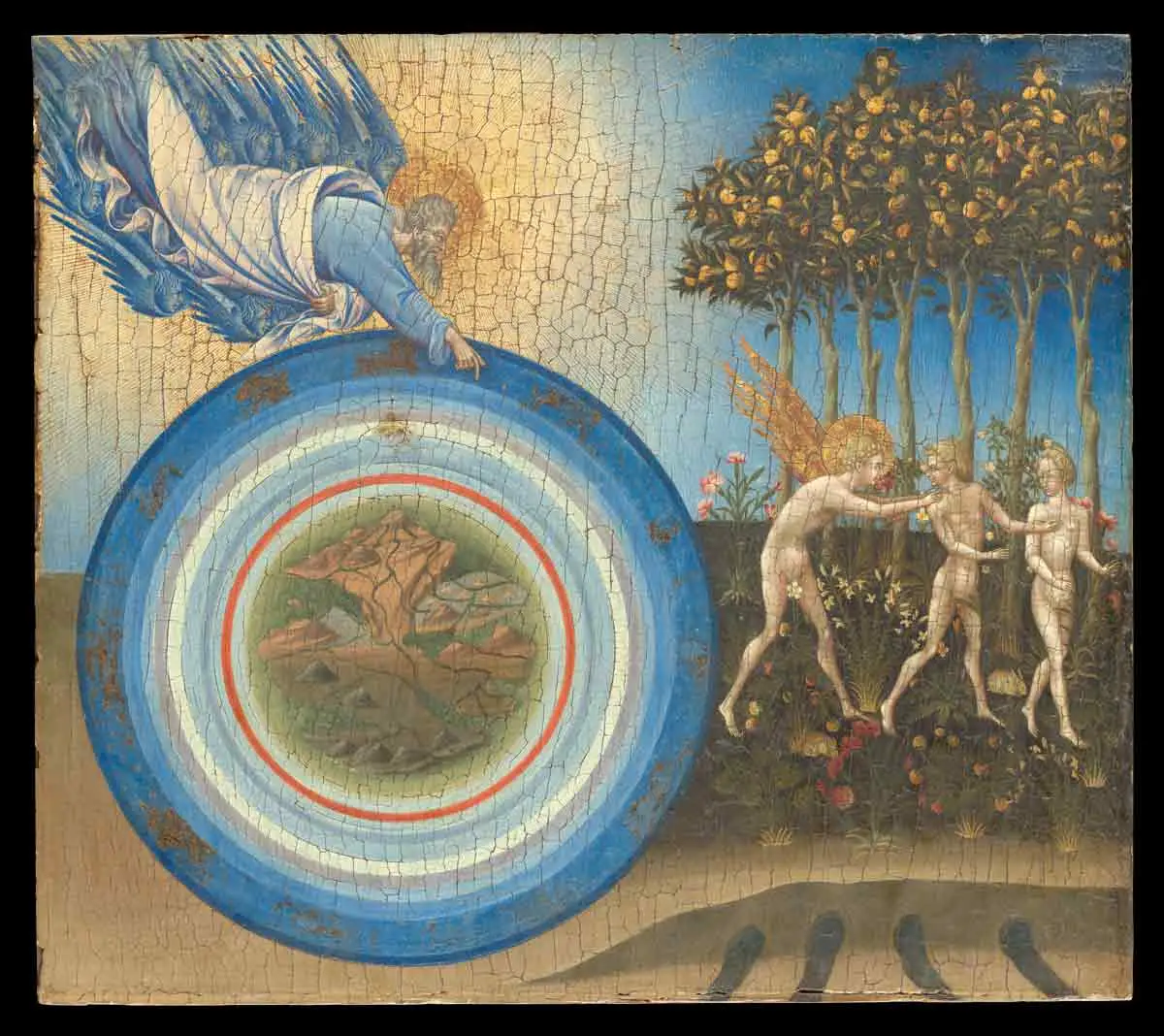
Before we define heterotopia, it's important to understand how Foucault understands its counterpart. The French philosopher defines utopias as "fundamentally unreal spaces" that represent society in a perfected form or the exact opposite of a society (upside down).
Heterotopias
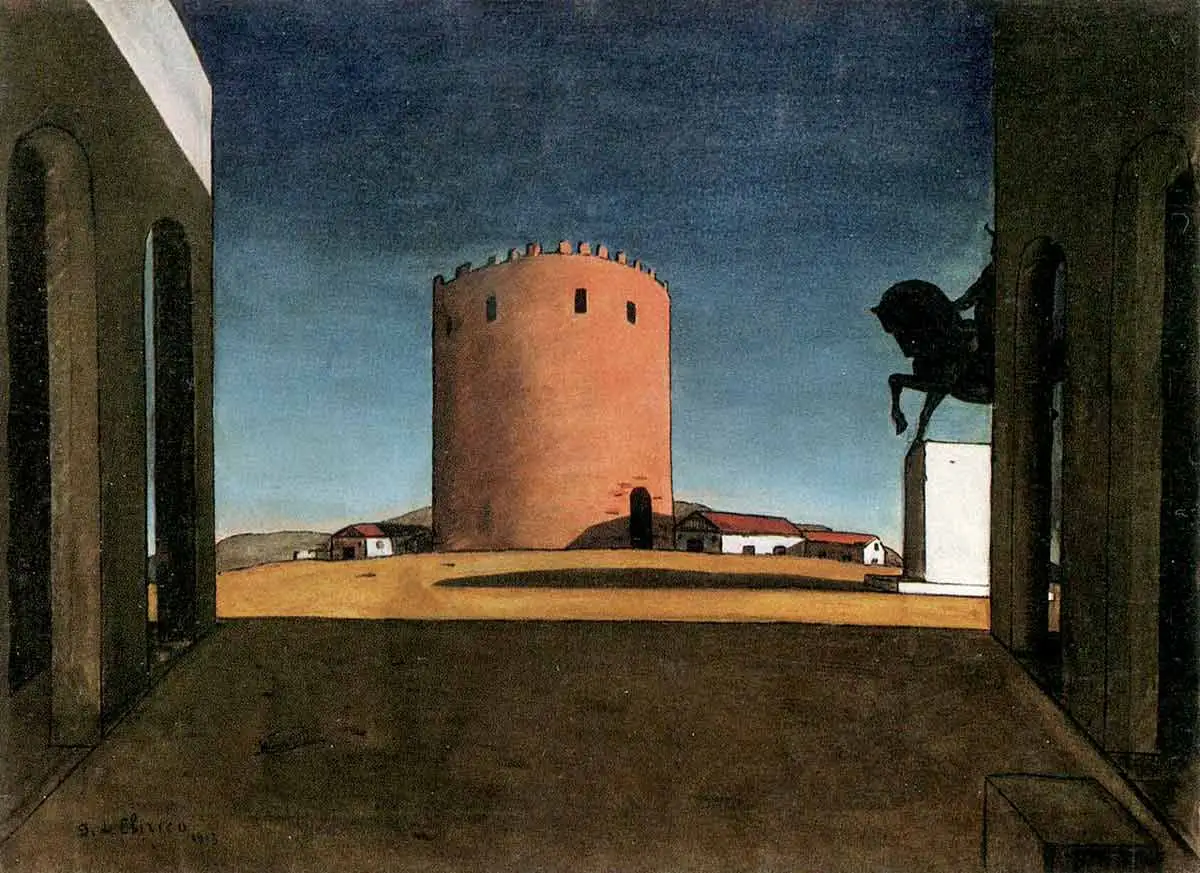
Brief definition (simplified): Heterotopias are real places that act like counter-spaces.
Foucault's definition:
"[a heterotopia is] a kind of effectively enacted utopia in which the real sites, all the other real sites that can be found within the culture, are simultaneously represented, contested, and inverted"
Definition based on a reading of Foucault:
Heterotopia refers to varied spatial and temporal disruptions that imaginatively interrogate and undermine certain formulations of utopia. (Johnson 2006)
Etymology: from the Greek heteros (other, distinct) and topos (place). So, heterotopia literally means "other place".
| Feature | Utopia | Heterotopia |
| Existence | Fundamentally unreal; a mental construct or "ideal" society. | Fundamentally real; they are actual, physical locations. |
| Location | No-place (ou-topos); they exist outside of physical geography. | "Other-place"; they exist within society but are set apart from it. |
| Function | They represent society in its most perfected or inverted form. | They contest, invert, or neutralize the spaces they represent. |
| Relationship to Time | Often exist in a "frozen" or "perfected" future/past. | Often linked to heterochronies (breaks in traditional time, like a museum). |
| Accessibility | Usually inaccessible (imaginary or impossible to reach). | Regulated by systems of opening/closing (requires permission or a rite). |
Also read: Benedict Anderson's Imagined Communities (Summary & Key Terms)
The Example of the Mirror
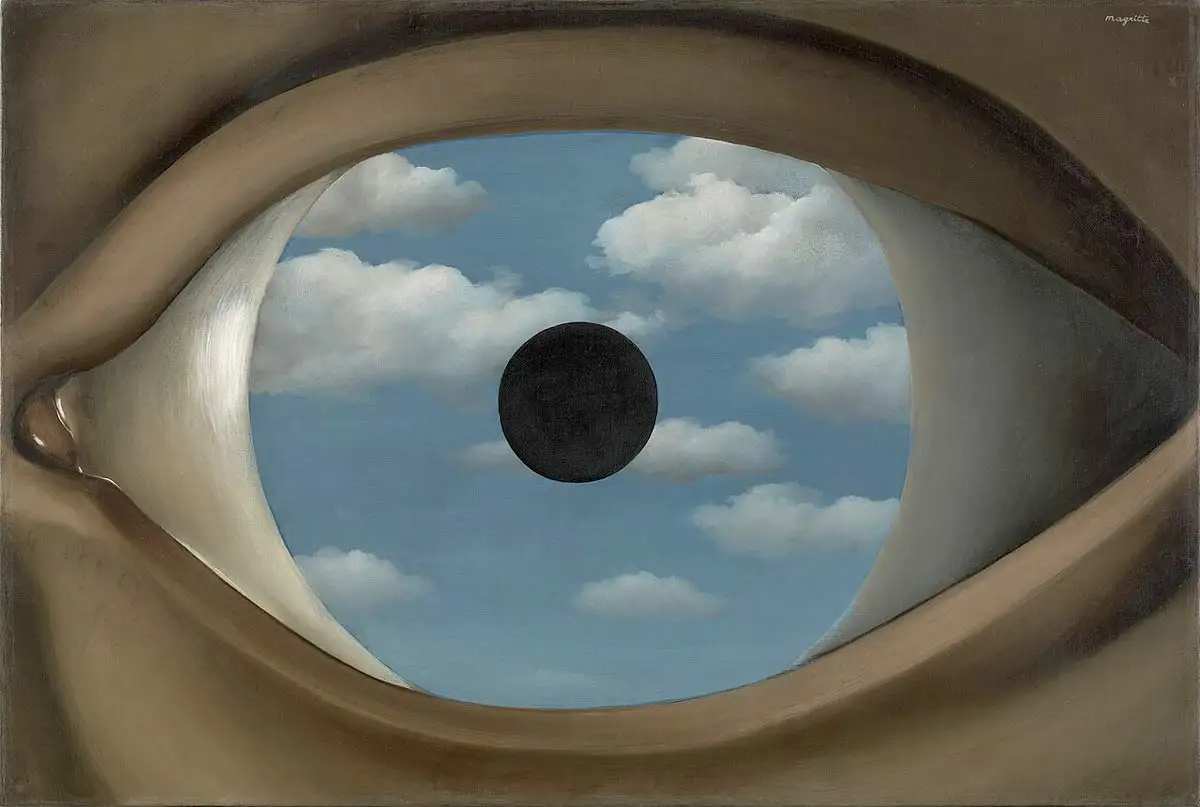
The utopia of the mirror is that one can see their reflection in a place where they are not.
"I see myself there where I am not, in an unreal, virtual space that opens up behind the surface".
But there is also the mirror's heterotopia:
the mirror does exist in reality, where it exerts a sort of counteraction on the position that I occupy... The mirror functions as a heterotopia in this respect: it makes this place that I occupy at the moment when I look at myself in the glass at once absolutely real, connected with all the space that surrounds it, and absolutely unreal, since in order to be perceived it has to pass through this virtual point which is over there."
The Six Principles of Heterotopology
Foucault calls Heterotopology the study of heterotopias and goes on to describe six basic principles. Let's look at them one by one.
| 1. All Cultures Have Them | Based on the culture, one will find crisis or deviation heterotopias. |
| 2. Their Functions Shift | How a space (like a cemetery) changes meaning over time. |
| 3. The Juxtaposition of Spaces | The garden, the cinema, the theater, and the rug fit many spaces into one. |
| 4. Heterochronies | Spaces that break from traditional time (Museums, Libraries). |
| 5. Systems of Opening/Closing | The paradox of the "public" space that requires an initiation (e.g., the sauna or the prison). |
| 6. The Function of Illusion/Perfection | The colony vs. the brothel. |
1. All Cultures Have Heterotopias
Foucault is clear. Heterotopias are everywhere:
there is probably not a single culture in the world that fails to constitute heterotopias.
However, different cultures constitute different kinds of heterotopias. Foucault sees two main categories:
1.1. Crisis heterotopias
These are found mostly in "primitive" cultures and are privileged or forbidden spaces reserved for individuals who are perceived as being in a state of crisis (adolescents, menstruating women, pregnant women, the elderly, etc.)
Examples:
- the 19th century boarding school
- military service for young men
- the tradition of the “honeymoon trip” (a young woman's "deflowering" in a hotel or train outside of the city).
1.2. Deviation heterotopias
These are heterotopias meant for individuals whose behavior is deviant, i.e. does not conform with social norms.
Examples
- rest homes
- psychiatric hospitals
- prisons
Foucault also examines a heterotopia that sits on the crossroads between crisis and deviation; retirement homes. The reasoning is that old age is perceived as a crisis, but also a deviation since idleness is often seen as a sort of deviation in a society "where leisure is the rule".
2. Their Functions Shift
Heterotopias appear as stagnant with stable functions. However, as history moves, they can also shift their focus to serve different functions.
The example of the cemetery
In Western culture, cemeteries used to lie in the very center of the city symbolizing its sacred and immortal heart. However, with the fading of belief in the afterlife and the rise of the bourgoisie in the 19th century, the cemetery was placed outside of the city, and seen as a source of death, through the spread of illness.
The cemeteries then came to constitute, no longer the sacred and immortal heart of the city, but the other city, where each family possesses its dark resting place.
3. Juxtaposition Of Spaces
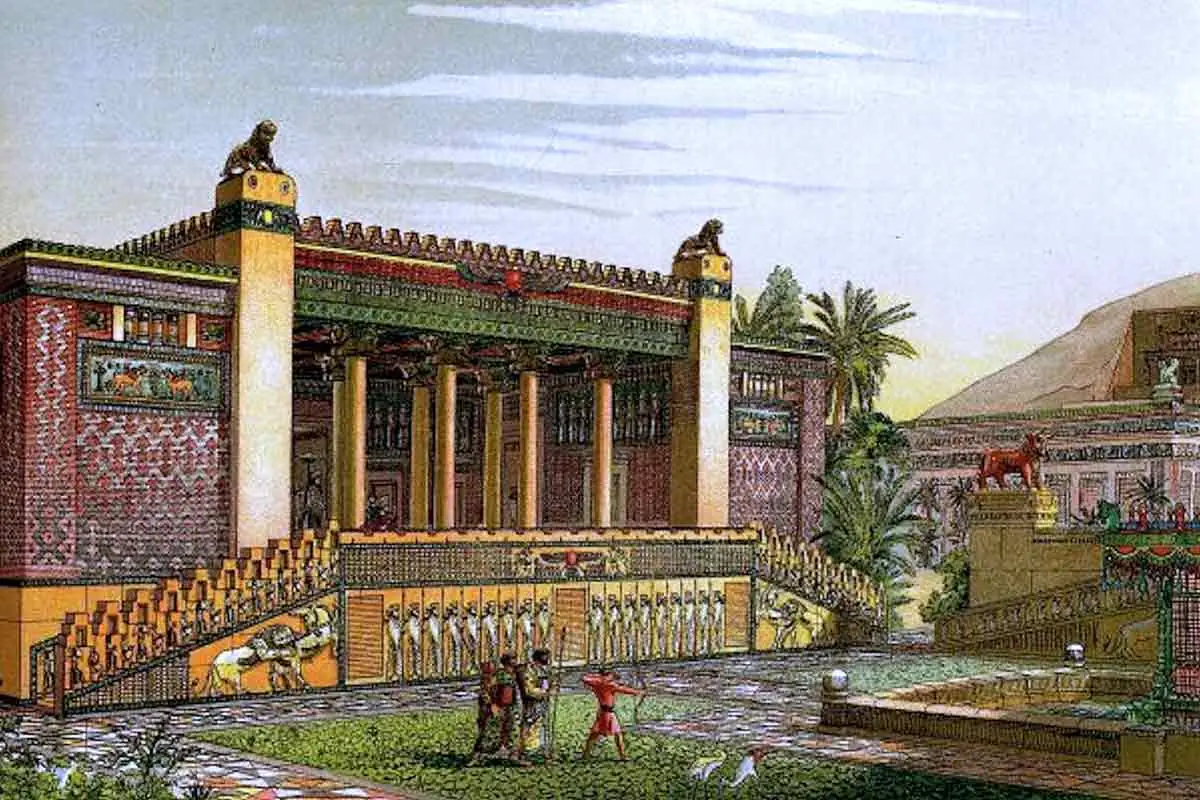
The heterotopia is capable of juxtaposing in a single real place several spaces, several sites that are in themselves incompatible.
Foucault brings a series of examples that explain how a heterotopia can bring together different incompatible spaces.
Examples
- theater and the cinema that, through performance, evoke various spaces that challenge each other.
- the Persian garden which was intended to symbolically represent the world. Foucault seems to be particularly intrigued by the symbolic elements of the garden which he calls "a sort of happy, universalizing heterotopia".
- Rugs were also intende to represent gardens.
Fun fact: In Old Persian, the garden (as an assemblage of plantations and elaborate structures channeling water) was known as paridaida, which is where the word for Paradise comes from. There is a very interesting history that links the very idea of the Paradise with Persian aesthetics and the architecture of the garden.
4. Heterochronies
Heterotopias constitute spaces were the individual no longer experiences time traditionally. So, heterotopias constitute heterochronies, that is experiences of time outside the established ones.
Here Foucault sees two types of Heterochronies, those accumulating time and those focusing on the time as flowing.
4.1. Accumulating Time
Museums and libraries are modern institutions that seek to create archives within one single space that contains "everything", all epochs, all knowledge, all civilizations.
This understanding of time as available, as fully controlled and as organized is a unique heterochrony found in the museum and the library.
Foucault also identifies Polynesian vacation villages in this category. He writes:
"the rediscovery of Polynesian life abolishes time; yet the experience is... as if the entire history of humanity reaching back to its origin were accessible in a sort of immediate knowledge."
4.2. Time as flowing
Heterotopias where time is experienced as constantly flowing and bringing change are festivals, such as fairgrounds. These heterotopias focus on the temporal, not the eternal.
5. Systems of Opening/Closing
Heterotopias have different systems of opening and closing, entry and exit., that both isolate them and make them more or less accessible.
There are those which are less open and may have strict rules to allow entrance, others which are only forcefully entered, and others where entry requires participation in certain rituals and gestures.
Such examples include:
- barracks or prison (entry is compulsory)
- hammam (entry upon religious and hygienic purification)
- Scandinavian saunas (entry upon hygienic purification)
Foucault also mentions another heterotopia which he struggles to locate and even thinks that may have disappeared completely: i.e., heterotopias that appear open but hide exclusions.
He provides the following example:
...the famous bedrooms that existed on the great farms of Brazil and elsewhere in South America. The entry door did not lead into the central room where the family lived, and every individual or traveler who came by had the right to open this door, to enter into the bedroom and to sleep there for a night. Now these bedrooms were such that the individual who went into them never had access to the family’s quarter the visitor was absolutely the guest in transit, was not really the invited guest.
I had never heard of this, so I googled it and found this Reddit thread, which confirms what Foucault said.
6. Relation to All the Space That Remains
Heterotopias relate to the outside world in two ways. Either they create a space of illusion that exposes every real space (such as brothels) or they create a space that is another real space, "as perfect, as meticulous, as well arranged as ours is messy, ill constructed, and jumbled" (such as the colony).
Also read: Invention of Tradition: How Eric Hobsbawm Exposed "Ancient" Customs
Why Are Heterotopias Important?
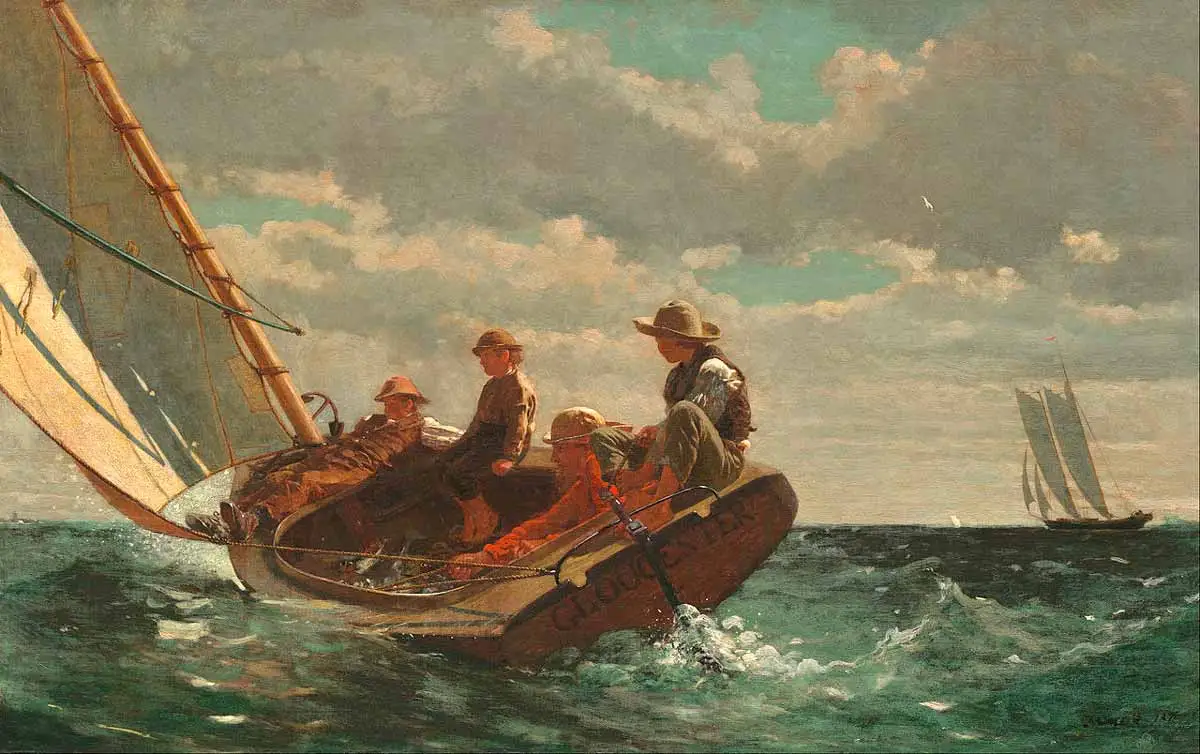
Foucault was interested in understanding power and he particualrly sought to expose the hidden, unrecognized ways in which power structures work in places that seem to function outside of traditional power relations, such as universities, prisons, etc. Even though these institutions present themselves as neutral entities standing outside the politics of power, they in fact perpetuate them and reinforce the status quo.
Heterotopias offer a strange hope that power structures can be countered, unexpectedly, from within or as Johnson writes:
"Heterotopias in this way light up an imaginary spatial field, a set of relations that are not separate from dominant structures and ideology, but go against the grain and offer lines of flight." (Johnson 2006, 87)
This is a space of hope for Foucault as it presents the opportunity for imagining a world outside of the present, a world that is not simply an inverted case of the existing, but a glimpse of a new one. This becomes evident in the last sentence of his speech where he describes the ship as a heterotopia:
"The ship is the heterotopia par excellence. In civilizations without boats, dreams dry up, espionage takes the place of adventure, and the police take the place of pirates."
Bibliography
- Johnson, P. (2006). Unravelling Foucault’s ‘different spaces.’ History of the Human Sciences, 19(4), 75–90. https://doi.org/10.1177/0952695106069669
- Foucault, M. (1984). Of Other Spaces. Diacritics, 16(1), 22–27. (Based on Foucault's original speech from 1967). https://doi.org/10.2307/464648
Also read: Necropolitics vs. Biopolitics: Mbembe's Reinterpretation of Foucault