Necropolitics vs. Biopolitics: Mbembe's Reinterpretation of Foucault
The evolution of state power from Foucault's biopower to Mbembe’s necropower, with key definitions and examples.
Key Takeaways
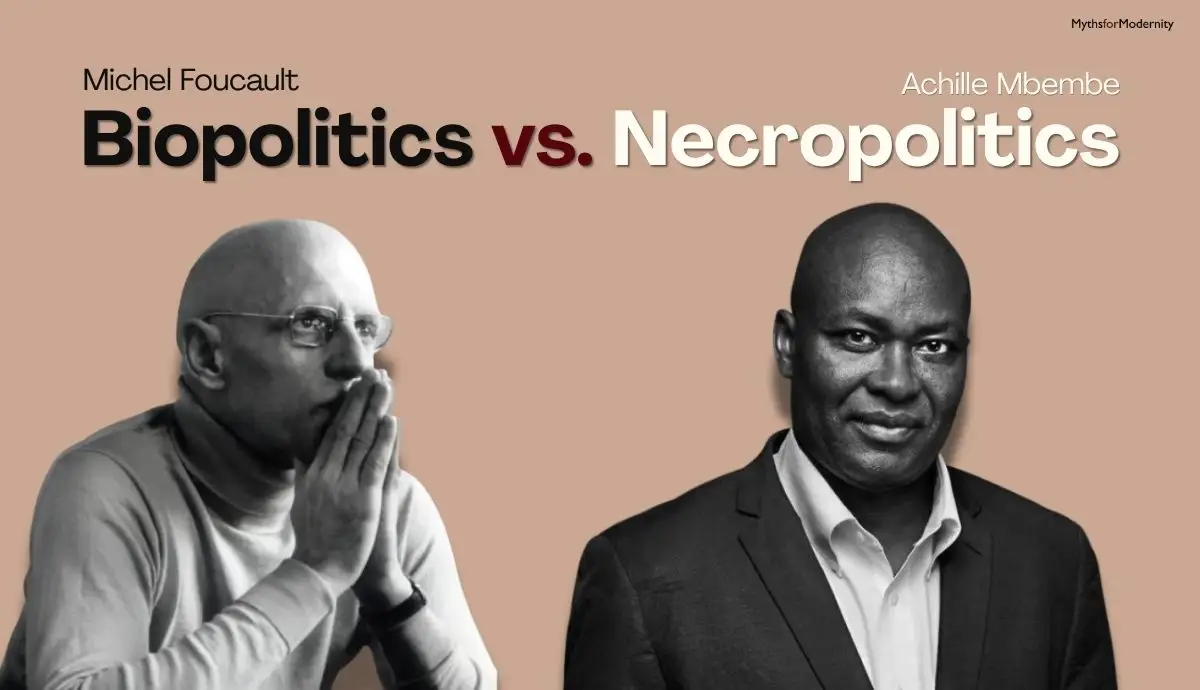
- Biopolitics (Foucault): The modern state's power to manage, optimize, and "make live." Think healthcare, urban planning, and population control.
- Necropolitics (Mbembe): The power to dictate who is allowed to die, creating Death-Worlds (like refugee camps or colonies) where people live as the living dead.
In modern states, power goes beyond voting and passing laws. For French philosopher Michel Foucault, a prevalent form of stately power is the one that seeks to manage bodies or rather life itself. Foucault called this biopower and the politics behind it biopolitics.
Recently, Achille Mbembe proposed a different term for a technology of biopolitical power that seeks to manage death or to treat the living as dead. Mbembe calls this necropolitics.
| Power Type | Key Phrase | Goal | Example |
| Sovereign Power | "Make die and let live" | Punishment of legal transgression | Capital Punishment |
| Biopower | "Make live and let die" | Managing life and health | Universal Healthcare / Vaccination |
| Necropower | "Treat the living as dead" | Creating "Death-Worlds" | Refugee camps / Militarized borders |
What Is Biopolitics According to Michel Foucault?

Definition: Foucault briefly defines biopolitics as "the State control over the biological." (Foucault 2003, 240)
Biopolitics appeared in the 18th century as a form of politics concerned with the management of life and population (Kos 2025). To understand the importance of biopolitics, we first need to understand how it differs from previous forms of power, like, for example, the ones wielded by Medieval kings.
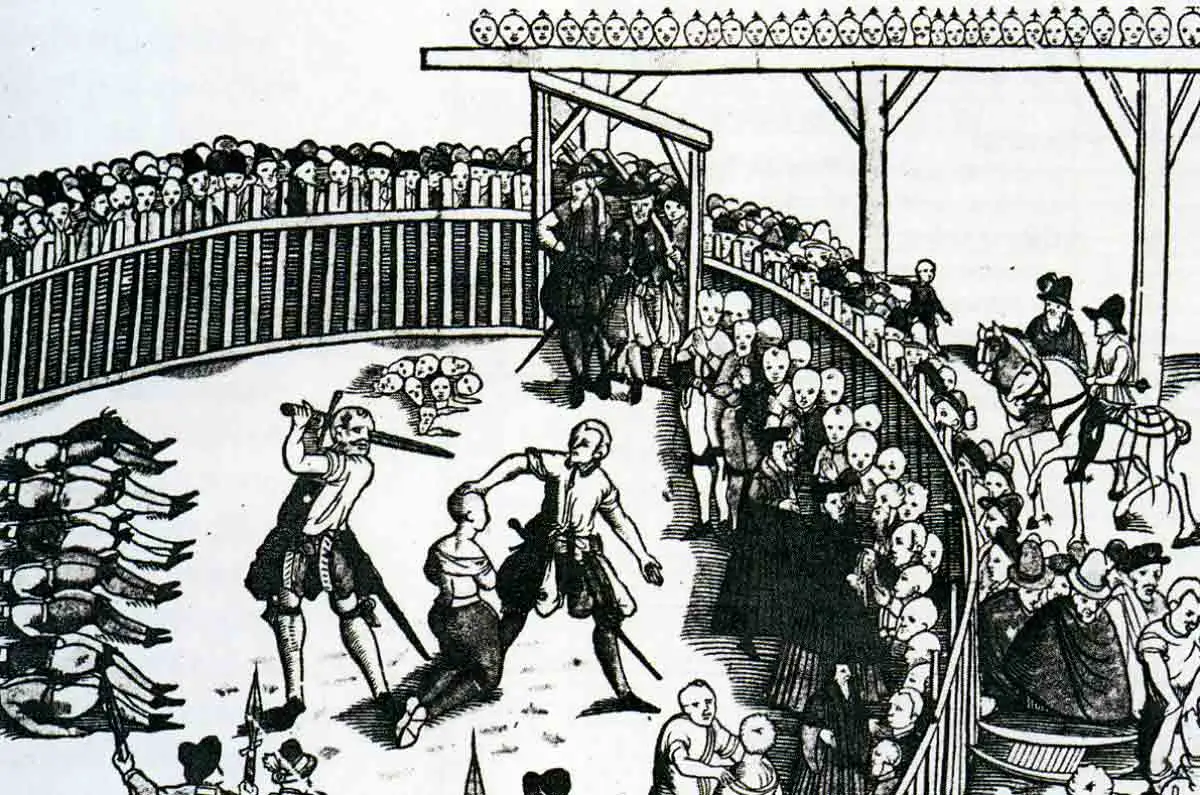
For Foucault, a Medieval king had the right over life and death, meaning the pre-modern state could either let someone live, or kill. In short, if the king found you unnecessary, he could either ask for your head or let you go on with your life.
However, sometime around the 18th century this old form of sovereignty was absorbed into a new power that Foucault describes as a form of State racism. This new form of power, the biopower, organized life by dividing the population into those who have the right to live and those allowed to die. So, from "let live or kill" the state's sovereignty went to "live or let die".
Still, the old sovereign right to kill did not disappear with the advent of modernity. For Foucault, the mechanisms of biopower facilitate and coexist with the sovereign right to kill. For the French philosopher, both are inscribed in the way that all modern states function.
Examples of Biopolitics
To understand what this means, think of access to healthcare. Biopolitics is a way to decide who gets access to good healthcare, and as such has the right to live, and who doesn't have access to healthcare, and as such is allowed to die.
In Society Must Be Defended, Foucault presents the Nazi State as the ultimate example of a state where both the old sovereign right to kill and the modern biopower of organizing life coexisted side-by-side.
The Nazi State actively divided the population into those who were allowed to live, whose lives were actively managed in both the frontline and at home, and those deserving death. The Final Solution was the ultimate expression of this project.
What Is Necropolitics According to Achille Mbembe?
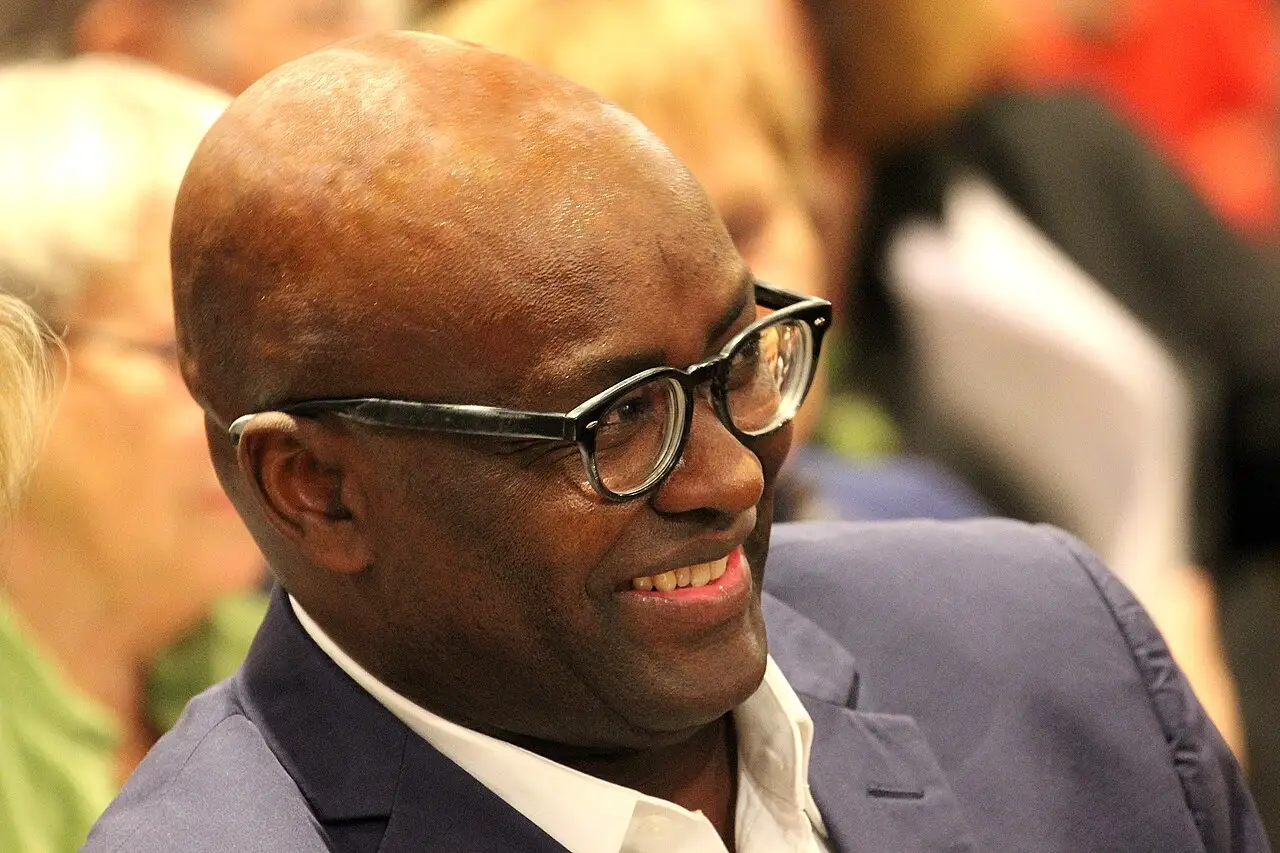
Definition: Necropolitics is the “subjugation of life to the power of death” through the creation of Death-worlds, where the living are treated as living-dead (Mbembe 2003, 39).
Cameroonian historian Achille Mbembe has critiqued Foucault's work arguing that it is insufficient when approaching the post-colonial world.
Mbembe wrote about necropolitics in a 2003 article and expanded his conceptualization of the term in his 2016 book Politiques de l'inimitié which was translated in English in 2019 under the title Necropolitics.
In Foucault's theory, sovereignty consists in selecting who can live, and separating them from those who can perish. For Mbembe, however, Foucault's theory does not go far enough.
"... biopower is insufficient to account for contemporary forms of subjugation of life to the power of death." Mbembe 2003, 39
Mbembe defines necropower as: "the capacity to define who matters and who does not, who is disposable and who is not" (Mbembe 2003, 27).
Death-Worlds
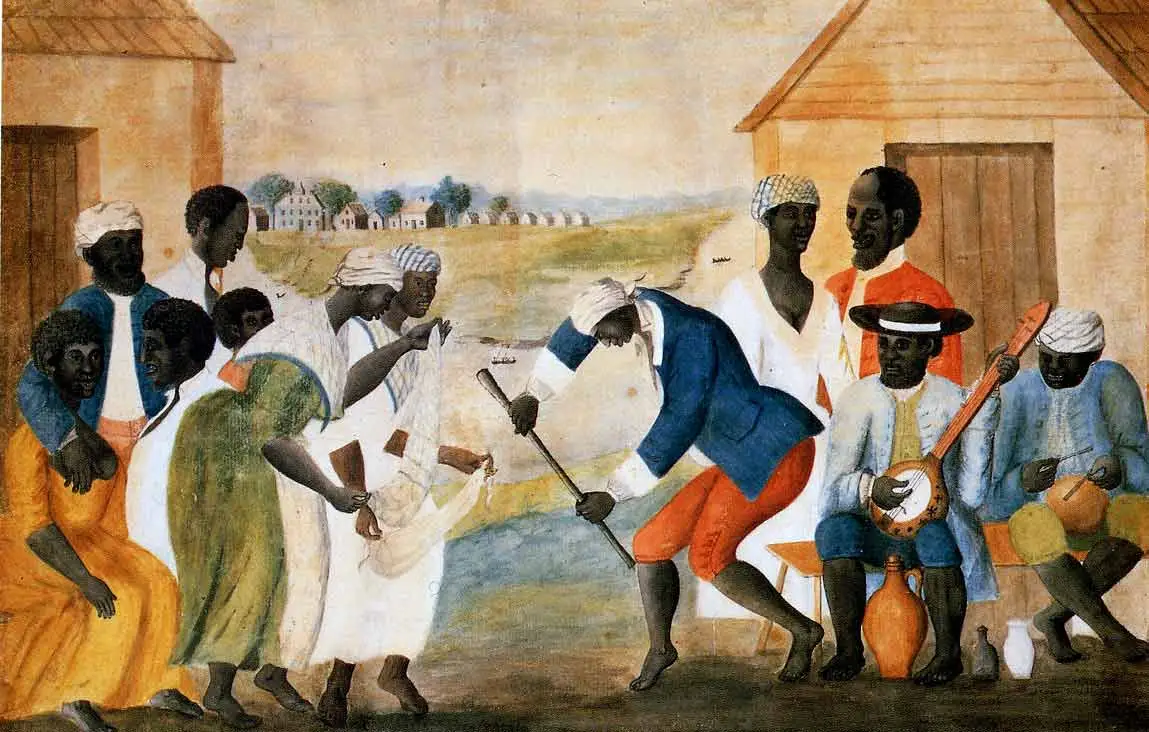
For Mbembe, necropolitics are used to create death-worlds which he defines as:
"forms of social existence in which vast populations are subjected to conditions of life conferring upon them the status of living dead." Mbembe 2003, 40
Death-worlds are sites where power is exercised outside of the law and where “peace” can become synonymous with a “war without end.” The population of a death-world is in a perpetual state of terror, serving to keep subjects in check and enforce the status quo.
Death-worlds are zones where a constant state of exception is enforced.
Carl Schmitt famously defined sovereignty as the power to decide a state of exception. Schmitt's state of exception is the decision to suspend the rule of law, enforcing the right to kill. War is a prime example of the state of exception.
Schmitt is also the starting point for Agamben's conception of biopolitics, which presents many similarities to Mbembe's.
Examples of Necropolitics and Death-Worlds
In his 2003 essay, Mbembe highlights some examples of death worlds. These are:
- the plantation
- the colony
- South Africa of the Apartheid
Mbembe writes about the death world of the plantation:
"The slave is therefore kept alive but in a state of injury, in a phantomlike world of horrors and intense cruelty and profanity. The violent tenor of the slave’s life is manifested through the overseer’s disposition to behave in a cruel and intemperate manner and in the spectacle of pain inflicted on the slave’s body... Slave life, in many ways, is a form of death-in-life." Mbembe 2003, 21
The slave is not exactly a living person, because he/she is also property, and this results in a contradiction between the freedom of person and the freedom of property. The slave's life is like a thing, so "the slave existence appears as a perfect figure of a shadow" (Mbembe 2003, 22).
In more recent times, Mbembe finds deathworld in militarized borders, refugee camps and in Palestine, which he describes as a pure result of applied necropower.
In Palestine, the creation of death-worlds, both external (by occupation and colonization) and internal (by constant surveillance and exclusion) is justified on the basis of a narrative of identity that is strengthened and constructed by history, geography, cartography, and archaeology.
According to Mbembe's essay which I quote in the bibliography below, the case of Palestine demonstrates that late-modern colonial occupation is drawing on three powers:
- disciplinary
- biopolitical
- necropolitical
Here is a direct quotation from Mbembe's work:
"[In Palestine] entire populations are the target of the sovereign. The besieged villages and towns are sealed off and cut off from the world. Daily life is militarized. Freedom is given to local military commanders to use their discretion as to when and whom to shoot. Movement between the territorial cells requires formal permits. Local civil institutions are systematically destroyed. The besieged population is deprived of their means of income. Invisible killing is added to outright executions." Mbembe 2003, 30
About Archaeology and Anthropology
As an archaeologist-museologist, it is important at this point to consider the importance of necropolitics for a material culture specialist. Pamela Geller (2021) has discussed how studies of genocide by bioarchaeologists and forensic anthropologists materialize the necropolitical processes that Mbembe outlined in his work.
Such studies examine mass graves and the human remains associated with such events, providing material evidence and a concrete basis for comprehending the scale and real consequences of genocides. This also helps the memory of such tragic events and dehumanizing processes to remain a part of the collective memory.
Geller also doesn't believe that necropolitics, as described by Mbembe, applies to antiquity, and as such is a modern phenomenon.
Here we should mention that archaeology and anthropology have historically played a key role in facilitating and justifying necropolitical practices. Just think of how Nazi scientists sought to justify the State's attrocities by providing a pseudo-scientific basis for the "Aryan race", or how western scientists justified the institution of slavery on the basis of non-existing biological and mental differences between the races.
Archaeology as a discipline has also played its part in helping states exercise bio- and necropower by anchoring certain narratives in a deep past.
Again, one cannot help but mention the Nazi archaeologists who attempted to locate the origins of the Aryan race. The same scientists priviledged a certain vision of ancient Greece as the birthplace of civilization and then tied the Aryans to this vision in order to project this entirely manifested reality into the present. There are many more examples that we could discuss here, but that is a story for another article.
Also read: Benedict Anderson & The Nation as an Imagined Community
Conclusion
As we move further into a world where digital surveillance and algorithmic governance are the norms, biopolitics and necropolitics are becoming at the same time harder and easier to discern.
Thanks to technological advances that allow the world to become more connected we feel that our freedoms are expanding as we gain access to information and communication at an unprecedented scale. Yet, these same technologies allow power to concentrate in fewer hands and the realms of bio- and necro-politics is expanding.
Healthcare, bank accounts, even access to the web and important sources of income can all be easily revoked by the state or the corporations that control them.
Bibliography
- Foucault, M. (2003). “Society must be defended”: Lectures at the Collège de France, 1975–1976 (M. Bertani & A. Fontana, Eds.; D. Macey, Trans.). Picador. (Original work published 1997)
- Geller, P.L. (2021). What Is Necropolitics?. In: Theorizing Bioarchaeology. Bioarchaeology and Social Theory. Springer, Cham. https://doi.org/10.1007/978-3-030-70704-0_5
- Kos, Ž. (2025). Biopolitics. In: Encyclopedia of Diversity. Springer, Cham. https://doi.org/10.1007/978-3-030-95454-3_48-1
- Mbembe, A. (2003). Necropolitics (L. Meintjes, Trans.). Public Culture, 15(1), 11–40. https://doi.org/10.1215/08992363-15-1-11
- Mbembe, A. (2019). Necropolitics [Politiques de l'inimitié]. Translated by Corcoran, Steve. Durham: Duke University Press.
- Vinx, L. (2025) "Carl Schmitt", The Stanford Encyclopedia of Philosophy, Edward N. Zalta & Uri Nodelman (eds.). https://plato.stanford.edu/archives/sum2025/entries/schmitt/