What Is Collective Memory? Definition & History
The term 'collective memory' was coined by the French philosopher Maurice Halbwachs to describe the process by which groups of people remember things and construct their group identities.
Summary
- Definiton: Maurice Halbwachs defined collective memory as a shared social process where groups construct identities by selecting specific past events to remember or intentionally forget.
- Memory is inherently social, shaped by group interactions rather than being a purely isolated, personal experience.
By remembering memories that we find important and forgetting those we do not, we piece together our identity. Besides, as the saying goes: "We are our memories." Like the individual, a group of people (family, political party, nation) can also have a memory. This collective memory takes shape through monuments, symbols, and performances, and informs the group's collective identity.
Maurice Halbwachs Coined the Term Collective Memory
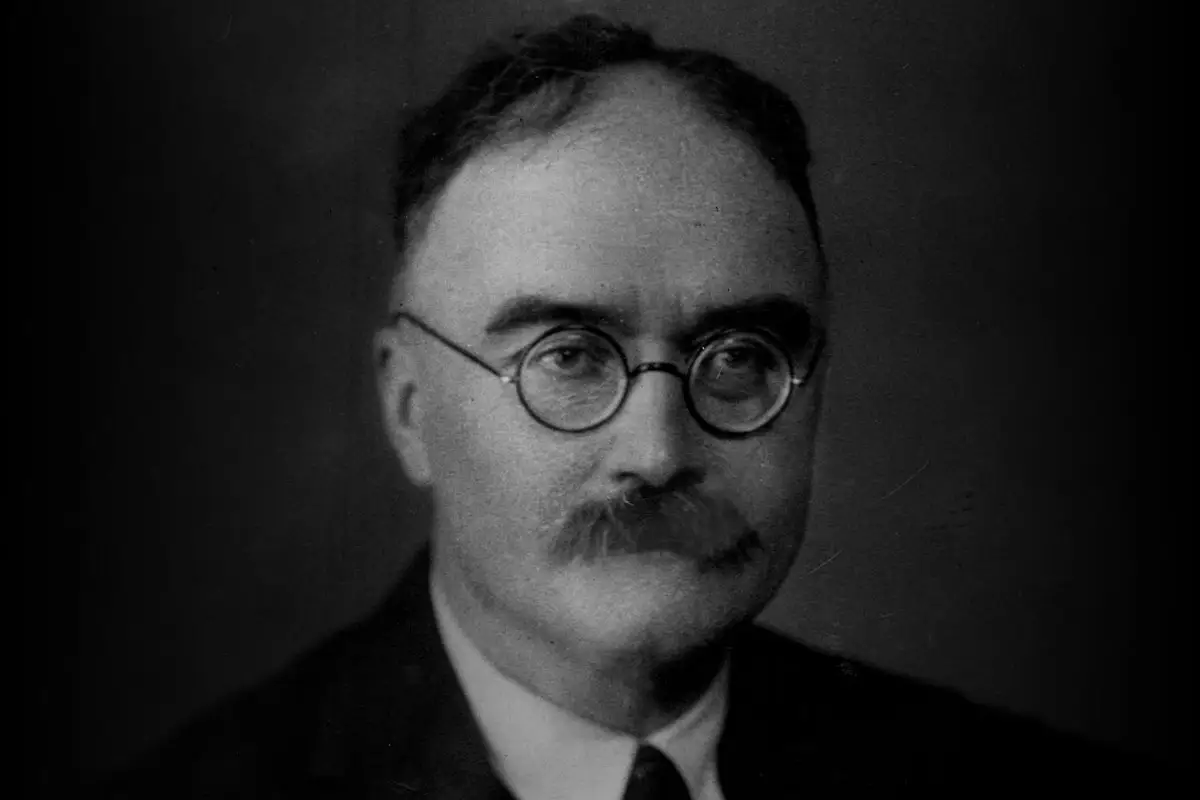
The term "collective memory" (original, memoire collective) was coined by the French philosopher and sociologist Maurice Halbwachs. Halbwachs first discussed the term in his work Les Cadres sociaux de la memoire (1925) and in more depth in Mémoire Collective (1950), published posthumously by his sister.
Halbwachs, under the influence of his teacher Emile Durkheim, studied memory as a social phenomenon. Halbwachs focus was on the way identities (individual, collective, or social) shape and are shaped by memories of the past. The idea is that an individual or a group can shape the past through the memories they select to preserve, but also that the identity of the individual or the group can change if a memory is altered.
Collective and Individual Memory
In a beautiful segment, Halbwachs explains how even in our personal memory we are never alone:
"In reality, we are never alone. Other men need not be physically present, since we always carry with us and in us a number of distinct persons. I arrive for the first time in London and take walks with different companions. An architect directs my attention to the character and arrangement of city buildings. A historian tells me why a certain street, house, or other spot is historically noteworthy...
Even if I were unaccompanied, I need only have read their varying descriptions of the city, been given advice on what aspects to see, or merely studied a map." (Halbwachs 1980, 23-4)
So what is the relationship between individual and collective memory? Collective memory is made of individual memories. But also the individual memory is collective.
"The collective memory, for its part, encompasses the individual
memories while remaining distinct from them. It evolves according
to its own laws, and any individual remembrances that may penetrate
are transformed within a totality having no personal consciousness." Halbwachs 1980, 51
As individuals, we all belong to multiple groups sharing common memories; the family, the neighborhood, the school, the university, work, a political party, a country, and an ethnic group. Our participation in these groups shapes our identity, but we also influence these groups. Like a mosaic, change enough pieces and you have a different image.
If you think about it, the politics of memory are everywhere. We spend a good bunch of our early years at school, which, among others, is tasked with passing down a society's key memories, or rather, the must-know things you need to know in order to become a member of society.
History vs. Collective Memory
Halbwachs distinguishes between history and collective memory. History is, for him, what follows the end of memory. For example, Holocaust survivors formed communities of remembrance, but as years passed and their communities began to fade away, historians jumped in to keep the memory alive. Thus, collective memory is a first, direct interaction with the past, while history is a second one, an interaction that follows memory. For Halbwachs, memory was alive, changing, debatable, while history was distant and rigid.
Today, however, the trend among academics is to perceive history as a form of collective memory that can also shape and interact with the past.
Pierre Nora and the "Lieux de Mémoire" (Sites of Memory)
As Halbwachs' work was rediscovered after WWII, in the 1970' the French historian Pierre Nora claimed that as societies modernized, "spontaneous memory" was disappearing, replaced by what he termed as Lieux de Mémoire (Sites of Memory).
What is a Site of Memory? It can be a physical place (a monument), a symbol (a flag), or an event (a national holiday).
Nora's Sites of Memory aim to keep the past alive, but they are not memory. Instead they are fragments of memory surviving within the realm of history.
Read the full guide: Pierre Nora and the Lieux de Mémoire.
Cultural Memory
Why do some memories last 80 years while others last 3,000? Egyptologists Jan and Aleida Assmann saw two distinct forms of collective memory:
- Communicative Memory: Short-term, based on everyday communication, shared through speech (usually lasting 3 generations or 80–100 years). For the Assmanns this was the memory Halbwachs talked about.
- Cultural Memory: Long-term, high-culture memories stored in texts, myths, and monuments (lasting millennia). Examples of cultural memory include texts (e.g. the Bible), rituals (e.g. national holidays), symbols (e.g. the cross), and monuments (e.g. the pyramids).
Read the full guide: Jan Assmann and Cultural Memory.
Canon and Archive
Here useful is also the distinction between the cultural canon and archive. For Aleida Assmann memory is the result of forgetting and remembering. Each has an active and a passive side.
| Function | Nature | Definition |
| Active Forgetting | Intentional Erasure | The purposeful destruction, erasure, or suppression of material culture and/or memories. |
| Passive Forgetting | Natural Decay | The non-intentional loss, abandonment, or falling out of use of objects. |
| Active Remembering | The Canon | Preserving the past as the present by giving items a sanctified, high-value status. Museum galleries, sacred texts, classic art, and monuments. Defined by strict selection, immense value, and long duration. |
| Passive Remembering | The Archive | Preserving the past as the past through intermediary storage and latency. Museum storerooms, academic records, and historical files. Items wait here and can be reactivated in the future. |
Read the full guide: Canon and Archive: Aleida Assmann's Cultural Memory Theory
Nation and Memory: The Architects of National Identity
The intersection of Nationalism and Collective Memory is important as nations are the groups where powerful, emotional, national identities form. There are a few theories that you need to know answering whether a nation is "invented," "imagined," or "(re)discovered".
| Theorist | Core Concept | Nature of the Nation |
| Benedict Anderson | Imagined Communities | Modern & Constructed: Real communities built on the imaginary image of "horizontal comradeship". |
| Eric Hobsbawm | Invention of Tradition | Modern & Fabricated: "Ancient" traditions are invented by the elites to respond to modern situations and create a sense of historical depth. |
| Anthony D. Smith | Ethnosymbolism | Rediscovered: Nations aren't "invented" from nothing; they are built on older foundations. Myths and symbols play a key role in the formation of the nation. |
1. Benedict Anderson: The "Imagined Community"
For Anderson, the nation is an Imagined Community. It is socially constructed as it only exists in the minds of the individuals who never get to meet their fellows.
For Anderson the Nation is a social construct that rose with Print Capitalism in the Modern Era.
Print Capitalism appeared when new print media, e.g. the newspaper, began circulating in the vernacular (instead of Latin).
Anderson argues that reading the daily newspaper acts as a "simultaneous ceremony."
Read the full guide: Benedict Anderson's Imagined Communities.
2. Eric Hobsbawm: The "Invention of Tradition"
Eric Hobsbawm also saw the nation as a modern construct arguing that nations required Inventing Traditions that looked old in order to gain legitimization.
For Hobsbawm, various invented traditions (national anthem, flag, etc) were imposed by elites in the 19th and 20th centuries.
Read the guide: Eric Hobsbawm and the Invention of Tradition.
3. Anthony D. Smith: Ethnosymbolism
Smith disagreed with modernists like Anderson and Hobsbawm. His ethnosymbolism emphasized the importance of pre-existing myths and symbols into the formation of a nation. His approach was more of a corrective to modernism, rather than a new movement.
Smith claimed that nations formed based on the assimilation of "ethnie"; pre-existing (and often pre-modern) ethnic cores (ethnie) with shared myths, memories, and symbols.
Read the guide: Anthony D. Smith and Ethnosymbolism.
Also: John A. rmstrong's mythomoteur influenced Smith's work.
Collective Unconscious vs. Collective Memory
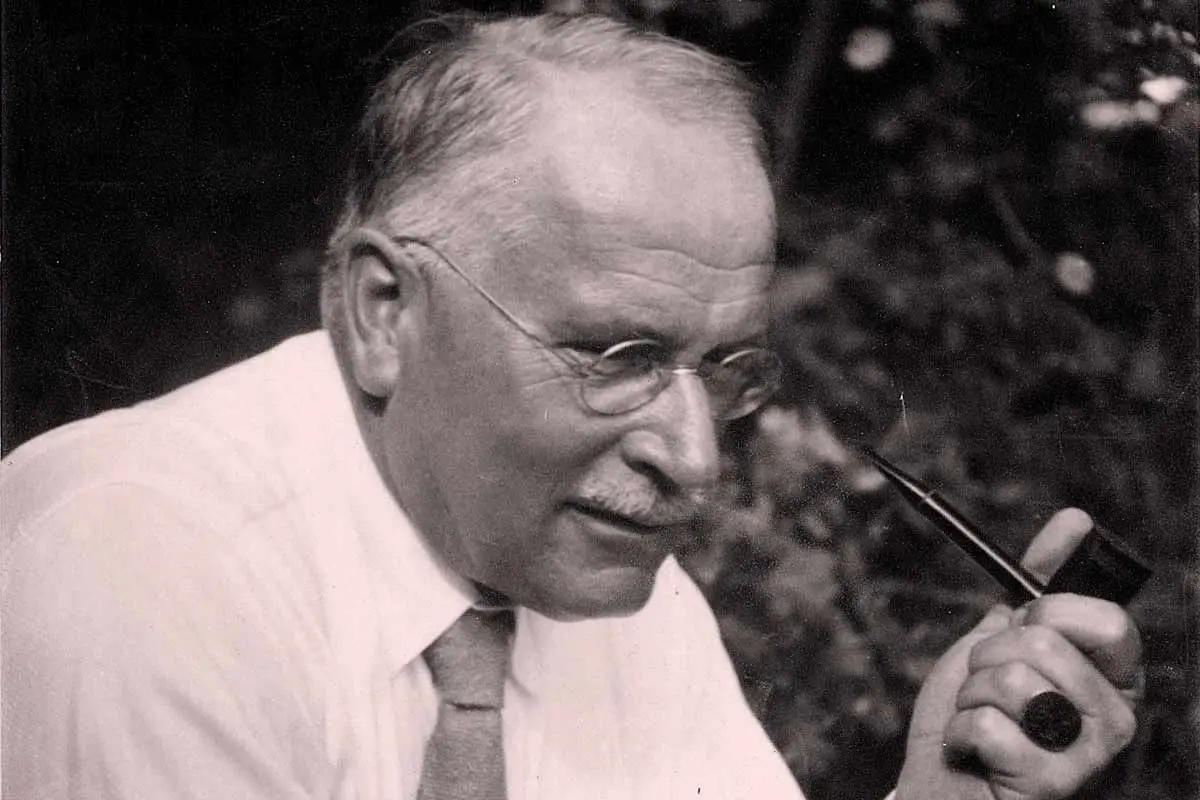
A common misconception is that Carl Jung's collective unconscious is the same as collective memory, but that's not the case. Jung's theory posits that there is a common unconscious shared by all humans that we can all access and binds us all together in a mystical way. However, Halbwachs' collective memory is not something that we are born with, it is something we learn, something we shape, something that can be lost. If a society chooses to forget something, it can be forgotten.
Also read: Herodotus' understanding of memory or Freud's uncanny.
Bibliography
- Olick Jeffrey and Joyce Robbins. 1998. ‘Social Memory Studies: From 'Collective Memory' to the Historical Sociology of Mnemonic Practices’. Annual Review of Sociology 24: 105–40.
- Halbwachs, Maurice. 1980. Collective Memory. translated by Francis Ditter and Vida Yazdi Ditter
- Jung, Carl. 1916. The Structure of the Unconscious.
Also read: heritage is more than monuments and ancient ruins.