Heterochronies Explained: Foucault on Spaces That Break With Time
Michel Foucault's theory of heterochronies: spaces that break with traditional time, from eternal museums to fleeting festivals and modern digital feeds.
Key Takeaways
- A heterochrony is a physical space that triggers a break with ordinary, linear time.
- Foucault contrasted spaces of indefinite accumulation (museums, libraries) with spaces of fleeting, flowing transition (fairs, carnivals).
- Modern digital feeds, theme parks, and wellness retreats function as modern heterochronies that attempt to freeze, accelerate, or escape time.
In his influential 1967 lecture Of Other Spaces (Des Espaces Autres), French philosopher Michel Foucault introduced the concept of heterotopias. According to Foucault, modernity tends to create spaces that function like worlds within worlds. These spaces simultaneously reflect, contest, and invert their surroundings, acting like "inverted utopias".
Foucault argued that in a heterotopia time is no longer experienced the same. Different kinds of heterotopias offer different experiences of time. Foucault terms these temporal experiences, for the sake of symmetry as he writes, heterochronies (hétérochronies).
What Is a Heterochrony? The Rupture With Real Time
Just like heterotopia derives from the Greek heteros (other, different) and topos (place), heterochrony derives from heteros and chronos (time).
Here is the passage where Foucault describes the concept of heterochrony:
Heterotopias are most often linked to slices in time—which is to say that they open onto what might be termed, for the sake of symmetry, heterochronies. The heterotopia begins to function at full capacity when men arrive at a sort of absolute break with their traditional time.
The Types of Heterochronies
Foucault argued that modern Western civilization produces two symmetrical yet opposite variations of heterochrony:
1. Spaces that perpetually accumulate time
2. Spaces where time is treated as constantly flowing
3. A hybrid version that combines both, which I will discuss below.
Let's look at them one by one.
1. Heterochronies That Accumulate Time
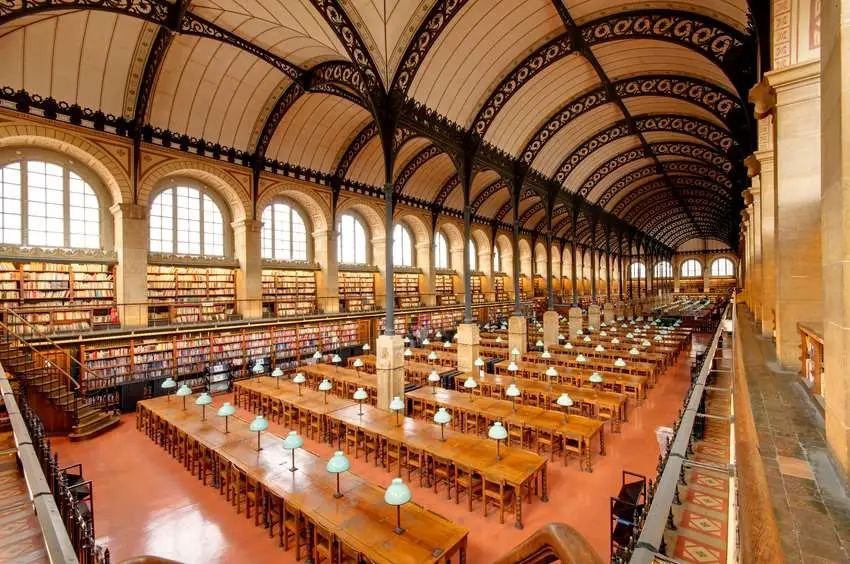
The first kind of heterochrony is described as "indefinitely accumulating time." This may seem like an abstract concept, but it is really not so.
The two most notable examples of this category are the modern museum (which I discussed in depth recently) and the library.
These institutions are guided by an imperative to collect virtually everything. They seek to accumulate everything. The endgame is to create an archive containing "all times, all epochs, all forms, all tastes."
By accumulating these, the museum and the library become spaces that exist outside of time.
Think of the way a history museum structures its exhibition chronologically, attempting to leave no gaps in its narrative, or how a science museum may seek to represent all species that once lived near a prehistoric lake.
2. Heterochronies of the Transitory and Fleeting (Time That Evaporates)
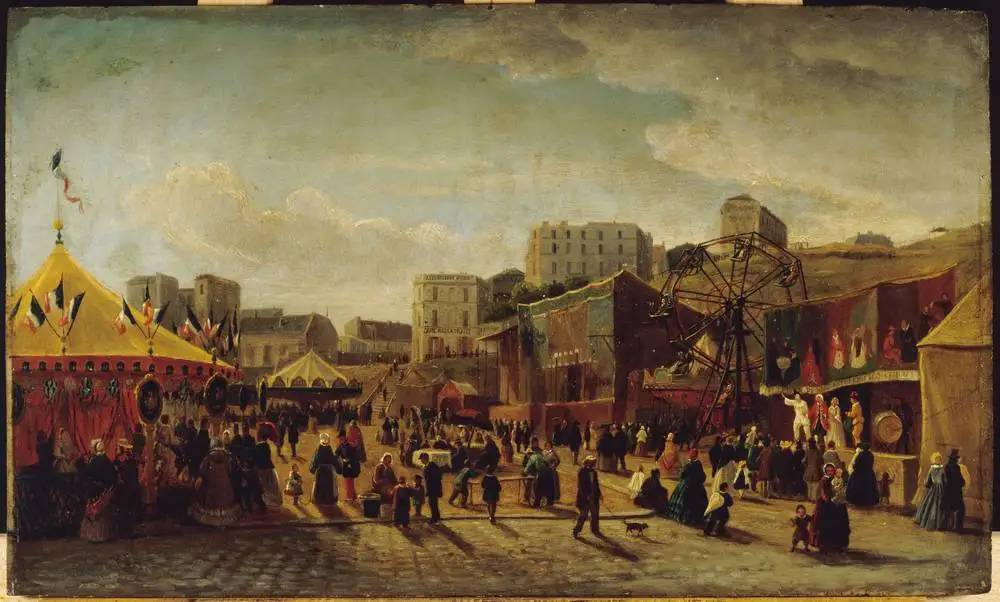
Standing at the exact opposite extreme are spaces linked to time "in its most flowing, transitory, precarious aspect". Such spaces are festivals and fairgrounds.
Unlike the museum which aspires to stand outside of time and offer an experience of eternity, festivals offer purely temporal experiences.
The idea is that a festival offers structures that are meant to appear and disappear. The musicians and the multiple vendors participating in a festival are there only for a certain period. The festival comes and goes with the passage of time and offers a cyclical experience of time, as the event goes and returns each year.
3. The Polynesian Vacation Village: Foucault’s Paradoxical Hybrid
Foucault identifies a third kind of heterotopia offering a new kind of heterochrony: the Polynesian holiday village. His example is very specific, but you will see that it describes a wider tendency of our time.
In the Polynesian holiday village, says Foucault, the residents of the city get to live, for a limited time only, an eternal/primitive experience. Tourists get to live in primitive-looking, yet newly-constructed, straw huts.
Like the museum, the Polynesian village offers an ahistorical experience. Swimming naked in the ocean, feeling like living in a prehistoric time, is different from life in the city. Guests feel like they occupy a space where time flows slower, where historical time is experienced at the same time in the present and is abolished.
However, at the same time, the experience is a commercial and transitory one. The "experience" is booked ahead of time and will last a limited time. The "experience" is paid for. In that sense, it is at the same time eternal and temporal.
If you think about it, as the 21st century progresses, these kinds of experiences are becoming more and more prevalent. It's not a coincidence that the tourist sector is oriented towards offering experiences (think of theme parks, performances, etc).
It is now possible to purchase "immersive experiences" that allow you to spend a few days in a classical or medieval-themed hotel and simulate the way people would have lived in times past.
Cemeteries as Frozen Time
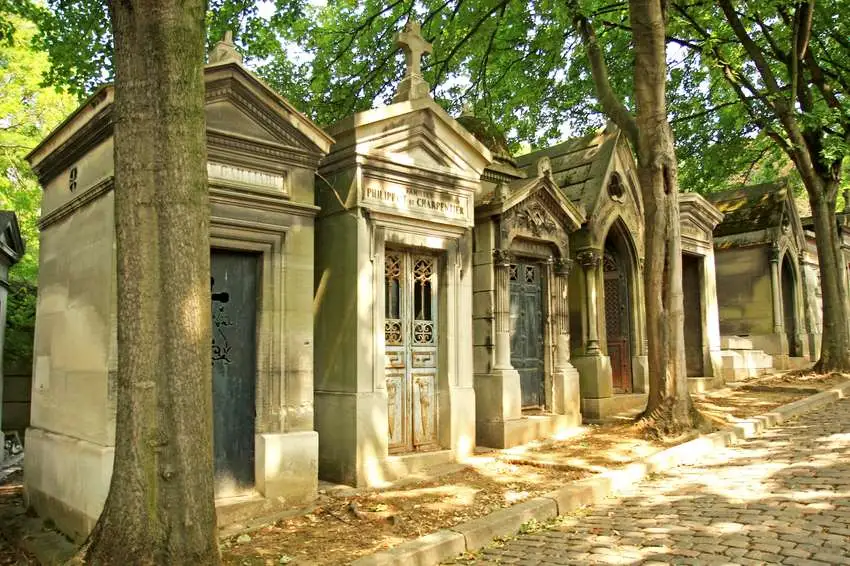
According to Foucault, the cemetery remains the most universal heterochrony in human culture: a threshold where linear, biographical time ceases, and the individual enters a quasi-eternal state of physical decay and commemoration.
In a similar vein, classical ruins and abandoned modern architecture (such as post-industrial factories or classical architectural landscapes) serve as physical monuments where the forward march of time has abruptly stalled.
| Heterochrony Type | Core Temporal Mechanism | Classic Foucault Example | Contemporary 21st-Century Counterpart |
| Accumulative | Stores, categorizes, and preserves all epochs forever | Universal Museums & National Libraries | Digital Cloud Archives, Wikipedia, Wayback Machine |
| Transitory / Fleeting | Suspends normal rules for an ephemeral window, then vanishes | Fairs, Carnivals, Circus Encampments | Music Festivals (Glastonbury, Burning Man), Pop-up Venues |
| Abolitionist / Hybrid | Simulates the complete erasure of history within scheduled leisure | Polynesian Vacation Village (Club Med) | Wellness / Digital Detox Retreats, Immersive VR Environments |
Beyond Foucault, the Heterochrony of Ruins
I recently read Dimitris Plantzos' Athens Demapped: Archaeology, Heritage, and Urban Transformation. Plantzos, Professor of Classical Archaeology at the University of Athens, approaches Foucault from an interesting perspective.
In Plantzos' book, heterochrony is used to describe the way European travellers and architects re-imagined Athens in the 18th and 19th centuries. Athens was a heterochrony where "time was indefinitely piling upon itself, in view of the classical ruins dotting the landscapes of Attica" (Plantzos 2025, 48).
Two decades ago, Marc Augé (who introduced the term of the non-place) wrote about the temporality of the ruin and the aesthetic of the ruinesque:
“The contemplation of ruins allows us to catch a fleeting glimpse of the existence of a time that is not the time spoken of in history books, nor that which restorations attempt to resurrect. It is a pure time, to which no date can be assigned; one that is not present in our world of images, simulacra, and reconstructions; one that finds no place in our violent world—a world whose rubble, lacking time, can no longer manage to become ruins. It is a lost time whose recovery belongs to art.” (Augé 2003, 8)
The Digital Feed and the 'Eternal Present'
What about social media? Aren't our feeds subject to similar principles? As you scroll, you encounter a post that was just uploaded, an image from 2012, a video of Winston Churchill, and a quote by Socrates.
In social media, time collapses. The past and the future collapse onto the present where everything exists as constantly flowing, as scrolling never stops, and eternal, as the digital archive is always there.
At the same time, just like Foucault saw the Polynesian time as a hybrid heterochrony that is both temporal and timeless, we can observe more and more such cases. In the 21st century, with the advent of technology and the ever-growing beast that is the modern city, the need to escape to a space where time is slow, even frozen, becomes increasingly necessary and even expected. Think of wellness retreats, video games, theme parks, and so on.
Unlike social media that virtually present themselves as outside of time but in a sense speed it up, these spaces slow down the passage of time. They are oases that allow the stressed and depressed modern human occupying the fast-paced environment that is the city to escape their present, breathe, and return to it. In a sense, these spaces are as Foucault wrote, at the same time facilitating the status quo and undermining it by showing the inverted glimpse of a different world that remains possible even if it appears out of reach for now.
Bibliography
- Augé, M. (2003). El tiempo en ruinas (Le Temps en ruines). Gedisa Editorial. [PDF via Monoskop]
- Foucault, M. (1984). Of Other Spaces. Diacritics, 16(1), 22–27. (Based on Foucault's original speech from 1967). https://doi.org/10.2307/464648
- Johnson, P. (2006). Unravelling Foucault's 'different spaces'. History of the Human Sciences, 19(4), 75–90.
- Plantzos, D. (2025). Athens Demapped: Archaeology, Heritage, and Urban Transformation. Imprensa da Universidade de Coimbra / Coimbra University Press. https://doi.org/10.14195/978-989-26-2771-7
- Rosa, H. (2013). Social Acceleration: A New Theory of Modernity. Columbia University Press.