Hellas as Heterotopia: Foucault, Freud, and the Power of Classical Ruins
For Western travelers, classical ruins have often felt like a "return home". Why? This take applying Foucalt's theory of heterotopia on classical ruins may hold the answer.
Key Takeaways
- Artemis Leontis has described Hellas as a heterotopia where classical ruins serve as a material, yet imagined, place of origin for Western society.
- Visitors like Freud experienced strange feelings upon visiting sites like the Acropolis.
- This heterotopia disciplines local populations by continuously measuring them against the idealized image of the ancestors.
Michel Foucault famously described heterotopias as real sites that mirror and unsettle the society around them. While we often look at prisons or cemeteries as examples, there is a more complex, cultural heterotopia that has shaped Western identity for centuries: Hellas. This is a place made of the West's conceptualization of Ancient Greece and of the material remain of the ancient civilization.
What Is a Heterotopia?
Heterotopias are real places that act like counter-spaces within a culture. French philosopher Michel Foucault defined it as:
"a kind of effectively enacted utopia in which the real sites, all the other real sites that can be found within the culture, are simultaneously represented, contested, and inverted" (Foucault 1984)
Foucault provides multiple examples which I have analyzed in my previous article about Foucault's understanding of heterotopia.
In this article, I will discuss an interesting case study that relates to classical antiquity, that is Hellas as a heterotopia.
Hellas as Heterotopia
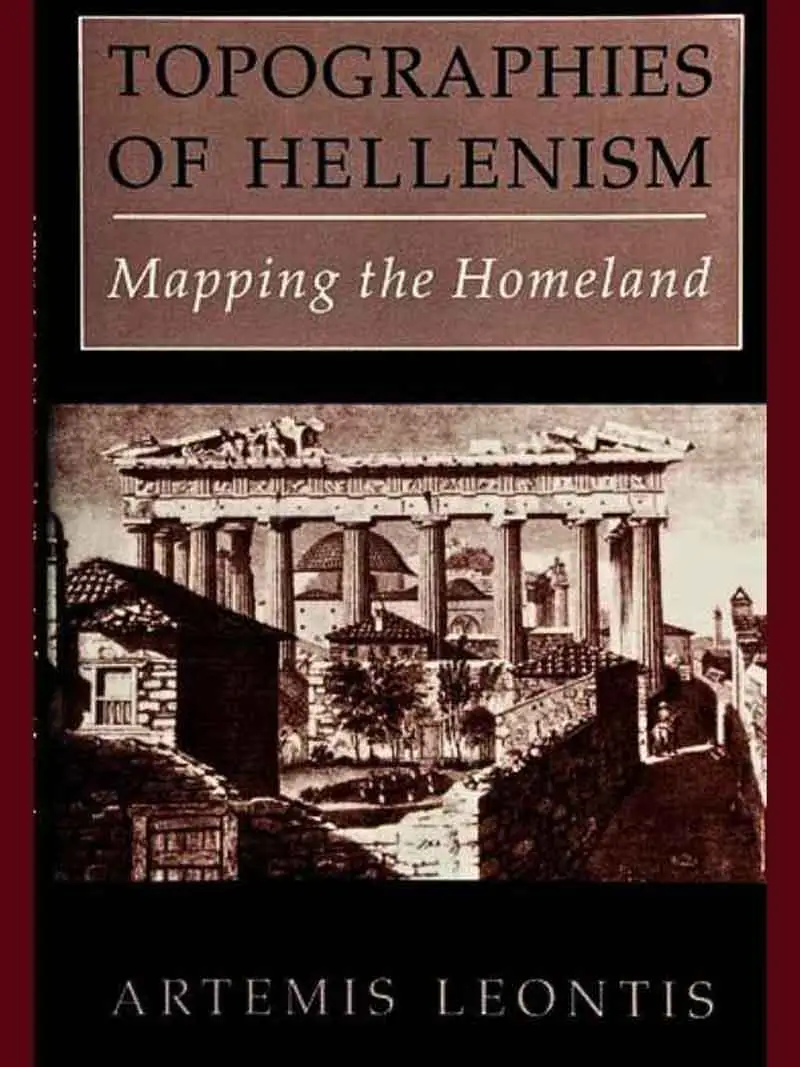
In Topographies of Hellenism, Artemis Leontis (1995, 40-66) identifies a site "that lies outside powerful Western states but that nonetheless appears as a place of origin within Western societies' collective imaginings."
That site is none other than Hellas, a topos (space) made of various sites containing ruins from classical antiquity. These are the sites that European travellers such as the famous British poet Lord Byron sought to visit.
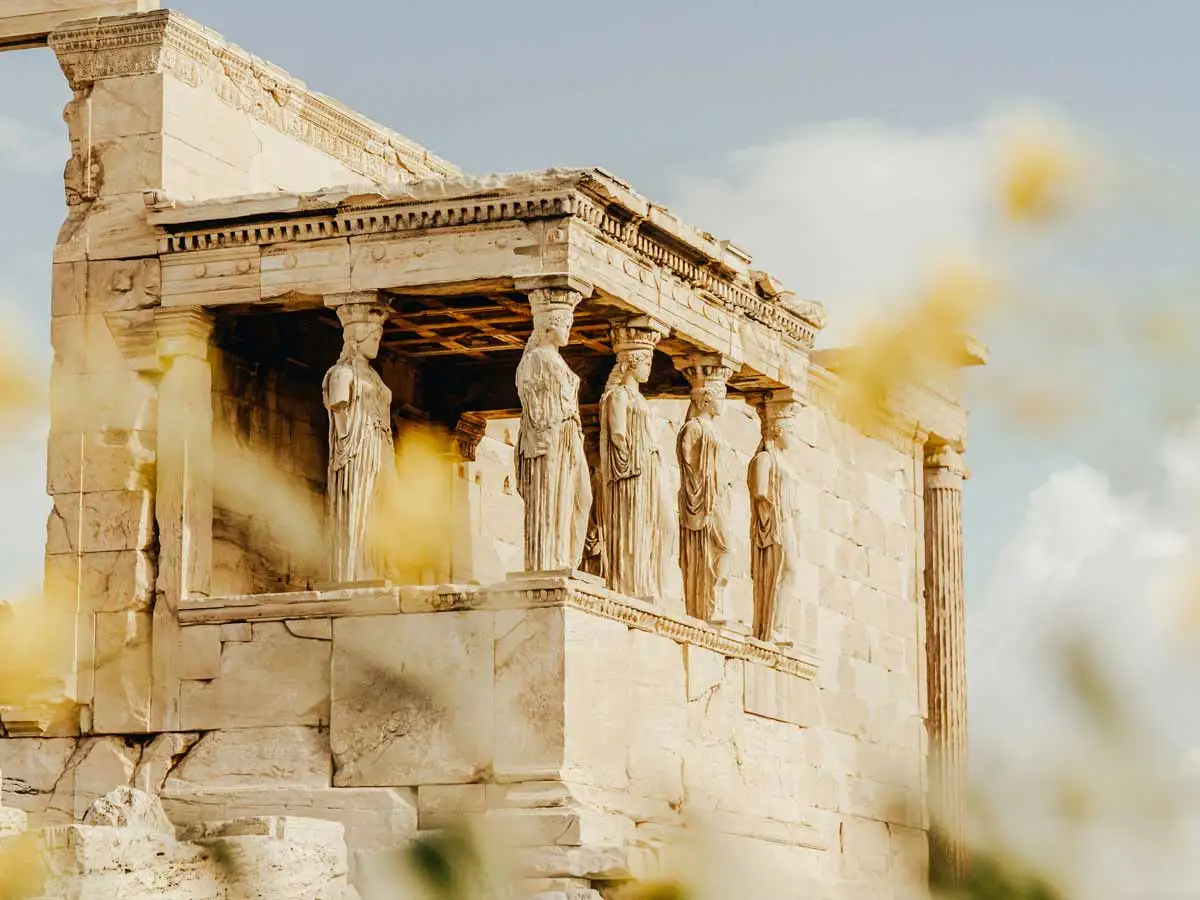
Think of the Parthenon, the ruins of the Athenian Agora, or the temple of Poseidon at Sounion. These are the sites of memory where ancient Greece felt alive to European travelers of the past centuries. The spaces that constitute what Leontis terms as Hellas, an imaginary space holding memories and ideas linked to a modern understanding of classical antiquity.
The Importance of Hellas
Leontis believes that Hellas, as a space, is important for both the West, as its place of origin, and for various national traditions, notably the Greek.
"Hellas itself is a heterotopia, a space set apart precisely because it
contains classical ruins. Of individual sites of ruin in Greece, the Acropolis is the most frequented and the most formidable-the one in which all meet their measure of sacredness, harmony, beauty, and grandeur. (Leontis 1995, 44-5)
Renan and Freud Visiting the Parthenon
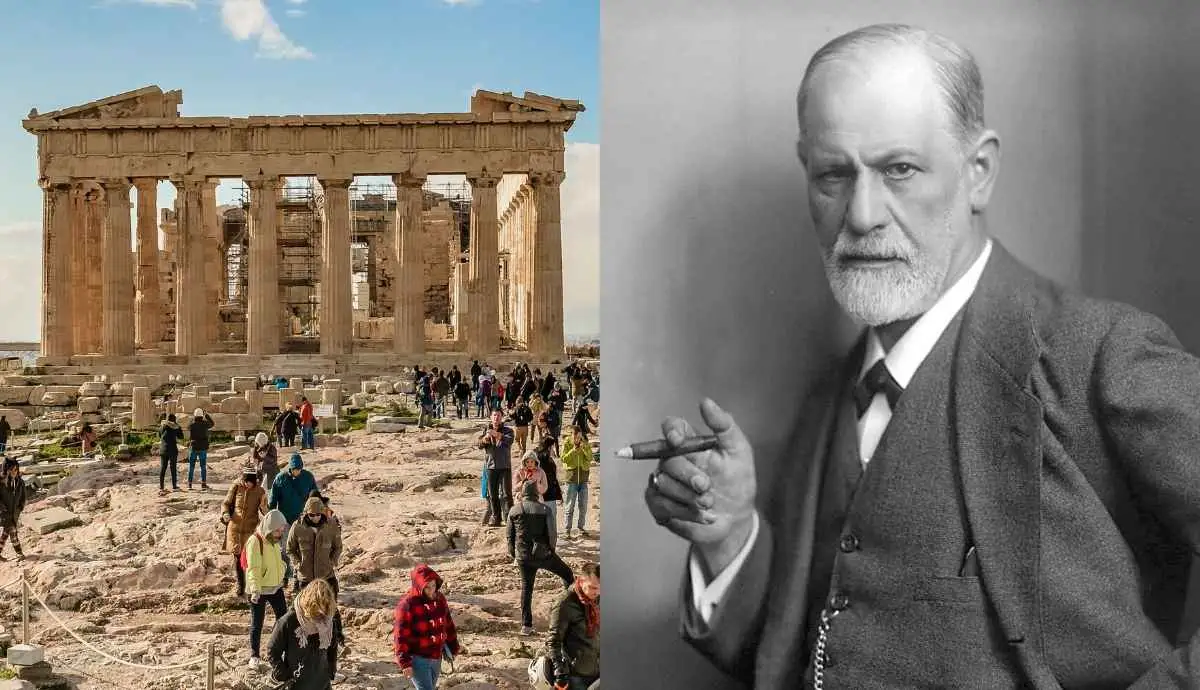
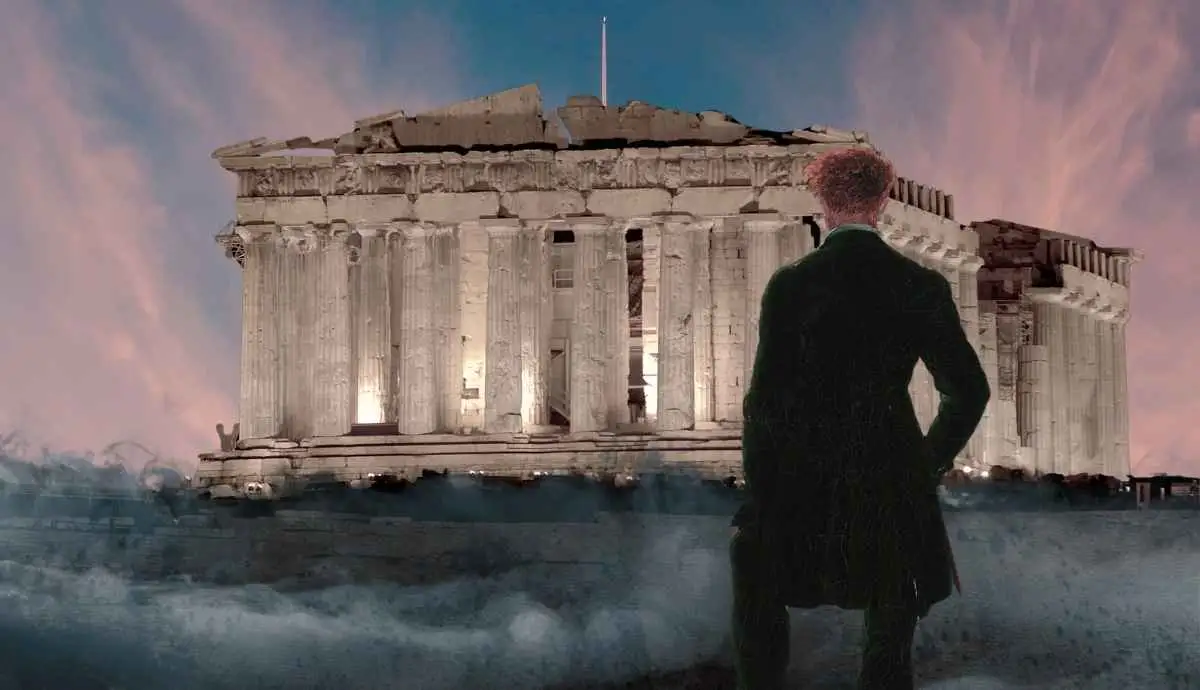
In Hellas' ruins, particularly the Parthenon, travelers in the 19th century felt strangely at home. The Parthenon felt like a return to one's roots and was a place able to deliver a religious response.
Such an example was one positivism's founders, Ernest Renan (1823-92), who visited the Parthenon in 1865:
"When I saw the Acropolis I accepted the revelation of the divine .... Then the entire world seemed barbarous to me." (as quoted in Leontis 1995, 51)
More interestingly Sigmund Freud's uncanny reaction when he visited the Parthenon in 1904 and experienced a feeling of 'derealization' in his short essay titled A Disturbance of Memory on the Acropolis (1936). Freud initially felt surprised that the Acropolis was real and proclaimed:
So all this really does exist, just as we learnt at school! (Freud 1950, 241)
Disciplinary Function
The heterotopia that is Hellas has also served to discipline local populations. The European travelers of the past centuries routinely compared the population of Athens to the Athenians of Pericles.
The modern Athenians were always deemed insufficient and eventually this sentiment became the property of the Athenians who sought to reenact antiquity and live up to the imagined image of those distant ancestors.
Also read: Necropolitics vs. Biopolitics: Mbembe's Reinterpretation of Foucault
and How Herodotus Invented the East vs. West Divide
Bibliography
- Foucault, M. (1984). Of Other Spaces. Diacritics, 16(1), 22–27. (Original work published 1984). https://doi.org/10.2307/464648
- Freud, S. (1950). A disturbance of memory on the Acropolis. In J. Strachey (Ed. & Trans.), The standard edition of the complete psychological works of Sigmund Freud (Vol. 22, pp. 237–248). The Hogarth Press and the Institute of Psycho-Analysis. (Original work published 1936).
- Johnson, P. (2006). Unravelling Foucault’s ‘different spaces.’ History of the Human Sciences, 19(4), 75–90. https://doi.org/10.1177/0952695106069669
- Leontis, A. (1995) Topographies of Hellenism: Mapping the Homeland. Cornell University Press.