What is a 'Non-Place'? Marc Augé's Anthropology of Supermodernity
According to French anthropologist Marc Augé our world tends to create non-places where humans become isolated.
Key definitions
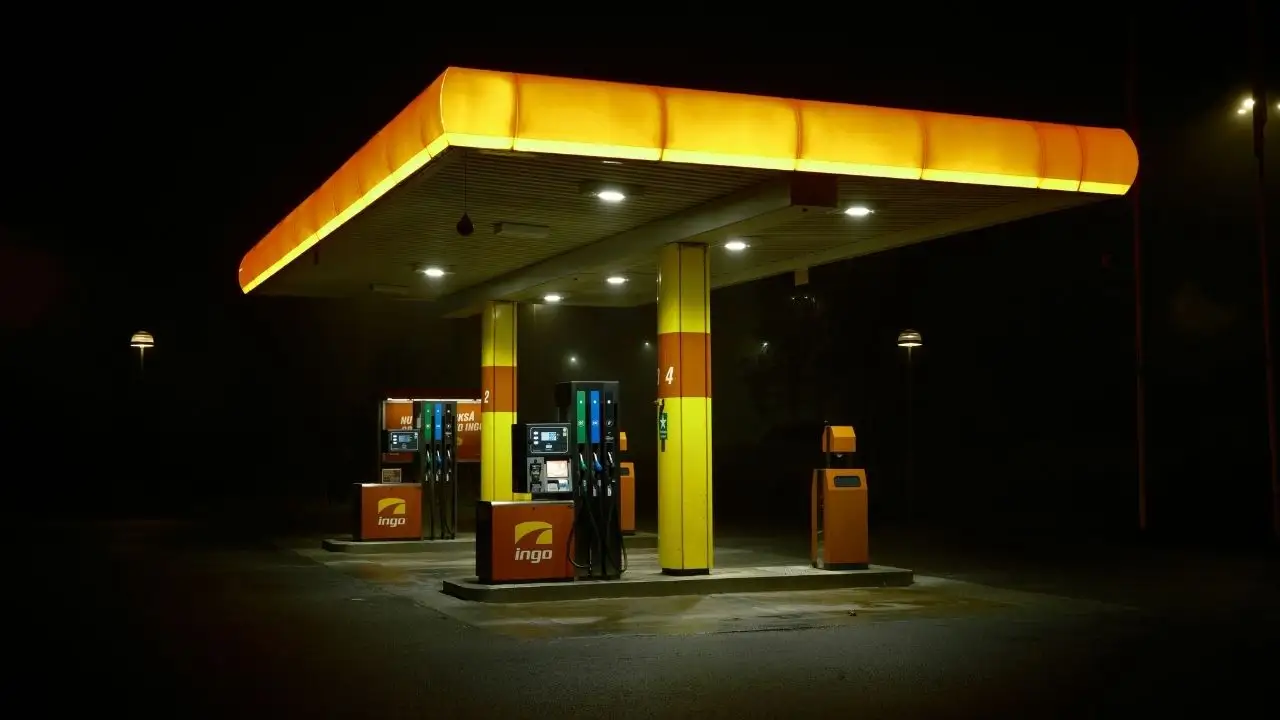
- Non-place: Anthropological empty spaces where humans are just passers-by. These are spaces of pure transience (gas stations, airports, etc) where collective identity dissolved and only the ever-moving modern individual remains.
- (Anthropological) Place: A space of connection where humans interact and shape collective identities.
- Supermodernity: A state of Late Capitalism marked by three excesses: a) of space through rapid travel, b) of time through the ever increasing pace of history, and c) of individualism.
In Non-places: Introduction to an Anthropology of Supermodernity (1995), the French anthropologist Marc Augé (1935-2023) introduced the term "supermodernity" to describe a stage of Late Capitalism defined by three excesses (of time, space, and Ego). Augé argued that Supermodernity produces non-places, spaces where humans exist solely as individual passengers who are not socially related (think of highways, train stations, airport lounges, etc).
In this article, we will unwrap Augé's theory and wonder about its place in a digital world.
What is Supermodernity?

Augé believes that we do not live in a postmodern world, a world beyond the modern one (post = after). For the French anthropologist we are currently in a world where modernity has intensified, the age of what he terms as "Supermodernity".
Supermodernity is defined by three excesses:
- Time: History feels like it's accelerating. What happened 10 years ago becomes part of history, so it's hard to see ourselves as parts of the present.
- Space: This is the direct result of world travel and communication. The world feels smaller and even its remotest areas are within our reach.
- Ego: Modern life imposes long hours of solitude (work in front of the computer, long commutes to work, etc). The individual, not the collective, is in the spotlight.
What are Non-Places?
"If a place can be defined as relational, historical and concerned with identity, then a space which cannot be defined as relational, or historical, or concerned with identity will be a non-place." (Augé 1995, 77-8)
From this quote, we get the essentials we need to understand Augé's theory. Non-places are the opposite of places. What is not a place is a non-place.
Anthropological Places
To understand what this means exactly, we need to clarify that with the term "place" Augé refers to anthropological place. This place is not a simple point in space, but a site that is symbolically charged; a space where social life unfolds.
Places have three characteristics. They are places of:
- identity
- relations
- history
Places are the polar opposites of non-places, though both terms never exist fully. Every non-place contains elements of social activity and every place contains elements of transition. The two interact with each other producing identities and relations.
Non-Place vs. Lieu de Mémoire
This anthropological place should not be confused with the site of memory (lieu de mémoire) which we also explored in a previous article. The site of memory, according to Pierre Nora is a site that has been stripped of its social function to become a pure symbol; a material manifestation of collective memory.
Augé proposes that Supermodernity takes places and turns them into two different things: 1. sites of memory and 2. non-places.
- Supermodernity seeks to organize and classify all available places and turn them into sites of memory (think of how a Medieval church turns into a museum or how a city's square once the social center of the city becomes a monument meant to be admired and "visited").
- Supermodernity produces non-places at scale.
Examples of Non-Places
Augé provides a vivid description of a world filled with non-places:
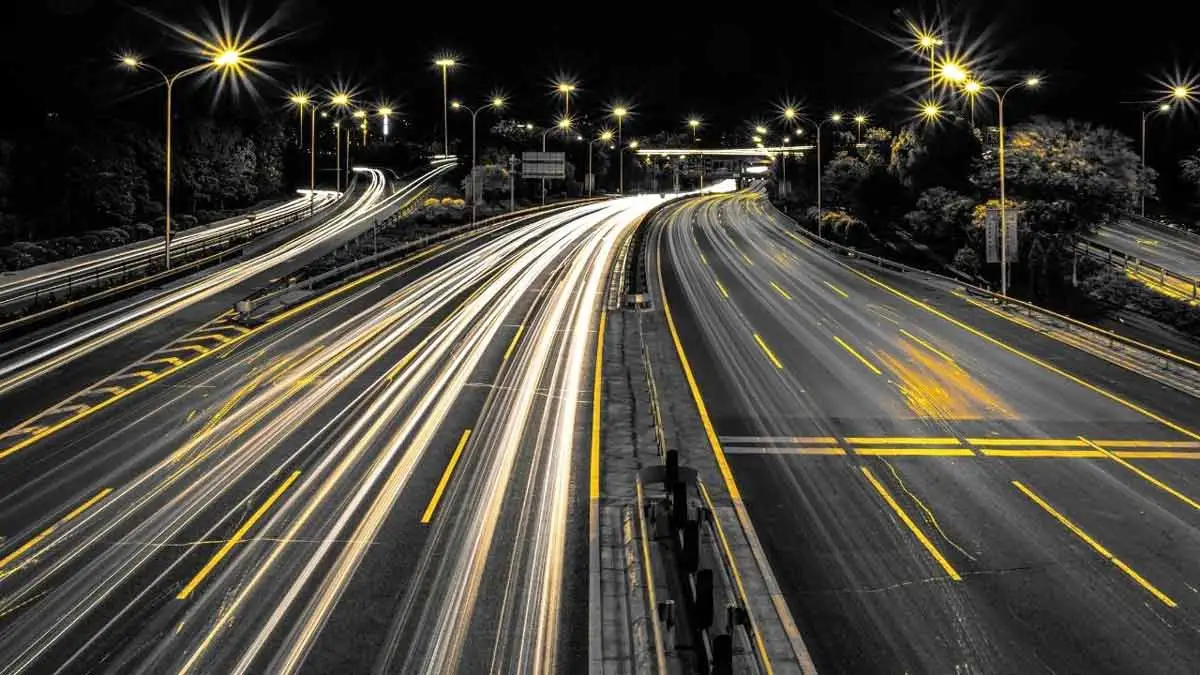
"A world where people are born in the clinic and die in hospital, where transit points and temporary abodes are proliferating under luxurious or inhuman conditions (hotel chains and squats, holiday clubs and refugee camps, shantytowns threatened with demolition or doomed to festering longevity); where a dense network of means of transport which are also inhabited spaces is developing; where the habitué of supermarkets, slot machines and credit cards communicates wordlessly, through gestures, with an abstract, unmediated commerce; a world thus surrendered to solitary individuality, to the fleeting, the temporary and ephemeral, offers the anthropologist (and others) a new object, whose unprecedented dimensions might usefully be measured before we start wondering to what sort of gaze it may be amenable." (78)
Conditions of the Non-Space
"The user of a non-place is in contractual relations with it (or with the powers that govern it). He is reminded, when necessary, that the contract exists. One element in this is the way non-place is to be used: the ticket he has bought, the card he will have to show to the tollbooth, even the trolley he will trundle around the supermarket are all more or less clear signs of it..." (101)
To enter a non-space a contract is always required. The individual agrees to obey certain rules (such as "no speeding" in highways) and relinquishes direct communication and relations with other humans (the "no speeding" rule is conveyed through signs).
Even though he enters a realm of perceived freedom from identity where the right to anonymity alongside other freedoms (such as freedom from taxes in a duty free airport zone), he can only obtain this after going through a controlled entrance system (such as the search and ID demonstration in airports).
"So the passenger accedes to his anonymity only when he has given proof of his identity; when he has countersigned (so to speak) the contract." (102)
Loneliness and the Joy of Identity Loss
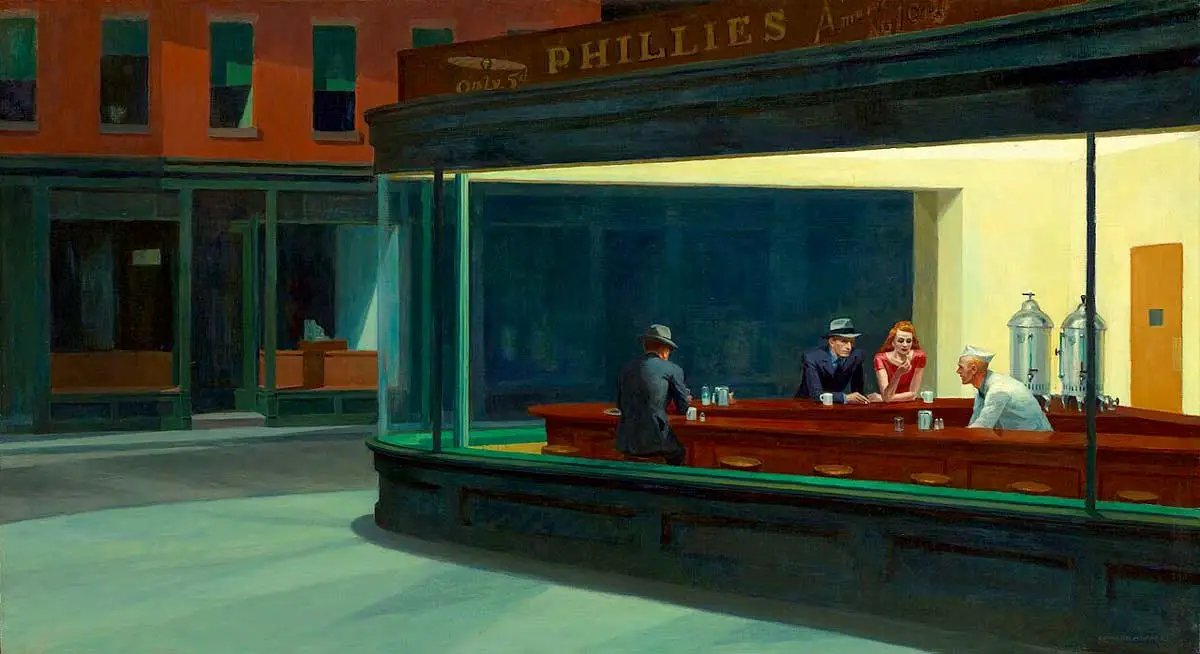
Inside non-spaces the individual gains distance from their own life. Anonymity and identity loss can offer a joy complemented by the more active joy that role playing can offer as in a space without identities, all identities become available.
"The space of non-place creates neither singular identity nor relations; only solitude, and similitude." (103)
History also disappears in non-spaces, as only the present exists in a space where everyone becomes a passenger.
Interesting is that Supermoderntiy pairs these non-spaces with spectacles. There is always something to see. Something that is exoticized and available.
Digital Non-Places & User-Generated Places

Augé's wrote back in the 90s and his work seems to be describing very well the ever-growing tendency of Late Capitalism to birth non-places. But what happens in the digital realm?
In a 2025 article, Wang et al. argued that, as the abundance of information has drastically increased in the past 30 years thanks to the worldwide web, non-spaces are ever expanding.
However, this is creating a paradox that Augé did not predict. Users of digital infrastructure in non-places create temporary places which can instill identity, relation, and history to the physical space.
The solitude imposed on the individual in non-spaces stimulates the desire to share personal status through social media. This, in turn, can lead to the activation of social processes in the physical space itself. Wang et al. argue that it's possible then for non-spaces to become spaces.
Someone may feel great after consuming a meal at a restaurant at St. Pancras Station, so they may take a photo and post it online. This behavior, in turn, may result in others, who see the social content, to visit the railway station with the intention of checking out the restaurant, rather than seeking out an alternative at a different location. Visitors may use photography in a celebratory and memory‐inducing way to maintain their relationship with the culture of this non‐place. (Wang et al 2025, 18)
Unintentionally, by taking photos, posting them, and leaving comments online, visitors create a relationship with the space and even document their experiences changing the physical space's dynamic.
In addition the infrastructure present in non-places (e.g. the shops in a train station) means that non-places are often more than simple waiting areas or passing spaces. People often treat this infrastructure as the destination and through their digital activity can create temporary places that alter the identity of a non-place.
However, there is also another way to look at things. The internet is itself a space, the digital space. Inside this grand digital space exist myriads of digital locations: websites, apps, and relational nodes of all sorts. We can argue that our digital activity can move toward the creation of both digital places and non-places.
For example, the forum was a favorite of early internet users. The forum was a place where a digital community could be built. The forum craze of the early internet days was largely replaced by social media. Algorithms now individualize our feeds, while fresh content is constantly pushed forward. What was said one year ago by a user on X is rarely relevant. In this way, we can talk about social media as a grand, digital non-place.
In the same way, news websites produce innumerable articles per second across the world. Opinion pieces are now of decreasing importance as getting the news out fast is more important than reflecting on what transpired. What happened 5 minutes ago is now part of history. This is furthering the feeling that history is accellerating and that the digital realm is that of passengers travelling from one virtual space to the next.
The commodification of the digital world is certainly to blame. There are of course other paths and attempts to create digital communities or digital spaces that facilitate actual human interaction and relations, but the great current of our time is the opposite way.
We should also note that digital infrastructure is now increasingly used to facilitate the creation of non-spaces; a world where human interaction is ever decreasing being treated as a problem that needs to be fixed. Our passages through toll booths, airport lounges, even restaurants are now mediated by apps and digital aids of all sorts that eliminate the need for human interaction.
Bibliography
- Augé, M. 1995. Non-Places: Introduction to an Anthropology of Supermodernity. London: Verso.
- Wang, W., Tewdwr-Jones, M., & Signorelli, V. 2025. Making Places: From Non-Place to User-Generated Space Through a Diversity of Media. Urban Planning, 10, Article 9063. https://doi.org/10.17645/up.9063.
Also read