The Roman Concept of Homo Sacer in Agamben's Biopolitics
Giorgio Agamben's concept of Homo Sacer and bare life, and how it connects to Foucault and Mbembe necropolitics.
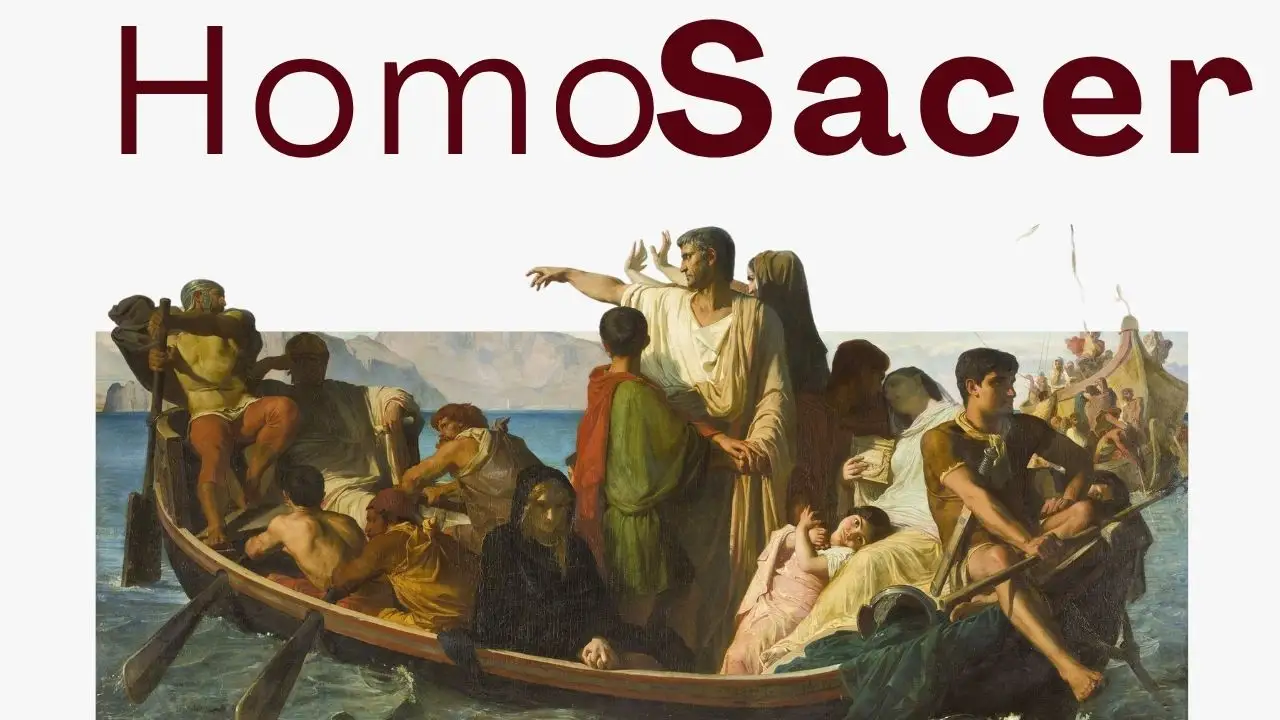
Key Takeaways
- A homo sacer in Roman law was an outcast reduced to "bare life". He was legally killable but could not be sacrificed.
- Sovereign power relies on the "state of exception," defining political inclusion by suspending rights and excluding others.
- Agamben and Mbembe expand Foucault's biopolitics, showing how states use this exclusion to create colonial "death-worlds."
In Homo Sacer: Sovereign Power and Bare Life (published in 1995, translated in 1998) Giorgio Agamben discusses an unseen form of power that is related to the one Michel Foucault described as biopolitical. Agamben claims that sovereign power is related to the state of exception (more on that in a bit) and traces back to the Latin term homo sacer, a form of exile whose subject was available to be killed but not sacrificed.
Atthe end of the article, I will discuss how Agamben's ideas relate to Foucault's biopolitics and Mbembe's necropolitics which we discussed in a previous blog.
Homo Sacer in Roman Law
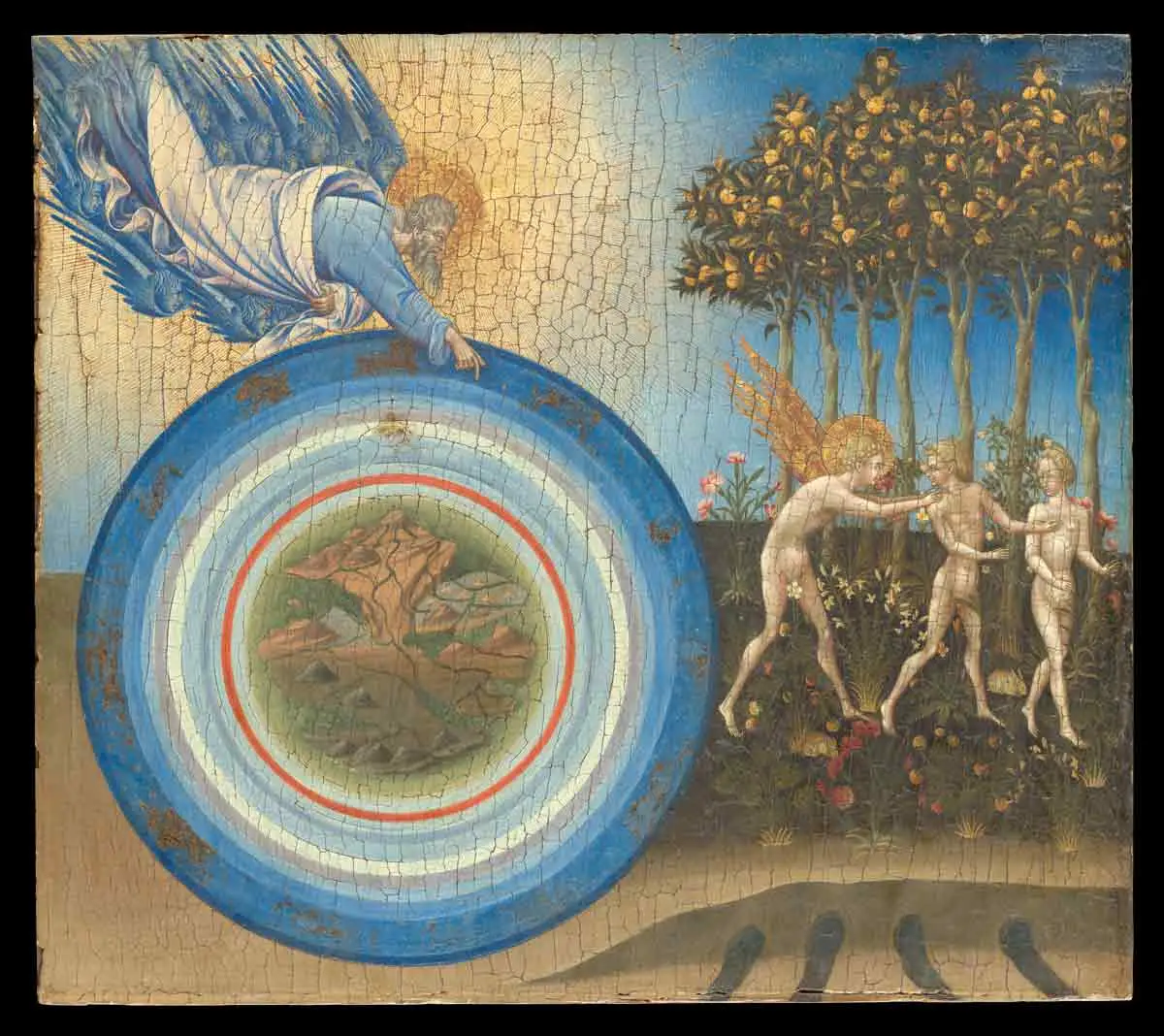
Homo sacer is Latin for "sacred man". A homo sacer was essentially an outcast; someone who had been excluded from both the laws of the city and the laws of the gods. All citizens could kill a homo sacer without being punished for homicide under one condition: the homo sacer could not be sacrificed.
The figure of the homo sacer is recorded in Pompeius Festus' (2nd century AD) On the Significance of Words:
The sacred man is the one whom the people have judged on account of a crime. It is not permitted to sacrifice this man, yet he who kills him will not be condemned for homicide; in the first tribunitian law, in fact, it is noted that “if someone kills the one who is sacred according to the plebiscite, it will not be considered homicide.” This is why it is customary for a bad or impure man to be called sacred.
So, a homo sacer is someone who has committed such acts, that he must be excluded from civil life. He is thought to exist outside human law (he is killable) and, in a strange way, as being already dead or purely within the domain of the gods, which is why he cannot be punished and is called "sacer" (sacred).
Homo sacer as divine punishment
Breaking an oath could lead to a homo sacer status. So, in a sense, the status of the homo sacer was closely related to the Roman religion and possibly reserved for crimes against the gods.
The oathbreaker had committed an offense by disrespecting the gods and for this reason, he cannot be sacrificed, because a sacrifice is meant to purify or return something to the gods. But in this case, the oathbreaker is the property of the gods guaranteeing the oath. So, a sacrifice does not make sense.
Killing the homo sacer meant serving as the hand of the god to enact divine punishment.
The difference between bios and zōē
In ancient Greek there were two terms for "life".
- bios: the form of living that is specific to a community or an individual.
- zōē: bare life, biological life.
To understand the difference, writing the history of one's life was called a biography, not a zoegraphy, because bios in this case refers to the way that someone lived.
With zōē we would refer to the act of being; a biological form of life.

Giorgio Agamben understood the difference between these two terms as the difference between political (bios) and biological (zōē) life and connected them to Aristotle's separation between life (zēn) and good life (eu zēn) which the Greek philosopher saw as the one producing the polis, through inclusion of the first (in this case, bare life) within the second (political life).
Homo sacer is a status that leaves humans naked of all social protections, they become bare life, pure zōē. The human is reduced to a sum of biological functions that can be terminated without moral or social consequences.
The state of exception
Central to Agamben's thesis is the concept of the "state of exception". He describes homo sacer as an inclusive exclusion because it's through his exclusion that the political community can exist.
"In Western politics, bare life has the peculiar privilege of being that whose exclusion founds the city of men."
Agamben borrows from Carl Schmitt, who argued that it is the state of exception that determines who is actually sovereign in a given state. In this sense, the sovereign power lies in the ability of an actor to suspend the law.
Biopolitics
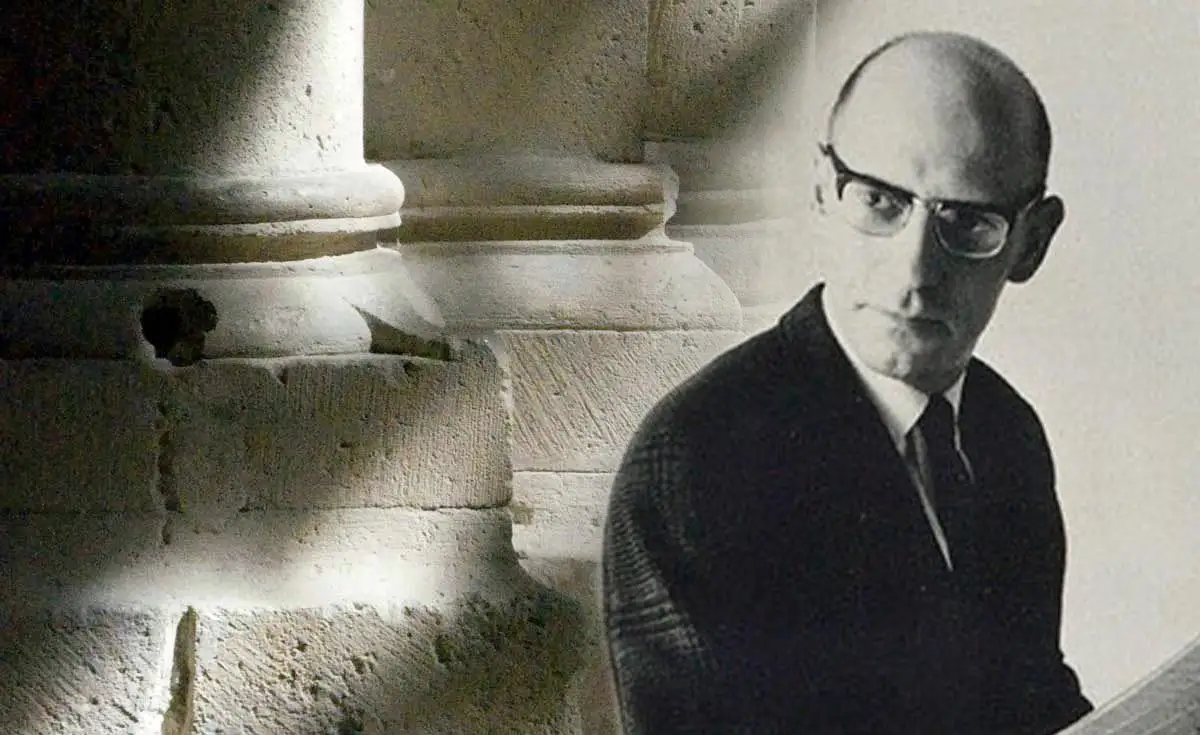
Agamben also draws from Foucault's biopolitics. Foucault argued that modernity introduced a new form of power next to the sovereign which he termed biopower. Biopower was a power that included bare life (zōē) within political life as something that the State could study, regulate, and control.
Agamben's position is essentially that Foucault was correct in identifying biopower as separate from the sovereign but wrong in claiming that it arose with the advent of Modernity.
For Agamben, the case of homo sacer is proof that "the production of a biopolitical body is the original activity of sovereign power...as old as the sovereign exception". Since ancient times, the state determined who could participate in political life by defining the political body through the exclusion of others.
To sum up Agamben's argument in his own words:
The Foucauldian thesis will then have to be corrected or, at least, completed, in the sense that what characterizes modern politics is not so much the inclusion of zoe in the polis—which is, in itself, absolutely ancient—nor simply the fact that life as such becomes a principal object of the projections and calculations of State power. Instead the decisive fact is that, together with the process by which the exception everywhere becomes the rule, the realm of bare life—which is originally situated at the margins of the political order—gradually begins to coincide with the political realm, and exclusion and inclusion, outside and inside, bios and zoe, right and fact, enter into a zone of irreducible indistinction. (Homo Sacer, 9)
Agamben lists multiple examples in his work, but Auschwitz certainly stands out as a space where the state of exception was used to separate the bios from the zoe.
The Politics of Death

In a previous article, I presented the essay Necropolitics of Achille Mbembe. Much like Agamben, Mbembe seeks to re-examine Foucault's biopolitics and take the theory a step further.
Looking at spaces like the colony or the concentration camp, Mbembe saw a different form of power: the necropower. Necropolitics is then the power to create death-worlds, "forms of social existence in which vast populations are subjected to conditions of life conferring upon them the status of living dead" (Mbembe 2003, 40).
Agamben and Mbembe seem to be describing the same condition through a different starting point. Agamben seeks to prove that the state of exception, which is also the basis for Mbembe's necropolitics, is just as ancient as power itself, at least in the Western tradition.
In subsequent works, Agamben further refined his theory on the state of exception and bare life, looking into cases such as the Third Reich (which he described as a pure form of exception itself), Guantanamo, and even Covid-19 (thought this last one has been heavily criticized and for very good reasons).
Mbembe is not so much concerned with its antiquity, but with the way it manifests itself and the technologies it has at its disposal. For Mbembe, modern necropolitics originated in the colony, and until continue to utilize colonial technologies in new settings to create deathworlds.
Bibliography
- Agamben, G. 1998. Homo Sacer: Sovereign Power and Bare Life. Translated by Daniel Heller-Roazen.
- MagShamhráin, R. 2022. 'The State of Exception between Schmitt and Agamben: On topographies of exceptionalism and the constitutionality of COVID quarantine measures (with examples from the Irish context)', Society, 60(1), pp. 93-105. https://doi.org/10.1007/s12115-022-00766-0
- Mbembe, A. 2003. 'Necropolitics'(L. Meintjes, Trans.). Public Culture, 15(1), 11–40. https://doi.org/10.1215/08992363-15-1-11