Gentrification in Ancient Syracuse and the Glorious Exploits of Ferdia Lennon
The unique language and impactful themes of "Glorious Exploits" by Ferdia Lennon; a story about beauty and art.

I recently read Glorious Exploits by Ferdia Lennon, a novel set shortly after the Athenian expedition at Sicily (415-413 BC). Lampo and Gelon, two Sicilian potters who have lost their jobs, decide to stage Euripides' Medea and Trojan Women using Athenian captives of war who are left to starve in the city's quarry. The interesting thing, besides the plot, is the language of the novel. Lennon uses the Irish vernacular to unexpectedly breathe new life into the period.
The novel's central theme, as I understood it, is the power of art, or rather storytelling, to bring beauty to a devastated world, even if for a brief moment.
Before I talk more about the novel, some historical facts are in order.
The Failed Athenian Expedition at Sicily
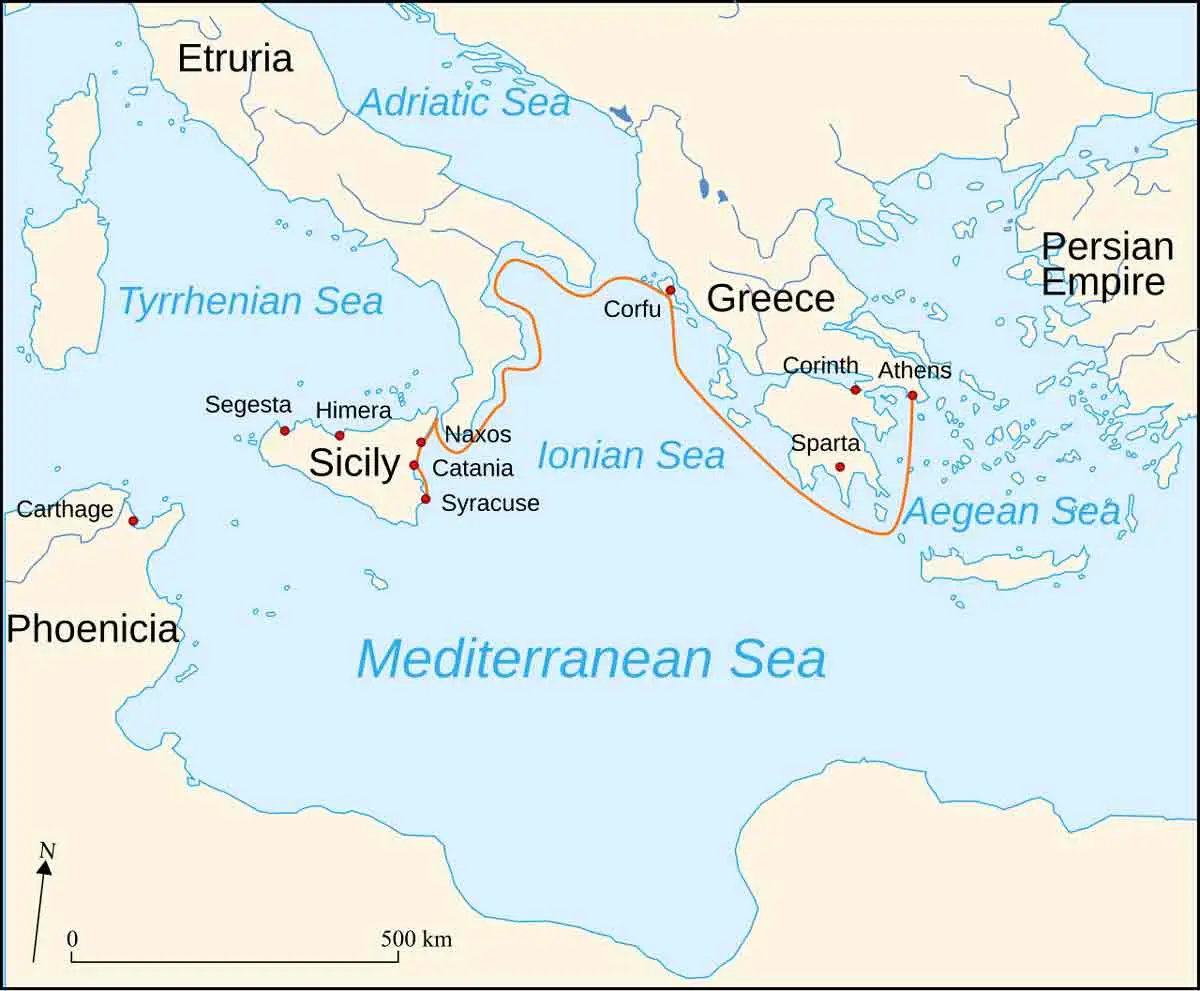
The book is set shortly after the disastrous Sicilian expedition (415-413 BC), a bloody episode in the almost 30-year long war between Athens and Sparta called the Peloponnesian War (431-404 BC). As I have discussed in a previous article, the causes of the war were more complex than the proponents of the Thucydides trap have argued.
By the end of the expedition, the Athenians would have lost 10,000 hoplites, a staggering 30,000 oarsmen, and the totality of their almost 200 triremes.
The Athenian generals, including Nicias, who opposed the expedition thinking it would lead to catastrophe, were executed.
Most prisoners were sold into slavery and a good number of Athenians were kept in the quarry of Syracuse which became a concentration camp.
Prisoners in the quarry were left to starve.
Syracuse would emerge as the major force of Sicily, and Athens would be fatally wounded. Even though the city kept fighting against Sparta for another 10 years, the Sicilian expedition was a catastrophe from which it never recovered.
The Passage from Plutarch's Life of Nicias That Inspired the Novel
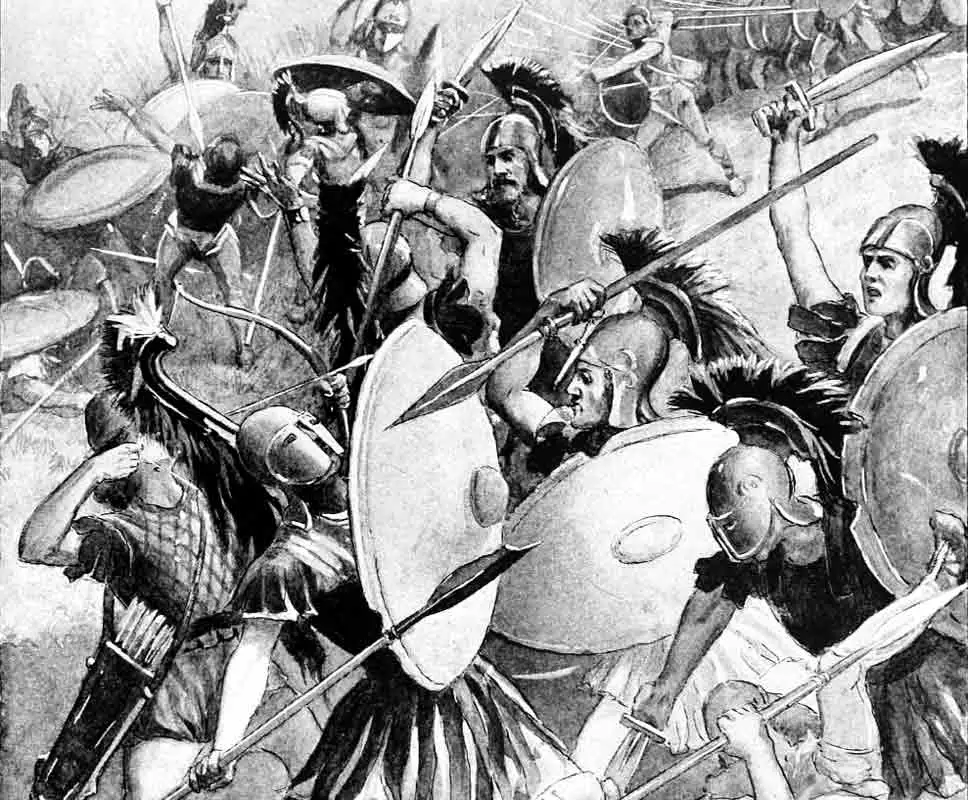
In the Life of Nicias, Plutarch tells the story of the prominent Athenian general Nicias who was executed in Syracuse after the Sicilian Expedition failed.
At some point he tells us that some Athenian captives were saved "for the sake of Euripides"; the prominent Athenian playwright who wrote about the dark and not-so-dark aspects of the human condition.
This passage, that I include below, served as the inspiration for Ferdia Lennon's novel.
Some also were saved for the sake of Euripides. For the Sicilians, it would seem, more than any other Hellenes outside the homeland, had a yearning fondness for his poetry. They were forever learning by heart the little specimens and morsels of it which visitors brought them from time to time, and imparting them to one another with fond delight.
In the present case, at any rate, they say that many Athenians who reached home in safety greeted Euripides with affectionate hearts, and recounted to him, some that they had been set free from slavery for rehearsing what they remembered of his works; and some that when they were roaming about after the final battle they had received food and drink for singing some of his choral hymns.
Plutarch, Life of Nicias, 29.2
Glorious Exploits by Ferdia Lennon
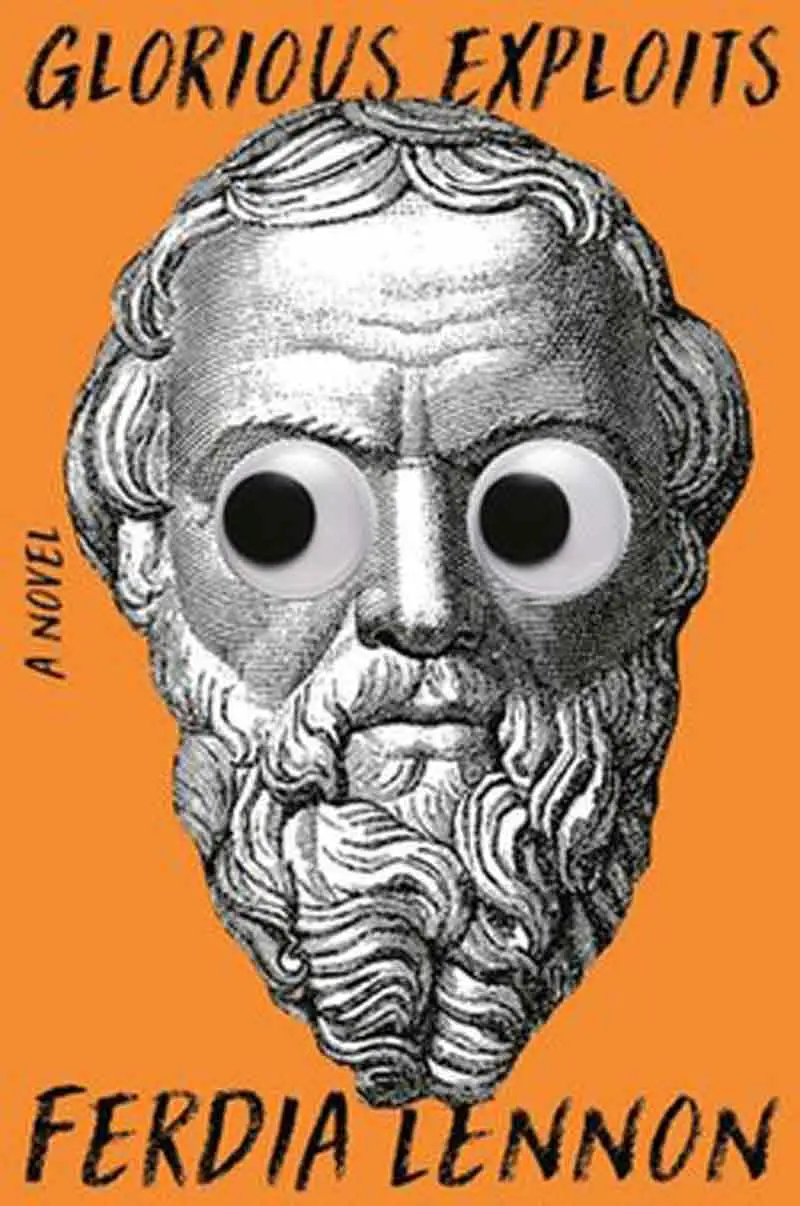
Glorious Exploits is set shortly after the events of Athens' defeat.
The Athenian captives are starving in the quarry and Syracuse is transforming into a rich, powerful force.
Our protagonist is Lampo, a uniquely tragic persona who is sometimes edgy, sometimes hateful, sometimes deeply sensitive and caring. He and his childhood friend Gelon were left unemployed after their pottery factory closed. Lampo accompanies Gelon to the quarry.
Gelon mourns the loss of his child while pursuing his love for Euripides' work. He is the one who leads Lampo to the quarry to seek Athenians able to recite Medea.
In the quarry, they ask Athenians to recite lines from Euripides' Medea in exchange for olives.
"A mouthful of olives for some Medea."
There, they learn that shortly before the expedition, Euripides had written a new work titled Trojan Women, which the great playwright considers his best.
Lampo and Gelon decide to direct both Medea and Trojan Women using Athenian prisoners. Their thinking is simple: if the Spartans win the war, they might raze Athens to the ground. If that happens, there will be no more Euripides. So, these Athenians who are slowly dying at the quarry might be their last chance to see Euripides' work come to life. This is all about preserving a great work of art.
Halfway through the book, Gelon is talking to one of the Athenians who is curious as to why Gelon and Lampo are helping them:
"I love Athens. I think I'll always love the city that wrote that play... I don't hate you. How could I? Even though you came to make us slaves. I can't hate you. I believe any city that gave us those plays has something worth saving. That's why I'm here."
In the process, they discover that art is able to bring beauty and peace to a devastated world, filled with orphans of war, men robbed of their dignity starving to death, and slaves robbed of their very dreams.
Eventually, through the work of Euripides, Lampo forms a friendship with an Athenian named Paches and develops a particularly fascinating romance with a slave from Lydia named Lyra. The reason is that Lampo cannot tell if the girl is genuinely interested in him or is looking for a way out of an oppressive master.
The Strange Tuireann and the Celtic Influence

In their quest, they receive help from a few different people, including the mysterious Tuireann, a rich man from the Tin Islands named after a Celtic god and a direct link to the Celtic world.
Tuireann is the character who adds a whole new layer to the novel. He is exotic and almost divine. He has traveled around the world, possesses wealth, enormous knowledge, and an appetite for art inspired by pain.
He essentially finances Gelon and Lampo's endeavors and even introduces them to a real god that he keeps in a barrel in his ship's cellar.
Gentrification in Ancient Syracuse
Lennon pictures a very real image of gentrification in an ancient setting.
Every night, Gelon and Lampo visit the tavern of Disma where they enjoy cheap wine.
At the novel's beginning, we are introduced to a group of "aristos", aristocrats and upper-class elites who are beginning to flood the streets of Syracuse as the city is becoming rich and powerful.
A group of young aristos shows up at Disma's tavern. They order the most expensive wine, speak of democracy and pretend they care about the low class, but, as Lampo notes, "you know they're only here for the bit of rough".
As the plot progresses, more aristos begin to show up at the tavern, which eventually serves only the expensive wine that the aristos can afford.
Even if the aristos pretend to care, in reality, they are colonizers who use democratic language but impose their will through their wealth.
In one of my favorite scenes from the book, Lampo gets some gold in his hands to buy food for the theatrical production. As he walks through the market of Syracuse, he becomes unable to control himself as he buys expensive clothing and transforms into an aristo himself. What is guiding him? The looks of the people around him, the immediate respect and ability to control those who are after his money.
The difference between the working-class struggle and the elites becomes apparent once more later on in the novel in a more violent manner.
Irish Vernacular
It is striking how well the Irish vernacular works. It might seem strange at first, but after a while idioms like "aye", "it was a buzz", "stunner", "mate", make the world feel alive, and the difference between the elites and the likes of Lampo more potent.
If anything, this is the way for historical fiction of this kind. No pompous Victorian English, no attempt at "restoring" what cannot be restored. I particularly enjoyed the atmosphere that Lennon's language created. It felt true to itself and allowed me to immerse myself in the world of Glorious Exploits.
The End
The end of Glorious Exploits will leave you thinking about the state of the world. Death, disease, injustice. These form the baseline of the work. But it's not just that. The world is a tragedy, but tragedy can bring the catharsis that can lead to empathy, which is the takeaway of the book.
In Lennon's words:
"... his master was ever in love with misfortune and believed the world a wounded thing that can only be healed by story".
Overall, I highly suggest this book if you love ancient Greece and are interested in classical reception.