Recognition in Aristotle, Said, and Isabella Hammad
In this article I discuss some interesting takes on the Aristotelian concept of anagnorisis by Edward Said and Isabella Hamamad.
Key Takeaways
- Aristotle defined anagnorisis as a shift from ignorance to knowledge, often triggering a reversal of fortune.
- Freud’s Moses and Monotheism argued Moses was Egyptian, suggesting that identity can contain foreign elements at its core.
- Isabella Hammad reads Edward Said's work on Freud's essay and finds a different anagnorisis that consists in discovering the foreign in the familiar.
In storytelling, the best plot twists reveal something new about who we truly are. At least this is what Aristotle believed. He called this idea anagnorisis (recognition), the moment when a character moves from ignorance to knowledge. But what if there was a different form of recognition, one that challenged our very understanding of the world, one that could make us see that who we truly were was a Stranger? This is a key point in Isabella Hammad's Recognizing the Stranger: On Palestine and Narrative which explores themes and ideas from, among other, Sigmund Freud and Edward Said.
I wrote this article after attending a talk and discussion with Isabella Hammad earlier this week in Athens. Even though Hammad's talk titled "Standing on the Rubble: Ruins and the Work of Mourning", revolved around different concepts, offered the inspiration for this week's article.
Recognition in Aristotle
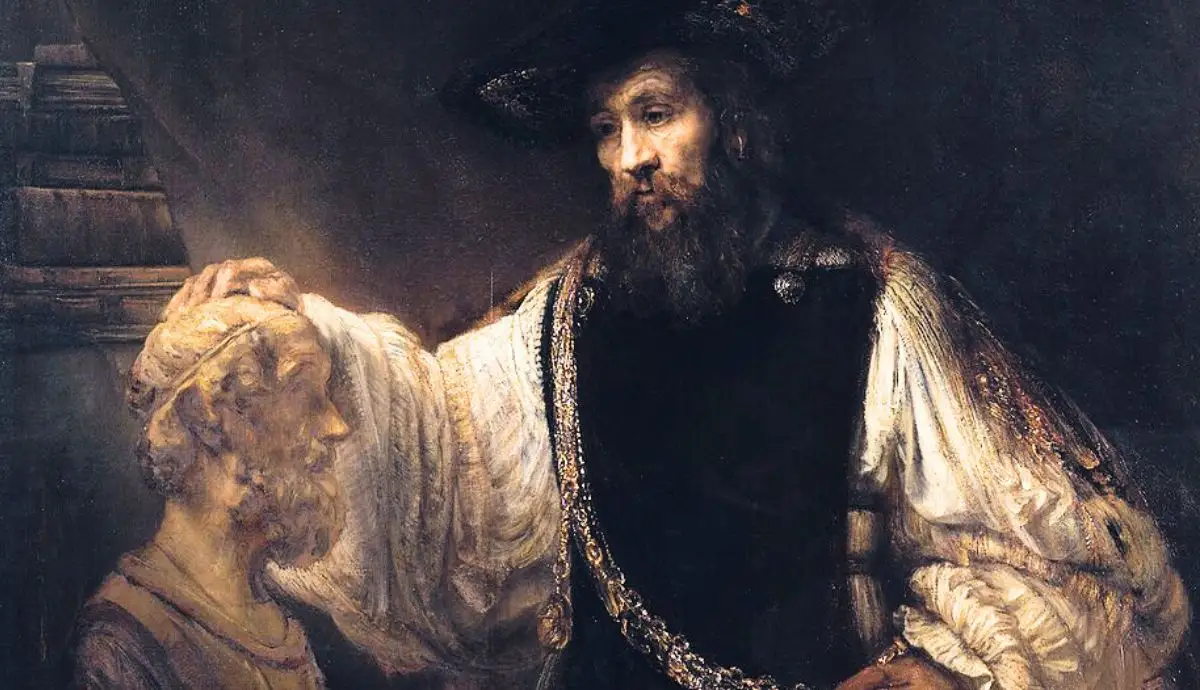
For Aristotle, a crucial component of an interesting or effective plot is what he terms anagnorisis (recognition).
Definition:
"Recognition, as the name indicates, is a change from ignorance to knowledge, producing love or hate between the persons destined by the poet for good or bad fortune." Poetics 1452b

For Aristotle, the best form of recognition coincides with a peripeteia, i.e. a reversal of the situation when one's fortune is reversed. Here's the related passage:
"But the recognition which is most intimately connected with the plot and action is... the recognition of persons. This recognition, combined, with Reversal [of the Situation], will produce either pity or fear; and actions producing these effects are those which, by our definition, Tragedy represents. Moreover, it is upon such situations that the issues of good or bad fortune will depend. Recognition, then, being between persons, it may happen that one person only is recognised by the other-when the latter is already known—or it may be necessary that the recognition should be on both sides. " Poetics 1452b
Also read: Necropolitics vs. Biopolitics: Mbembe's Reinterpretation of Foucault.
Examples of Recognition
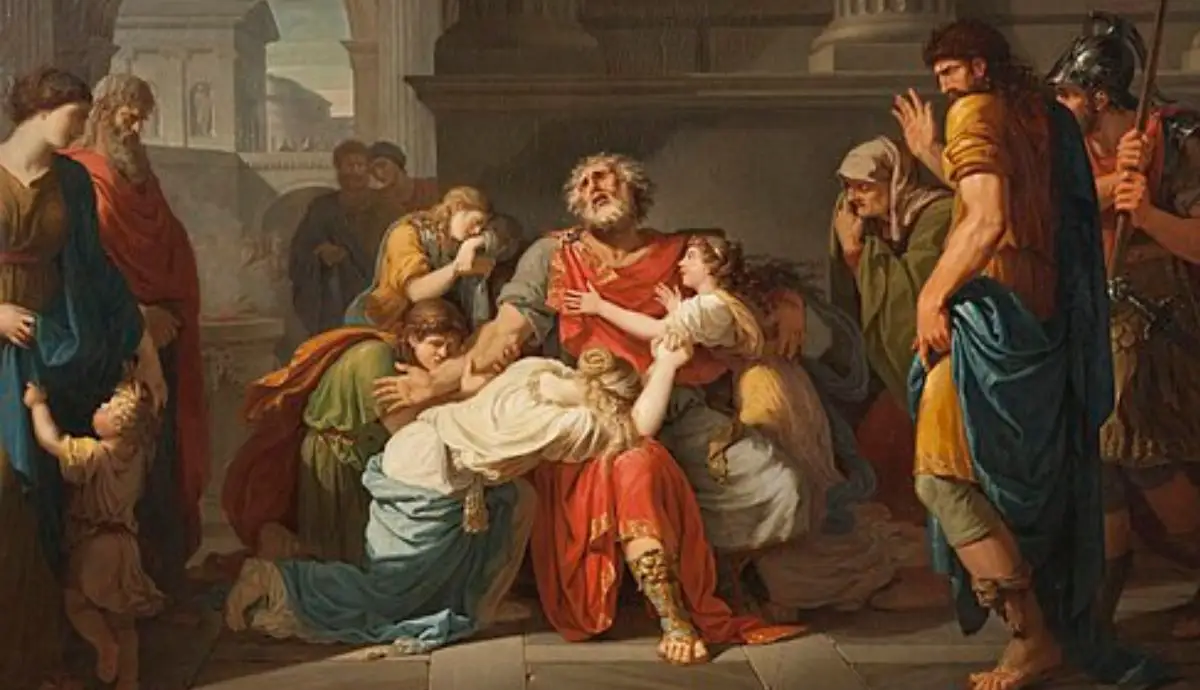
A little later (in 1455a), Aristotle claims that the best kind of recognition comes from events that are considered improbable.
In Oedipus for example the king send a messenger to the oracle of Delphi to ask about a plague that has fallen on the city. The oracle responds that the plague's cause is the murder of the city's previous king, Laius.
Oedipus vows to find the culprit only to eventually discover through a series of improbable events and prophecies that he killed Laius a few years ago. But worse than that, he did not simply kill the city's previous ruler. He actually killed his father, as he was Laius' son whom Laius had asked a shepherd to kill due to a prophecy that said that his son would kill him. The shepherd did not kill the boy but took him to Corinth. Oedipus had killed his father, and even ended up marrying his mother without knowing.
So, in Oedipus' case, the recognition was a discovery of a hidden aspect of Oedipus' self. The king was not who he thought he was. The truth was different, and this truth changed the king's fortune, who ended up taking his own eyes and roaming the world as a beggar.
Multiple famous examples of recognition can also be found in the Odyssey. One is that of Odysseus being recognized by his loyal dog and another of the hero being recognized by the nurse Eurykleia who spots a scar on Odysseus' left foot as she washes his feet.
Edward Said's Take on Recognition and Freud
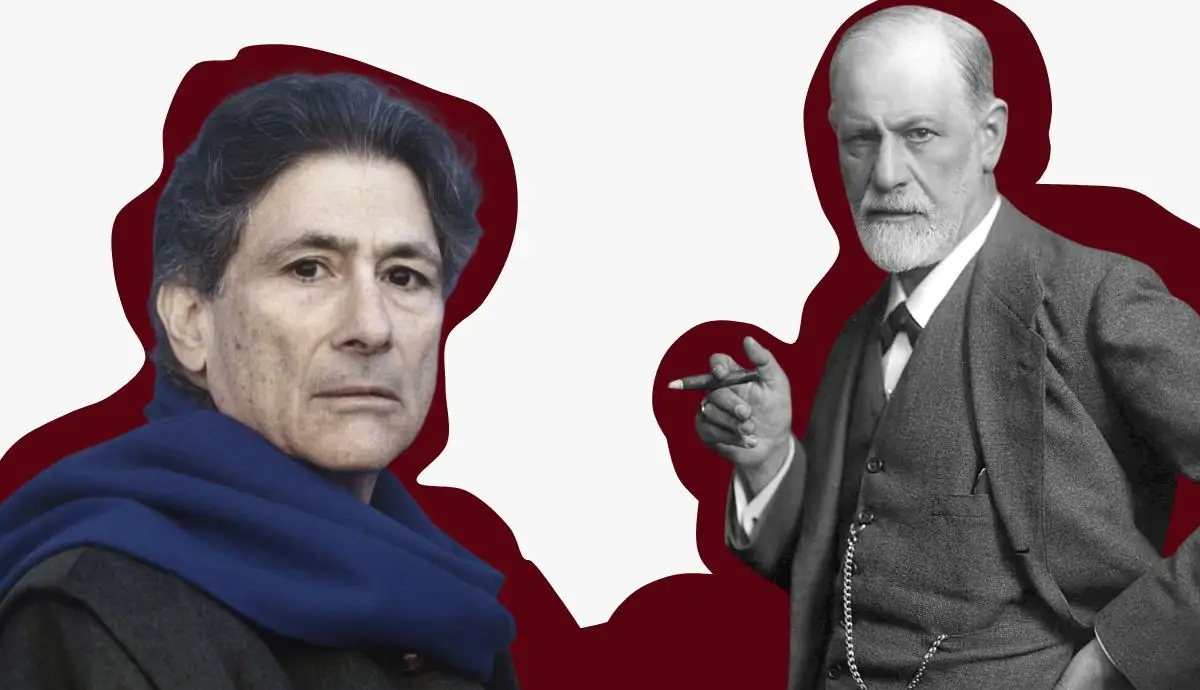
In Freud and the Non-European, the Palestinian-American thinker Edward Said, reads Freud's essay Moses and Monotheism and presents a nuanced understanding of identity and recognition. If you are interested in Said's work, I have also discussed his concept of orientalism in relation to Herodotus.
In his essay, Sigmund Freud claimed that Moses was not actually a Hebrew but an Egyptian connected to the heretic pharaoh Akhenaten, who imposed the cult of Aten and founded the city of Amarna in what is often described as the first attempt at monotheism.
According to Freud, Moses led his monotheistic followers to freedom after the death of Akhenaten and the restoration of the polytheist order in Egypt. However, the followers killed Moses and joined with another monotheistic tribe who worshipped a Yahweh. These religions fused and the guilt carried by Moses' followers eventually found expression in their belief that Moses would one day return as the Messiah.

Whether Freud's essay reflects a historical truth or not, is not what interests us here, neither did it interest Said, who saw in this story a unique take on identity as dynamic truth that is not fixed and often contains foreign elements. Said connects what Freud says about Moses with the psychoanalyst's own conflicted identity a mixture of atheism, Jewishness, German ideas, and hesitant opposition to zionism.
But for Said, the most interesting aspect of Freud's essay is how it shows a way to turn the tables on the way the state of Israel has employed archaeology as a tool to establish a static identity connected to a specific land.
"...the claim is repeatedly made that in the present-day land of Israel the Bible is materially realized thanks to archaeology, history is given flesh and bones, the past is recovered and put in dynastic order. Such claims, of course, uncannily return us not just to the archival site of Jewish identity as explored by Freud, but to its officially (we should also not fail to add: its forcibly) sanctioned geographical locale, modern Israel. What we discover is an extraordinary and revisionist attempt to substitute a new positive structure of Jewish history for Freud’s insistently more complex and discontinuous late-style efforts to examine the same thing, albeit in an entirely diasporic spirit and with different, decentring results." (Said 33)
Freud seeks to point that at the very heart of Judaism stands a non-European element, something that certainly went against the grain at a time such as the 30s when nationalist and racist sentiments against the non-European (a term that was also used as pejorative) were the mainstream.
But what Said find the most interesting of all in Freud's essay is the insight that:
"...even for the most definable, the most identifiable, the most stubborn communal identity – for him [Freud], this was the Jewish identity – there are inherent limits that prevent it from being fully incorporated into one, and only one, Identity. Freud’s symbol of those limits was that the founder of Jewish identity was himself a non-European Egyptian. In other words, identity cannot be thought or worked through itself alone; it cannot constitute or even imagine itself without that radical originary break or flaw which will not be repressed, because Moses was Egyptian, and therefore always outside the identity inside which so many have stood, and suffered – and later, perhaps, even triumphed."
Also read: Invention of Tradition: How Eric Hobsbawm Exposed "Ancient" Customs.
In Isabella Hammad's Recognizing the Stranger

In Recognizing the Stranger (2024), Isabella Hammad comments on Said, Freud, and Aristotle. The book is based on Hammad's 2023 lecture at the University of Columbia in memory of Edward Said.
Hammad traces the history of the concept of recognition starting with Aristotle and going through a series of literary works, her own included. Key in her presentation is the story of an Israeli soldier who disobeys his orders to shoot an unarmed Palestinian because he arrives at his moment of recognition and sees the Palestinian as a fellow human. The Israeli sees something familiar in a stranger and that is what this moment of recognition is about; finding the familiar in the foreign.
But this is not something that can be replicated en masse. How many more need to die for a soldier to have this kind of epiphany, asks Hammad?
For the author, a negative kind of recognition is more interesting and capable; a recognition that find the foreign in the familiar, just as Freud found the non-European (Egyptian) in his own Hebrew identity.
Such a scheme can be highly potent in literature:
"...not revelation, not the dawning of knowledge, but the exposure of its limit. To realise you have been wrong about something is, I believe, to experience the otherness of the world coming at you. It is to be thrown off-centre. When this is done well in literature, the readerly experience is deeply pleasurable."
However, in real life things are different:
“In real life, shifts in collective understanding are necessary for major changes to occur, but on the human, individual scale, they are humbling and existentially disturbing.”
In any case, what Hammad and Said asks us to do is consider a different kind of identity, one that challenges our narratives about who we are and allows us to arrive to a more cosmopolitan sense of the self, away from the rigid narratives that fragment the collective into groups.
Bibliography
- Freud, S. 1939. Moses and Monotheism (Trans. Catherine Jones). Hogarth Press. http://archive.org/details/mosesandmonothei032233mbp/page/n5/mode/2up
- Hammad, I. 2024. Recognising the stranger: On Palestine and narrative. Fern Press.
- Said, E. 2014. Freud and the Non-European. Verso.
Also read: Walter Benjamin's Aura: Authenticity in the Age of Mechanical Reproduction.