Was Marathon a Decisive Battle? What JS Mill Got Wrong
Why did John Stuart Mill claim the Battle of Marathon was more important to Britain than the Battle of Hastings?
Summary
- Imperialist Framing: 19th-century British imperialists used the Battle of Marathon to morally justify colonialism by framing it as Western civilization defeating Eastern barbarism.
- Speculation: Treating specific battles as uniquely decisive ignores slower historical processes and relies on unprovable, highly speculative "what-if" scenarios.
- Mythmaking: Athens employed Marathon as a powerful political myth.
John Stuart Mill once proclaimed that the battle of Marathon (490 BC) was more important for English history than the battle of Hastings (1066). To understand why a 19th century Englishman would reach this strange conclusion, we need to understand some concepts.
But first, let's look at Mill's famous quote.
The Battle of Marathon and JS Mill
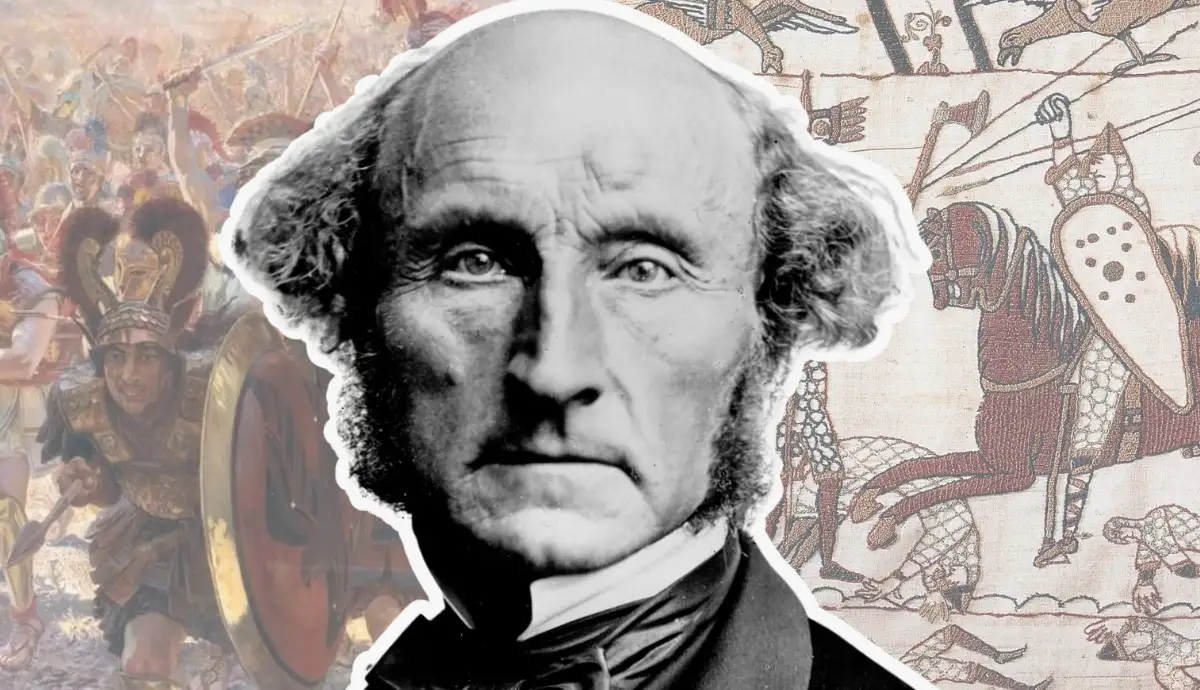
Commenting on the 1848 version of George Grote's History of Greece, John Stuart Mill wrote:
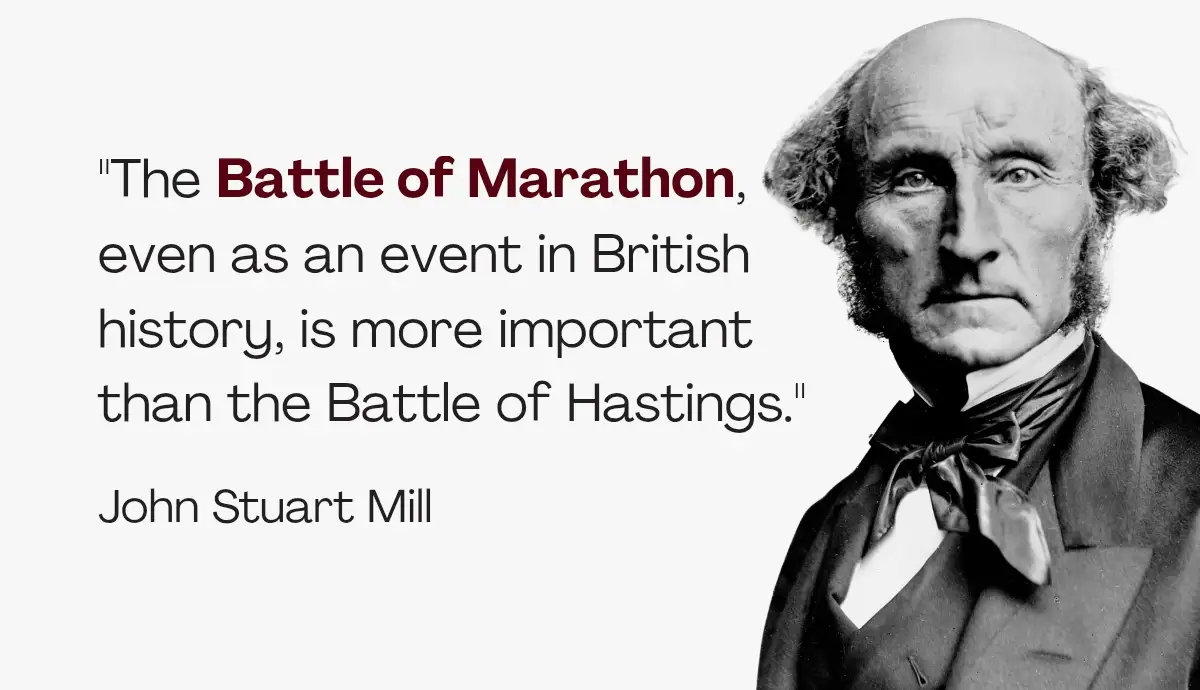
"The battle of Marathon, even as an event in British history, is more important than the battle of Hastings. If the issue of that day had been different, the Britons and the Saxons might still have been wandering in the woods."
- John Stuart Mill
Behind the quote, lies the concept of the decisive battle. In the following paragraphs I will try to briefly deconstruct the concept as a speculative exercise that presupposes that if something had or hadn't happened, the world would be different. I will try to show that this is not a fruitful way to think about history, even though it's a fun exercise nonetheless.
Creasy's Decisive Battles and Imperialism
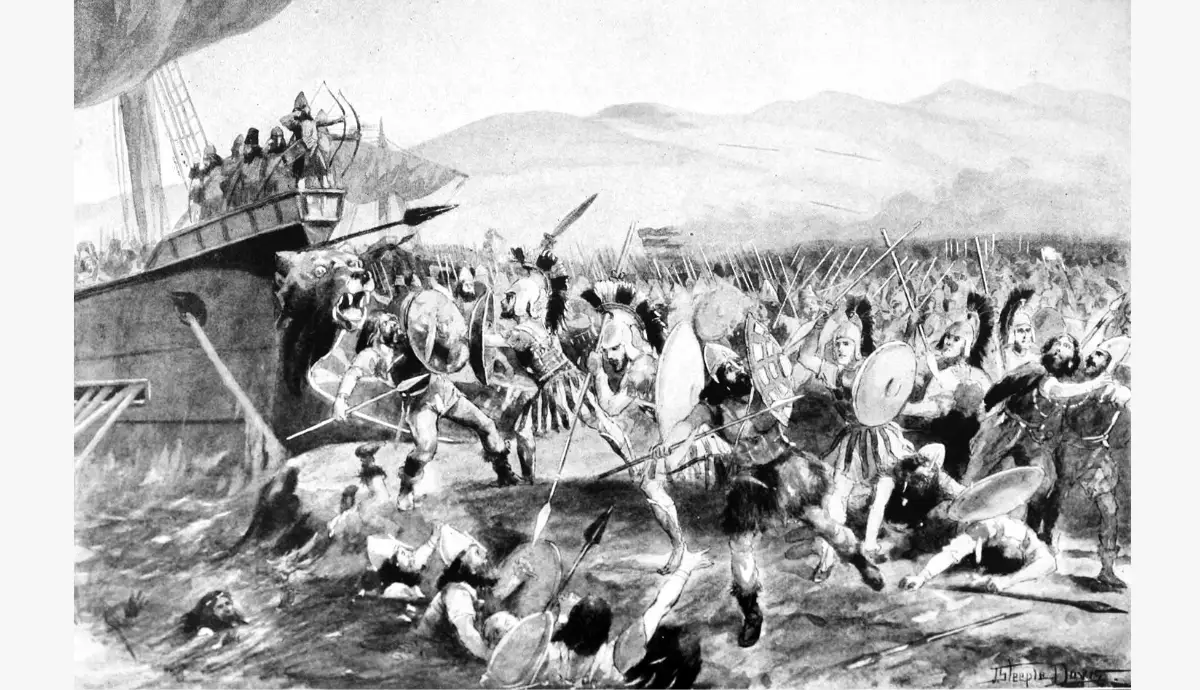
Three years later, in 1851, Marathon the first battle in Edward Creasy's classic work The Fifteen Decisive Battles of the World. Following Creasy, Marathon would be routinely quoted as a decisive battle that changed, shaped, or even saved the world or the "civilized West".
In subsequent histories, the connotations of Marathon were clear. Marathon had saved civilization from the "barbarians". Athens, a democracy, had defended itself against Persia, a so-called Eastern despot. These binaries (civilized-barbarian, West-East) were essential pieces of the orientalist discourse that arose with imperialism and its best buddy, colonialism.
During Mill's times, the British Empire was stretching across all continents and this worldwide endeavor required a moral justification. Roman and Greek history offered valuable parallels that the imperialist class could adopt to justify their means and goals.
Besides, the Romans had their own discourse that justified conquest on the basis of "civilizing the barbarians" while the Greeks could offer ample examples of intellectual superiority and a basis for distinguishing between those who can be called civilized and barbarians.
The classical world offered ample parallels, and Marathon came to represent the unlikely triumph over a superior force or despot. It is interesting, for example, that the French Revolutionaries (Robespierre and Marat in particular) valued Marathon and saw the French Revolution as a sort of new Marathon against the absolute monarchies that were attacking the newfound Republic.
A few years later, when Napoleon invaded German lands, he was seen as the new Xerxes against whom a new Marathon was due.
For the English, Marathon signified multiple different things, but for people like Mill who felt an intellectual affinity to what they perceived as the classical spirit, Marathon was the moment when it all began.
As Creasy wrote, without Marathon, Salamis would have never happened. Without Marathon, the intellectual treasures of Athens would have been lost, without Marathon there would be no Rome, no Britain, no Enlightenment, no Mills.
But would they really?
Decisive Battles
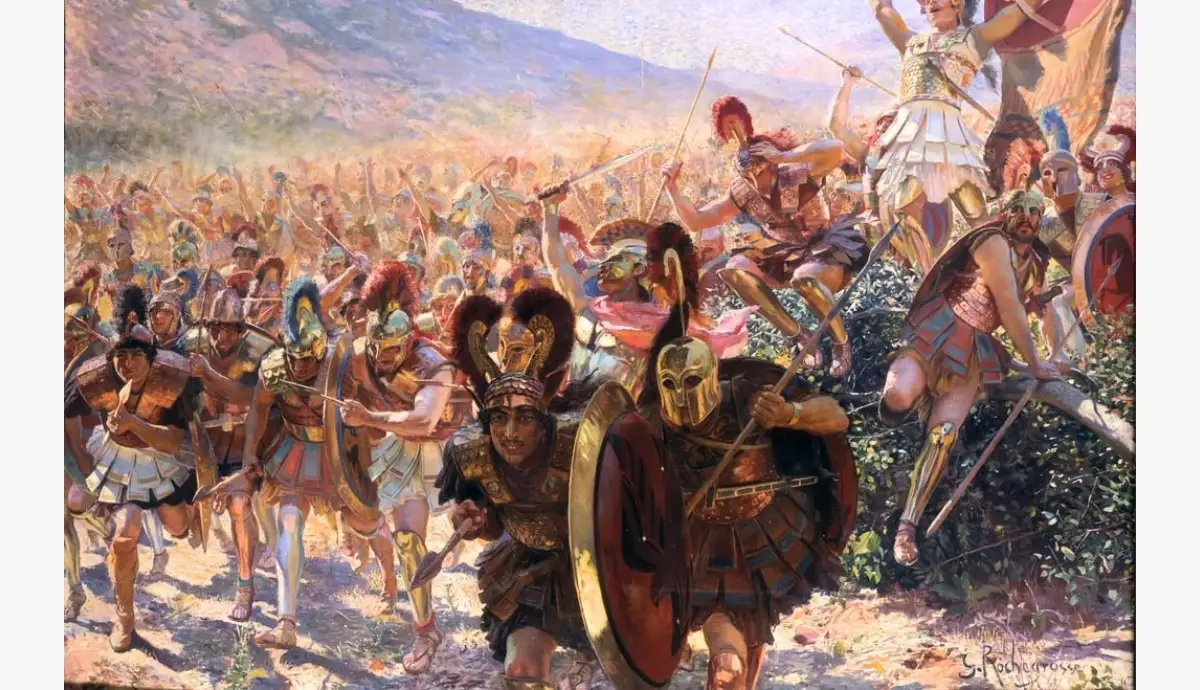
There is a whole (very interesting) take on Mill's quote and the understanding of individual battles as decisive (see Hanson 1989; Wheeler 2013 summarizes the issue perfectly).
According to this theory, the concept of a single battle as decisive appeared during the Napoleonic Wars when huge armies clashed in battles that determined wars. A single battle could redraw the map.
Within this context, a craze over which battles were the most decisive took hold. Battles were seen as the engine that moved history.
Slower processes that unfolded over decades or centuries were not given much importance. Same went for changes in other fields as diplomacy, the economy, or intellectual discourse.
It's all speculation

The concept of a decisive battle presupposes that the world would have looked different if it had gone the other way. This argument contains a speculative supposition:
- If the battle hadn't happened or its results were different, we would live in another reality.
- The world is the way it is because the battle happened, so the battle was decisive.
I personally enjoy a good speculative history. It's certainly fun to think about questions like how would the world look like if the Byzantine (Eastern Roman) Empire had never fallen to the Ottomans? With whom would the descendants of Justinian have sided during the Cold War?
However, behind all these questions lurks a big "if". And ifs are speculations, not certainties. There is no way to know what the world would have looked like if the Greeks had lost at Marathon because they didn't.
But what if the Greeks had lost at Marathon?
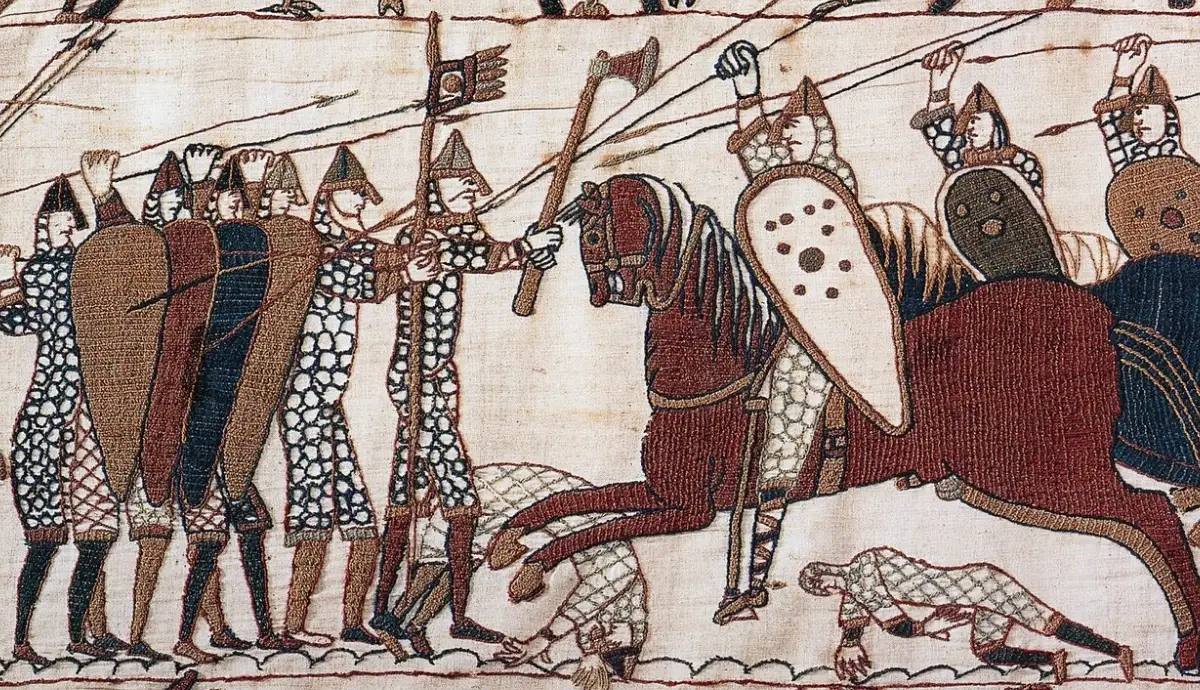
If the Athenians and their Plataean allies had lost, the world would be a different place. But isn't that something that we can say for almost everything that has taken place in such a distant past as Marathon?
What if Pericles had not died in the siege of Athens or if Socrates had chosen to become a musician? Or what if the Athenians had beaten Alexander the Great at Thebes? Wouldn't the world be different then?
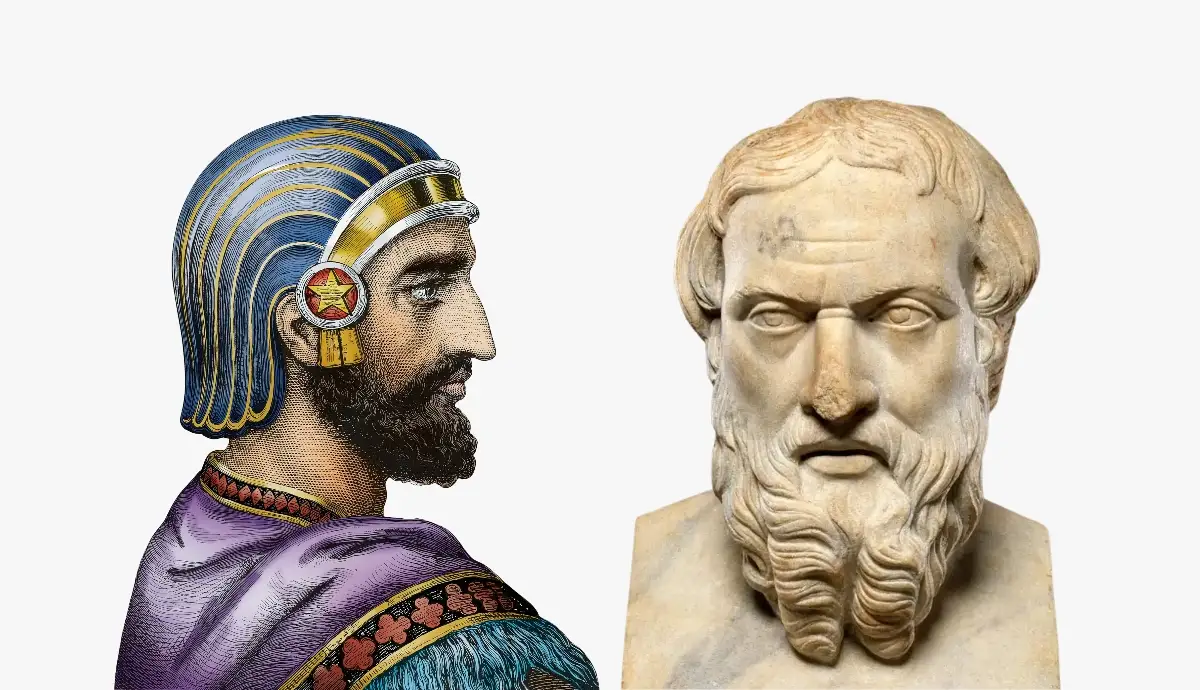
So, we have to ask ourselves this question: why did Mill and Creasy focus on Marathon in particular? Why not choose, for example, the moment when Cyrus the Great formed the Persian Achaemenid Empire? Without the antagonist there would have been no protagonist in our historical play. Without the Persians, there would have been no Marathon.
But also why choose that moment and not choose another, like say the invention of the wheel. Without wheels across Eurasia, there would have been no chariots. Without chariots, the whole Bronze Age would have looked different, and no event we know of would have happened.
Or why not choose an even more mundane moment, like a malaria-ridden mosquito that chose to spare a figure like Themistocles and bit a person close to him.
Then again, what if Herodotus' writings had not survived. Would we still know that Marathon even happened as it did? Following this train of thought, it is logical to believe that if Herodotus was Spartan, he would have emphasized Plataea or Thermopylae; not Marathon, a small skirmish battle that even the ancients debated happened as the Athenians claimed it did (more on that later).
By the way, Herodotus was from Halicarnassus, which was under the Persian Empire at the time.
Was It Really a Decisive Battle?
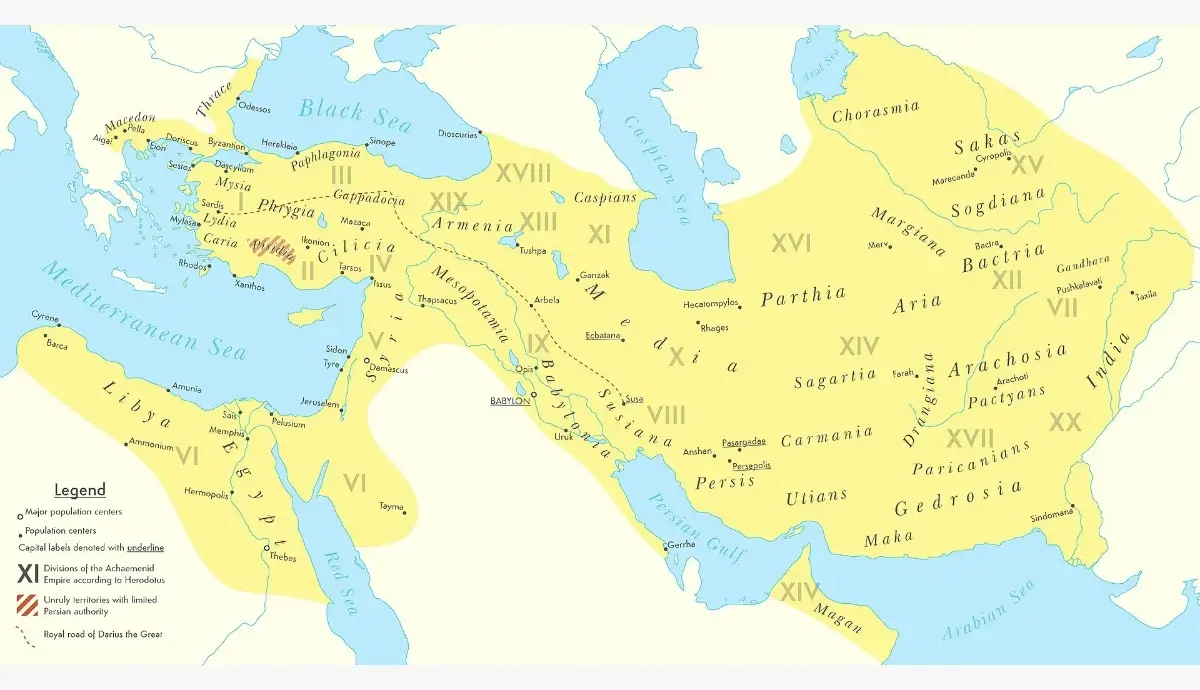
Let's now attempt something different. Let's view things from the Persian side. How did the Persians experience Marathon? I will here follow the narrative as presented by Parker and Parker in The Persians (2017).
It is 490 BCE. Darius the Great (522-486 BC) is the ruler of the empire, the Shahanshah. A few years ago, Darius faced a great revolt that shook the empire. After crushing the rebellion, Darius sought to expand the Persian frontiers.
In his first campaign, he went into the lands of present-day Afghanistan, took control of the Hindu Kush, and established the Indus River as his Eastern frontier.
The Greek cities of Ionia had been under the empire since 546 BC, when they were conquered by Cyrus the Great. These cities were free to worship their gods while Ionian philosophers, like Heraclitus, pursued their intellectual endeavors arguing about the true nature of the universe.
In 513 BC, Darius crossed the Hellespont. For the first time, a grand Persian army was entering the European continent.
Thrace and Macedonia fell easily, as well as a part of Scythia. However, after the Athenians facilitated a rebellion in Ionia, Darius' army had to return to Asia Minor to crush the rebels.
Darius had to take revenge and in 490 BC a Persian army landed 42km away from Athens at the plain of Marathon and prepared to move against Athens.
The Athenians, however, took the Persians by surprise in a battle for which we have many open questions (like why did the famous Persian cavalry not fight?).
Unfortunately we don't know how the Persians saw the battle as all our sources are Greek, but we do know that the Athenians tried to present it as something it wasn't according to the 4th century BC rhetorician Theopompus. Two centuries later, Plutarch wrote that Marathon was nothing short of a small Persian incursion, not the gigantic invasion that the Athenians said it was.
This all makes sense. The Athenians did use Marathon as propaganda to claim that they alone (with some Plataean help) fought the Persians. In Athenian propaganda it was democracy that allowed the citizens to rise and defeat the mighty Persians.
In any case, Marathon repelled the Persians and stopped their Westward expansion. Athens propagated Marathon as the battle where the city stood alone, unlike Salamis or Plataea. It was this narrative that helped Athens form the Delian League and eventually turn the city into a naval empire.
So, Marathon functioned as a symbol, a powerful myth that helped Athens promote its interests and also drive its internal unity.
The Athenians were obsessed with Marathon. It's no wonder the battle was the only thing menioned in the epigram of Aeschylus's tomb.
But, no matter what, the Persians were not orcs and Darius was not Sauron; nor were the Athenians the army of Gondor. It was not a battle of good vs. evil, as many contemporary popular histories try to make it out. History is rarely that simple.
The Persians did intend to reinstall the Athenian tyrant Hippias, if they were successful at capturing Athens, meaning that the institutions of democracy would be targeted. But when it comes to liberty the Persians were not the servile people they are portrayed as and they were remarkably tolerant when it came to other cultures and foreign deities.
Epilogue
So, to wrap this up. Marathon is important as an event. Its memory is conncected with so many modern things; just think of the marathon race. But decisive? I think that the question is wrong. We shouldn't be asking which moment was decisive. Understanding why we think that moment decisive is more interesting and can help us better understand how we situate ourselves within collective memory.
Bibliography
- Hanson, V. 1989. The Western Way of War: Infantry Battle in Classical Greece. New York.
- Parker, G. and Parker, B. 2023. The Persians. Reaktion Books.
- Pionke, A.D. 2021. ‘Reconstructing an Ancient Monument to Mid-Victorian Liberalism, One Annotation at a Time: John Stuart Mill’s Marginalia in George Grote’s History of Greece’, Victorians Institute Journal, 48(1), 130–160. https://doi.org/10.5325/victinstj.48.2021.0130.
- Wheeler, E.L. 2013. ‘Present But Absent: Marathon in the Tradition of Western Military Thought’, in K. Bourazeles and E. Kulakiots (eds.) Marathon: the day after. Symposium proceedings, Delphi 2-4 July 2010. Athens: European Cultural Centre of Delphi.
Also read: