The Uncanny Backrooms of Greek Mythology
The internet phenomenon of the Backrooms and the 2026 film parallel the Greek Underworld, the Labyrinth, and other stories from Greek Mythology.
Key Takeaways
- The Uncanny Aesthetic: The Backrooms use familiar environments, like endless empty offices without purpose which trigger uncanny responses.
- Greek Mythology Parallels: The Labyrinth, various locations of the Underworld (Tartarus, Asphodel Meadows), etc.
- Counter-Earth: The 2026 film presents the Backrooms as a distorted copy of reality, which is reminiscent of Pythagorean theories about a Counter-Earth.
The Backrooms began as an uncanny creepypasta in 2019, depicting endless, empty office space. It has since evolved into a complex universe, with Kane Parsons' 2026 film adaptation becoming an instant hit. The Backrooms are a prime example of what Sigmund Freud called the Uncanny; the terrifying distortion of the familiar.
I recently watched Parsons' film, and here are some connections I drew with Greek myth; namely the story of the Labyrinth, Tartarus, and Pythagorean theories of the Counter-Earth.
What are the Backrooms?
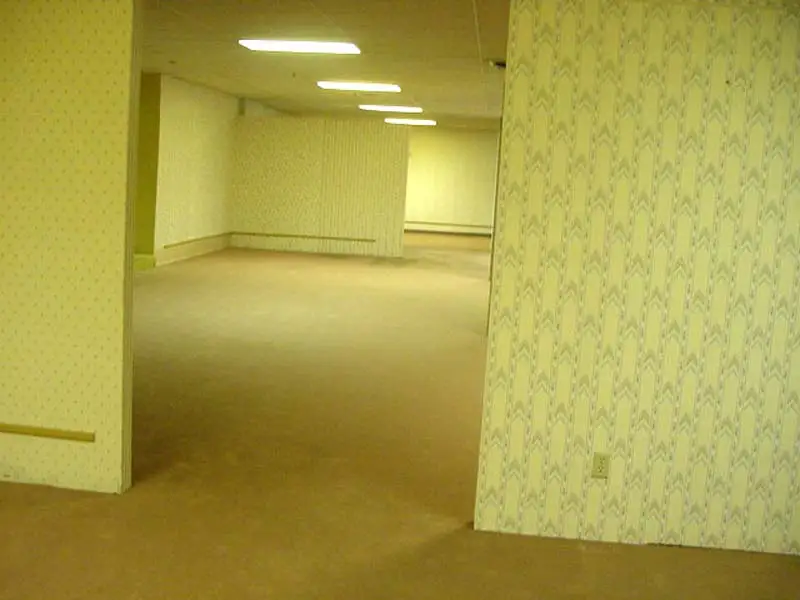
Backrooms is a concept that began in 2019 when an anonymous user posted the photo of an empty office on 4chan with the following caption:
If you're not careful and you noclip out of reality in the wrong areas, you'll end up in the Backrooms, where it's nothing but the stink of old moist carpet, the madness of mono-yellow, the endless background noise of fluorescent lights at maximum hum-buzz, and approximately six hundred million square miles of randomly segmented empty rooms to be trapped in.
God save you if you hear something wandering around nearby, because it sure as hell has heard you.
Since that original post, the Backrooms grew into a thing of its own. Countless posts on Reddit and 4chan laid down the details of an absurd universe consisting of empty offices, moist carpets, flickering lights, and yellow walls.
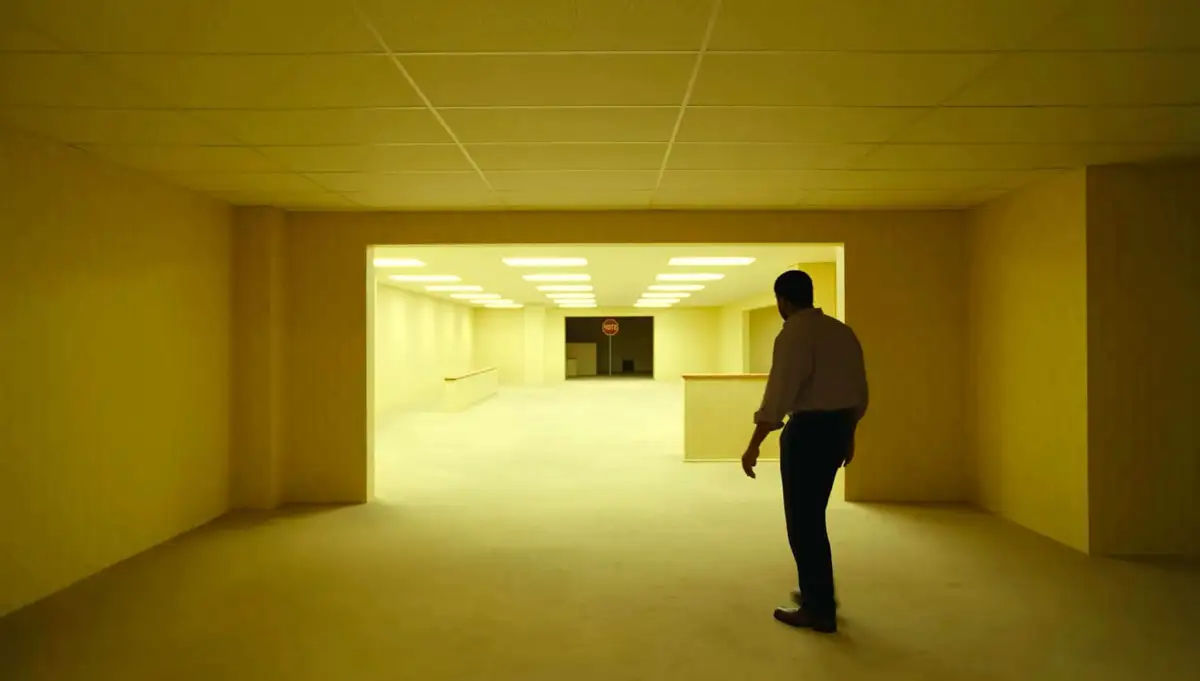
Kane Parsons, a young YouTuber, soon began publishing his own take on the Backrooms on YouTube and the universe kept expanding and gaining traction leading to Parsons directing his first film titled Backrooms in 2026.
The Backrooms as Uncanny Architecture

What seems to resonate with the Backrooms is exactly what Sigmund Freud termed as the Unheimliche (the Uncanny), i.e. the familiar that turns in on itself to become unfamiliar in a scary way, or in Freud's own words:
"...the uncanny is that class of the terrifying which leads back to something long known to us, once very familiar." (Freud, Sigmund. 1919. The Uncanny. Translated by Alix Strachey)
The Backrooms are scary because they contain images we can all recognize. The familiar office setting some of us have worked in or seen in photos or movies. The flickering bright lights, the office chairs, the desks. They are all familiar things but the fact that they are completely empty, serving no purpose whatsoever, and even seem to obey no known laws of physics makes them unfamiliar and scary; a truly uncanny world.
The Backrooms manifest many of Freud’s key triggers for the uncanny such as:
- doubles (the Backrooms create eerie copies of reality, from furniture to human forms)
- and the involuntary repetition or return to the same place that creates a sense of helplessness.
The Backrooms are also related to the concept of liminal spaces, often described as the aesthetic of empty buildings and offices that evoke uncanny feelings. A different kind of uncanny experience is that offered by the other cinematic success of 2026, the horror movie Obsession that explored the theme of obsessive love as a distortion or extreme version of romantic love.
The Backrooms as Weird and Eerie
In The Weird and the Eerie (2016), Mark Fisher critiqued Freud's theory and proposed two alternative qualities to the uncanny, namely the eerie and the weird. These two are more closely associated with the element of liminal horror that the Backrooms can evoke.
Weirdness
The 2026 adaptation certainly falls within Fisher's observations. The monsters that lurk in the Backrooms are certainly weird as they keep you constantly wondering what exactly they are and whether they should even exist; a key feature of Fisher's weird. The very existence of the Backrooms' lifeforms shakes the foundation of our understanding of reality, which is part of a genuinely weird experience.
Eeriness
For Fisher, something is eerie when it's missing something essential. It's exactly the absence that triggers the eerie, and this is exactly what we see at the Backrooms. Whole worlds made of empty offices, without humans occupying them, without humans building them. It is the absence of the human element that makes the Backrooms eerie. For Fisher, this kind of eeriness leads us to the realization that we are not in control.
The Labyrinth
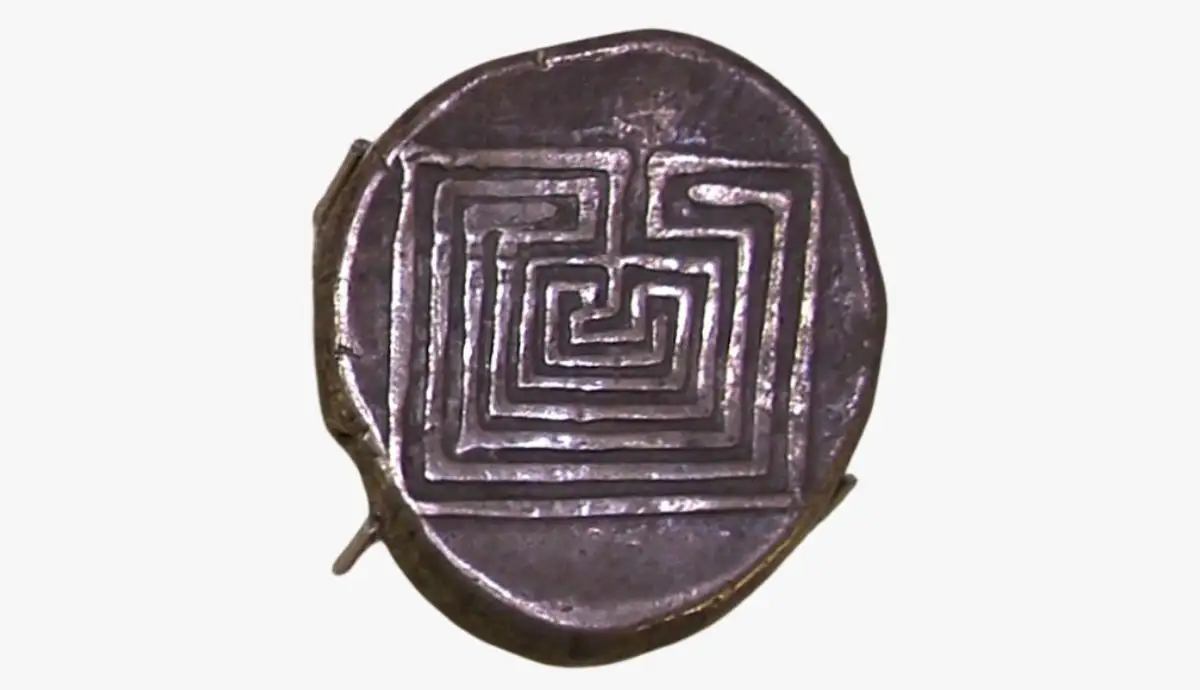
I spent some time thinking what's the equivalent of the Backrooms in Greek Mythology and without a doubt the Labyrinth is the best candidate.
Besides, the Backrooms are labyrinthine. They are an endless maze where each new turn looks like the previous one, evoking Freud's compulsion to repeat.
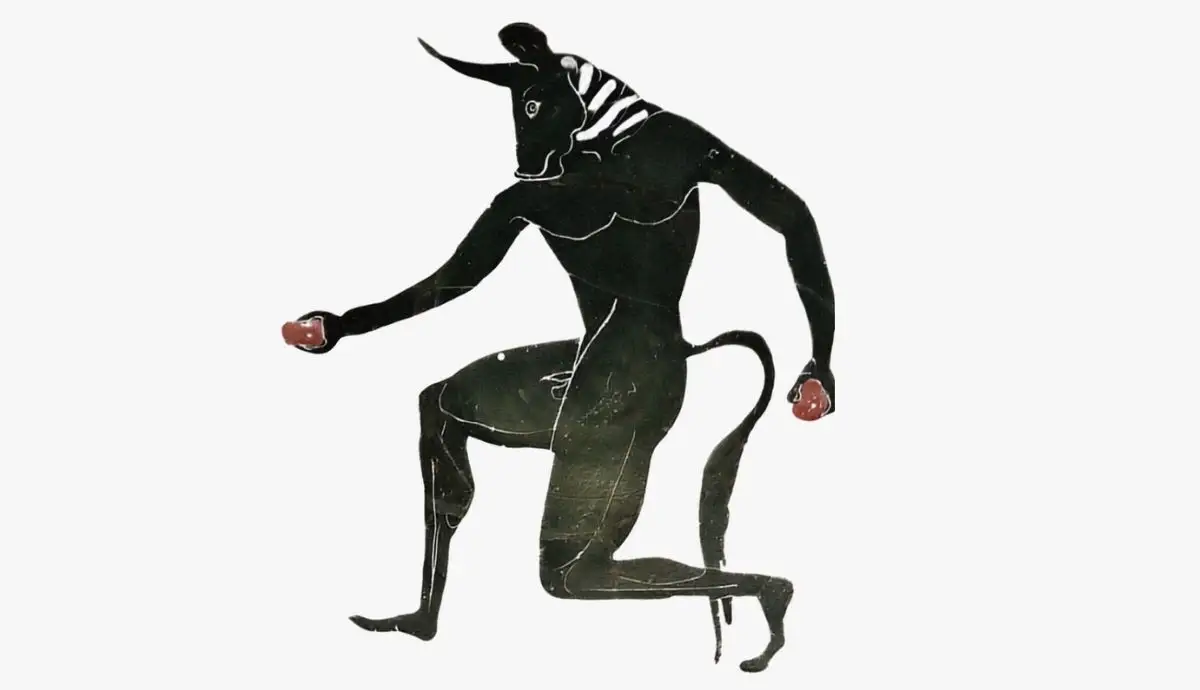
What is more, in the heart of the labyrinth lies the Minotaur, a half-man, half-bull beast who will hunt you down and eat you. Just like the entities that occupy the Backrooms who may not be half bull but they are almost human.
Tartarus
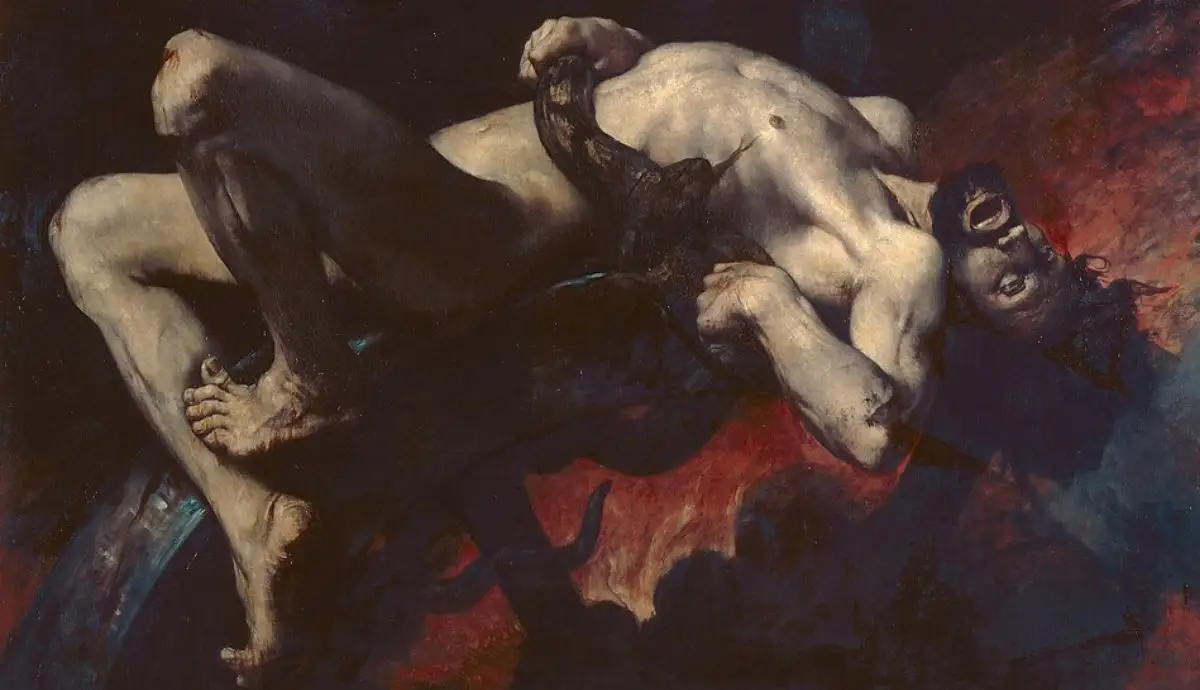
Tartarus is a space of the Greek Underworld reserved for those who seriously offended the gods. Those who are condemned to Tartarus spend eternity suffering absurd punishments.
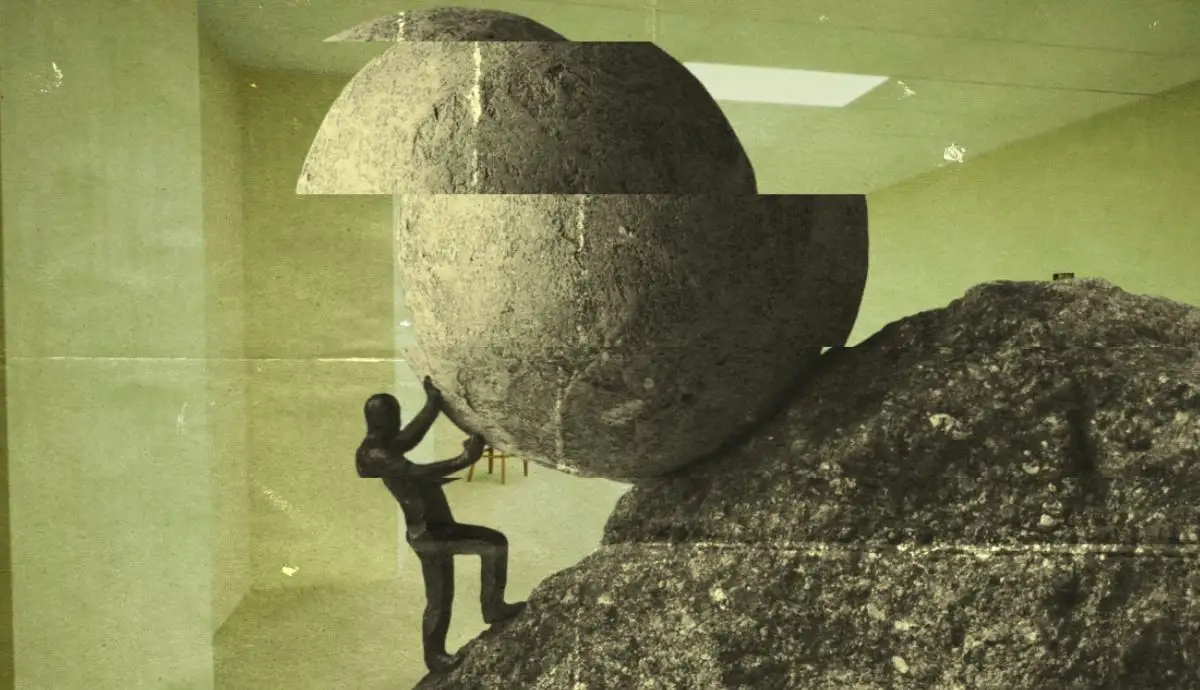
If you were to visit Tartarus you would encounter Sisyphus trying to roll a rock up a hill only for the rock to roll back down.
Tantalus, another prisoner of Tartarus, was condemned to eternal hunger and thirst. However there was a catch. He stood inside a lake with fruitful trees right above his head. But every time he tried to touch the water, the lake disappeared and every time he tried to grab a fruit the branches raised it higher beyond his grasp.
Cronus, Zeus' predecessor, and his fellow gods, the Titans, were also imprisoned in Tartarus.
The place was described as a deep abyss of eternal darkness that was as far from earth's surface as earth was from heaven.
The tortures suffered down in Tartarus certainly had a uniquely uncanny quality to them. They were endless and repetitive, which is reminiscent of what the Backrooms is about, repetition pointless repetition, and psychological torture.
Cronus Devouring His Sons
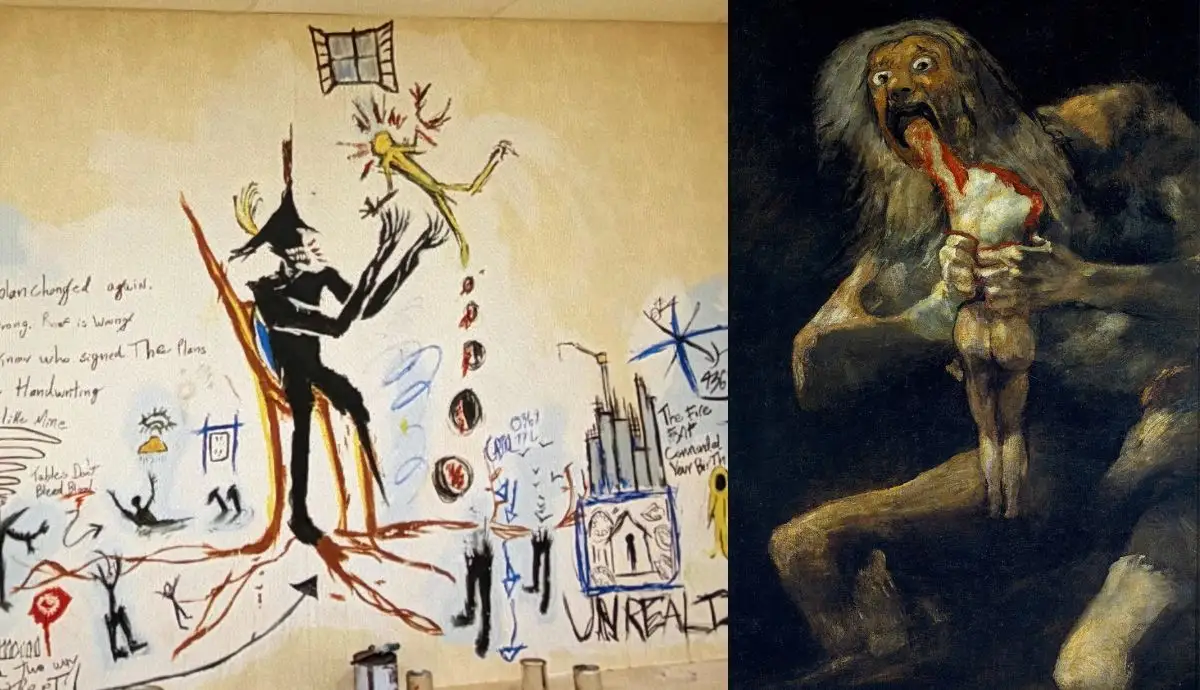
The 2026 film draws a direct connection with Cronus.
[*SPOILERS*]
In the, admittedly terrifying, dinner scene, Pirate Clark finally reveals himself and takes a good bite off the original Clark's shoulder. The position of the bodies is reminiscent and probably inspired by one of the most haunting images painted by Francisco Goya, Saturn (the Roman equivalent of Cronus) Devouring His Son (1820-3).
Asphodel Meadows
The Asphodel Meadows or Asphodel Fields were another location in the Underworld.
Unlike Tartarus, reserved for the wicked, and Elysium Fields, reserved for the righteous; the Asphodel Fields were something closer to what we would describe as the Limbo, an in-between space. It was a place reserved for the average human soul. There the dead would eternally roam in a shadow realm that echoed life, in that it looked like it, but was actually just shadows.
The Pools and River Lethe
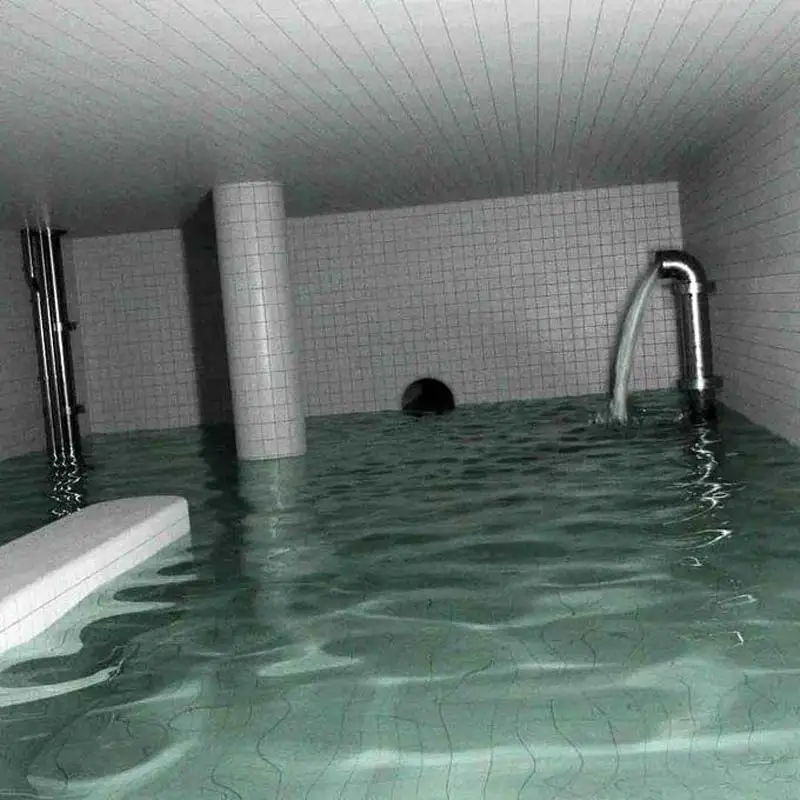
The Pools (or Poolrooms) that one would find in the Backrooms' canon lore also remind us of aspects of the Greek Underworld, more specifically the river Lethe whose water could make you forget everything you knew.
Food?
There is another similarity to the Greek Underworld: food. Or more specifically what food can do to you.
If a living human found themselves in the Underworld, they should avoid eating food. For example, Hades trapped Persephone by offering her a pomegranate that had grown in the Underworld. Once she tasted the fruit she was doomed to stay.
Similarly, eating things in the universe of the Backrooms may mutate you or drive you crazy. The only exception is the strange substance the internet has named Almond Water. Everything else is off-limits and will get you permanently trapped.
Antipodes and Antichthones
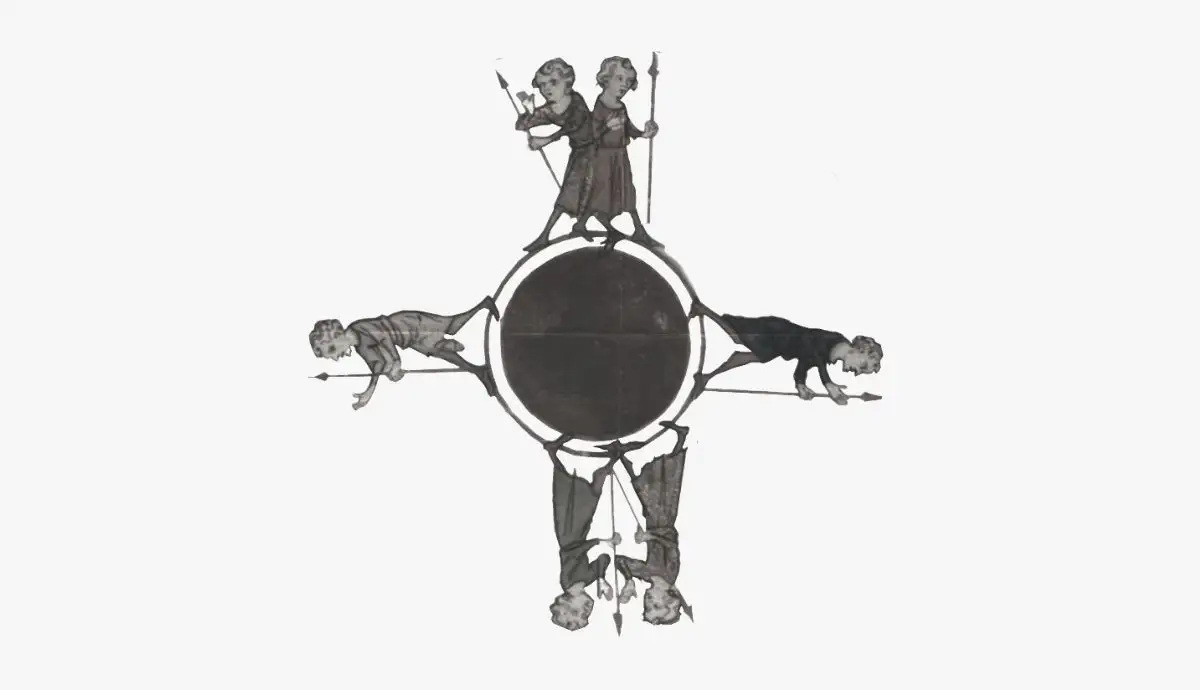
In early Greek philosophical thought, and especially among the Pythagorean circles, the idea of the opposites was well established. Finite was contrasted to infinite, good to bad, left to right, and so on.
So if you believed that everything in the universe has an opposite, then it would make sense to think that a people live right below our feet. These people were called Antichthones (anti=against/opposed, chthon=ground/soil/earth). For the Antichthones who inhabited the Antipodes (the opposite end of the earth), up was down, and down was up. They lived just like we do but in reverse.
The idea was meant to balance the universe, and was also the logical conclusion of a system in which earth was conceived as a round object. For if the earth was round, as many Pythagoreans believed (and they were right), then there were people living somewhere far beyond their known world. In the absence of a theory of gravity, the idea that people would live on the other end of a sphere seemed weird and difficult to comprehend.
The Pythagorean philosopher Philolaus (5th century BC) took the idea to a different place, claiming that there was an Antichthon, a Counter-Earth. In his system, this other Earth was the same size as our Earth and revolved around an Eternal Fire every day. Interestingly Philolaus was the first to claim that the sun, and not the earth, was the center of the universe.
The Backrooms present some similarities to these ideas. In the 2026 film, the Backrooms are said to be copying our reality and in a sense they are its negative. For example, in the Backrooms one can find copies of Clark's store occupying the same space, though the layout is not the same. In a sense, the Backrooms are a sort of an anti-earth or even better an upside-down world; a dark and uncanny Mundus inversus.
Also read: