3 Ancient Greek Myths about Obsessive Love
Strange and interesting stories about love and obsessive love in ancient Greek mythology.
If you watched the horror movie Obsession this summer, then you know that you should be careful what you wish for and seek to understand what you truly want, not what you think you want. In Greek mythology this is a well-established lesson. Think of King Midas who wished to turn whatever he touched into gold without realizing that he would not be able to eat, drink, or touch anyone ever again.
But beyond this simple idea, Obsession is primarily about, well, obsession. What would it be like to want someone uncontrollably, to neglect everything for a love sickeningly strong? This obsessive form of love is exactly what we are here to discuss this week through the three myths I have gathered. But first, let's say a few words about love and obsessive love in ancient Greece.
Obsessive Love in Ancient Greece
In Greek thought, all emotional extremities were viewed negatively. Philosophers like Plato believed that giving in to extreme emotion, the pathos, was a travesty. In Phaedrus he presents the metaphor of the charioteer as a representation of Reason steering two horses, one wild representing passions and one disciplined representing the spirit. The idea is clear, both horses need to obey the will for the soul to be in balance.
Aristotle taught that the sweet spot lies between extremes vices (e.g. courage is the middle ground between cowardice and recklessness). Reason is the tool one can use to find the middle ground, while surrendering to obsessive emotion can lead to destruction.
Similarly the Stoics and the various strands of Greek thought that followed, taught that the mind must not give in to pleasures. Logos (reason) must guide our actions. Disciplining our passions is the path toward a good life (eudaimonia).
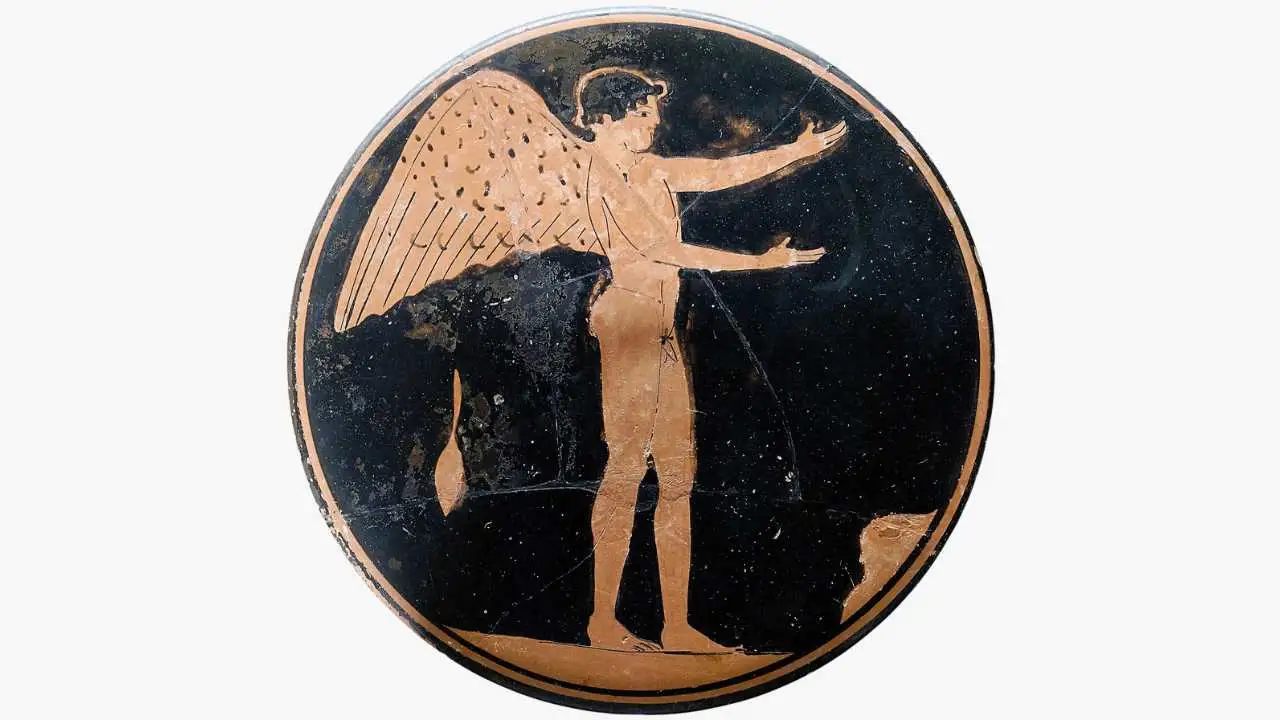
When it comes to religion there was no specific god for obsessive love, but Eros, the personification of love, was irrational and could lead to obsession. Much like the 2026 hit Obsession Eros stroke suddenly and without warning and even gods could find themselves under Eros' spell.
Gods such as the Maniae (often associated with the Furies as spirits of madness), Ate (goddess of moral error/blindness), or Nemesis (goddess of revenge, divine punishment) could instill divine mania (theia mania) to both mortals and immortals leading them to break divine laws and invite punishment. Here we should, however note that in Phaedrus, Plato argued that the theia mania of love (brought by Eros and Aphrodite) was a divine gift but he meant it more as a form of excitement and intense longing or passion.
Today, overstepping the boundaries is a personal mistake for which the individual can only blame himself but in Greece irrational behavior was not your fault; it was the deity's (well partly as you were still responsible for your actions) and not all deities had a reason for their actions. Gods were just as malicious or jealous as humans and humans could be very obsessed and very petty if rejected as the voodoo dolls and curse tablets from antiquity clearly showcase.
So, without further ado, here are three stories of obsessive love from Greek mythology.
1. Narcissus and Echo
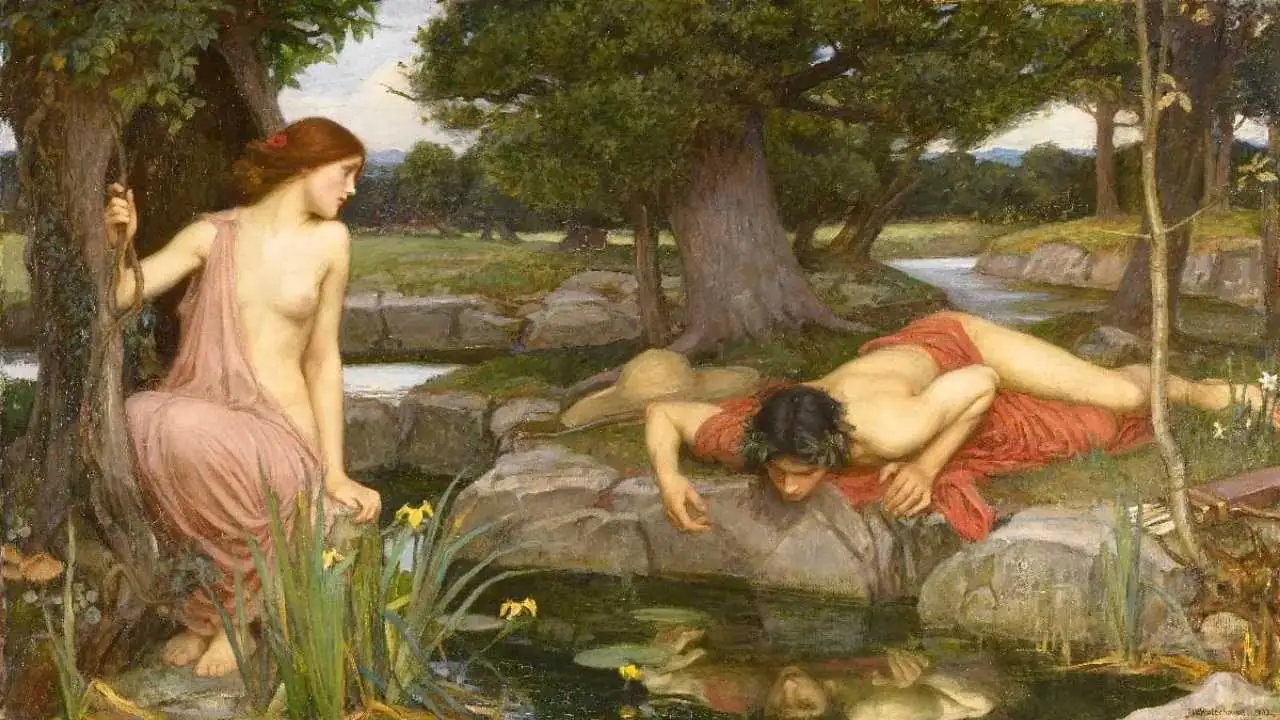
Narcissus was a beautiful young man. His good looks however were like a curse. Echo, a mountain nymph who had been cursed to repeat the last words spoken to her fell hopelessly in love with the beautiful young man. One day she mastered the courage to approach him, but Narcissus rejected her and Echo was so devastated that as she wandered the mountains she faded away until nothing was left of her but her voice.
Nemesis, the goddess of revenge, decided to punish Narcissus by cursing him to fall in love with "someone he can never have".
Soon after, Narcissus knelt by a crystal-clear pool and saw his own reflection. He thought he was looking at some sort of a water spirit. His own reflection magnetized him, he wanted to touch the man on the water but couldn't. Then again, he couldn't turn his eyes away from the pool.
He was obsessed. He said:
"I am he. I sense it and I am not deceived by my own image. I am burning with love for myself. I move and bear the flames. What shall I do?... Strange prayer for a lover, I desire what I love to be distant from me... I wish that him I love might live on, but now we shall die united, two in one spirit." Ovid, Metamorphoses 437-73
He couldn't eat, sleep, or look away. Finally, just like Echo had withered away, he vanished and a beautiful flower, the Narcissus, sprang where he once stood.
2. Apollo and Daphne
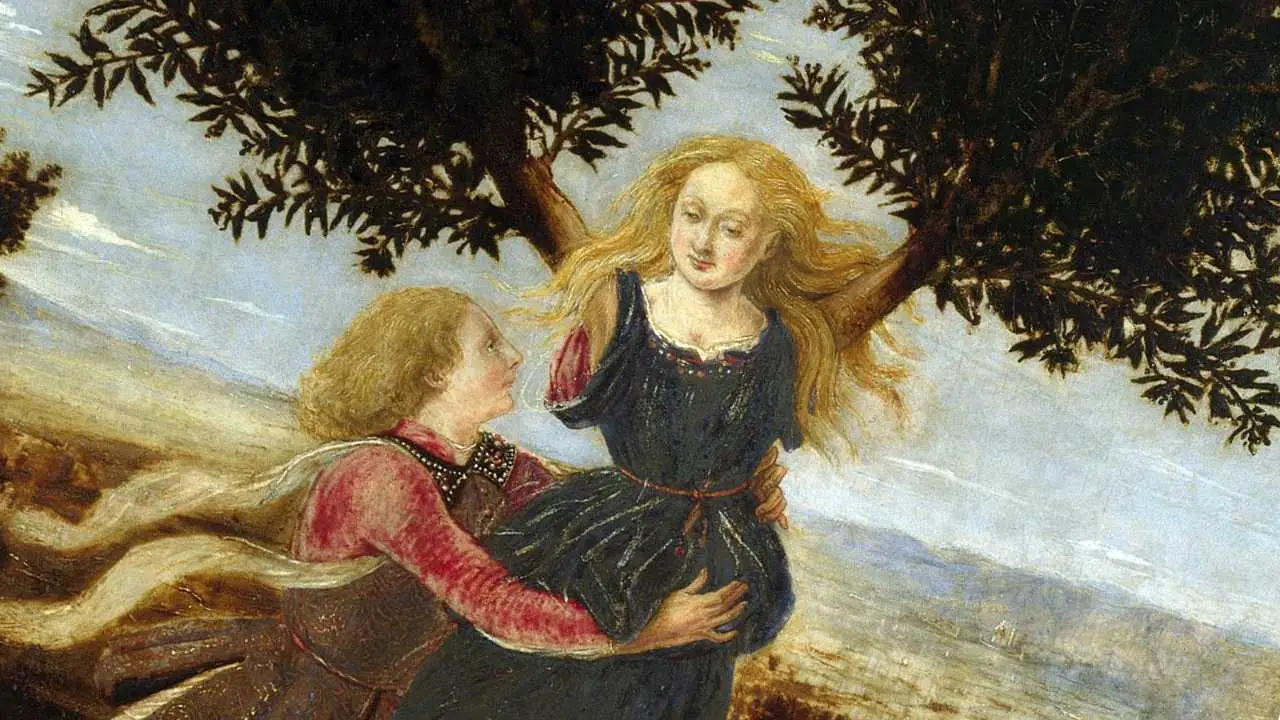
While Narcissus is essentially a story about self-obsession, the story of Apollo and Daphne is all about the incontrollable obsession with the other.
Apollo, the god of light, prophecy, and music, offended Cupid, the god of love, by making fun of his archery skills.
“You may hit every other thing Phoebus, but my bow will strike you: to the degree that all living creatures are less than gods, by that degree is your glory less than mine.” Ovid, Metamorphoses
Cupid then shot Apollo in the chest with an arrow, that made him fall madly in love with a river nymph who happened to be nearby. Her name was Daphne and she had sworn a vow of eternal chastity. Cupid also shot her with a different kind of arrow that made her feel disgust for Apollo.
A wild chase unfolded. Unable to control himself, Apollo hunted Daphne in the forest as she desperately sought to escape.
Right as Apollo caught up to her, Daphne spotted the waters of her father, the River Peneus. Desperate, she cried out loud for his help. The nymph then turned into a laurel tree and since then, the laurel became Apollo's sacred tree.
3. Salmacis and Hermaphroditus
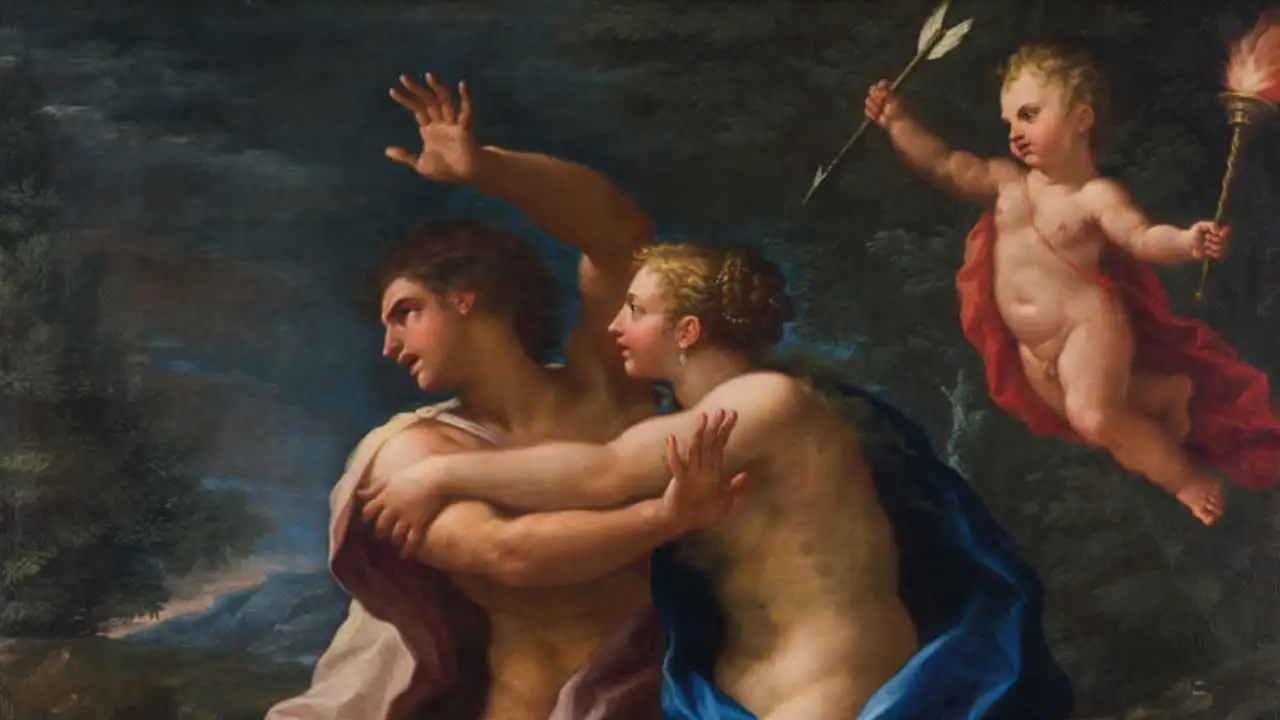
The myth of Salmacis and Hermaphroditus is a proper horror story. In fact it may remind you the 2025 film Together.
Hermaphroditus, was the handsome son of Hermes and Aphrodite (hence his name). One day, the naiad (river nymph) Salmacis saw him and fell in love. She immediately made a move on him but Hermaphroditus was not interested. Salmacis insisted and tried to kiss him but he rejected her and Salmacis pretended to leave.
Hermaphroditus thought that he was alone as he took off his clothes and entered the waters of a nearby pool. However, Salmacis was watching him from a distance.
As soon as the boy dove his head inside the water, Salmacis run naked, jumped into the pool and hugged him. He tried to repel her, but she insisted, wrapping her legs and hands around him. Salmacis prayed loudly for the gods to unite them forever, to make them one, and the gods heard her prayers.
The result was one being, half Salmacis, half Hermaphroditus. Half man, half woman.
Now the entwined bodies of the two were joined together, and one form covered both. Just as when someone grafts a twig into the bark, they see both grow joined together, and develop as one, so when they were mated together in a close embrace, they were not two, but a two-fold form, so that they could not be called male or female, and seemed neither or either. Ovid, Metamorphoses 346-88
Conclusion
I think there is something uncanny in all these stories but not in the way that Backrooms (2026) was. Much like in the film Obsession, the three myths discussed here reflect situations that are in some way or another relatable. Behind them all hides the concept of intense love that is not reciprocated. This extreme, intense longing for something, be it someone else or one's own self (in Narcissus' case) is a distortion of the more familiar romanticized love.
Unlike obsessive love, romantic love is thought to make the world more beautiful and life worth-living. But love as we saw can also be destructive, often self-destructive if obsessive and not reciprocated. It seems like a natural disaster almost in that it is not within one's control and is not predictable. The ancient Greeks were afraid of the destructive consequences of such a force, just as much as we are when we experience in the theater (and hopefully not in real life).
Bibliography
For the stories discussed in this article, I used Ovid's Metamorphoses, as translated by A.S. Kline. There are multiple different versions of these myths.