Euripides' Alcestis & Nietzsche's Amor Fati on Cheating Death
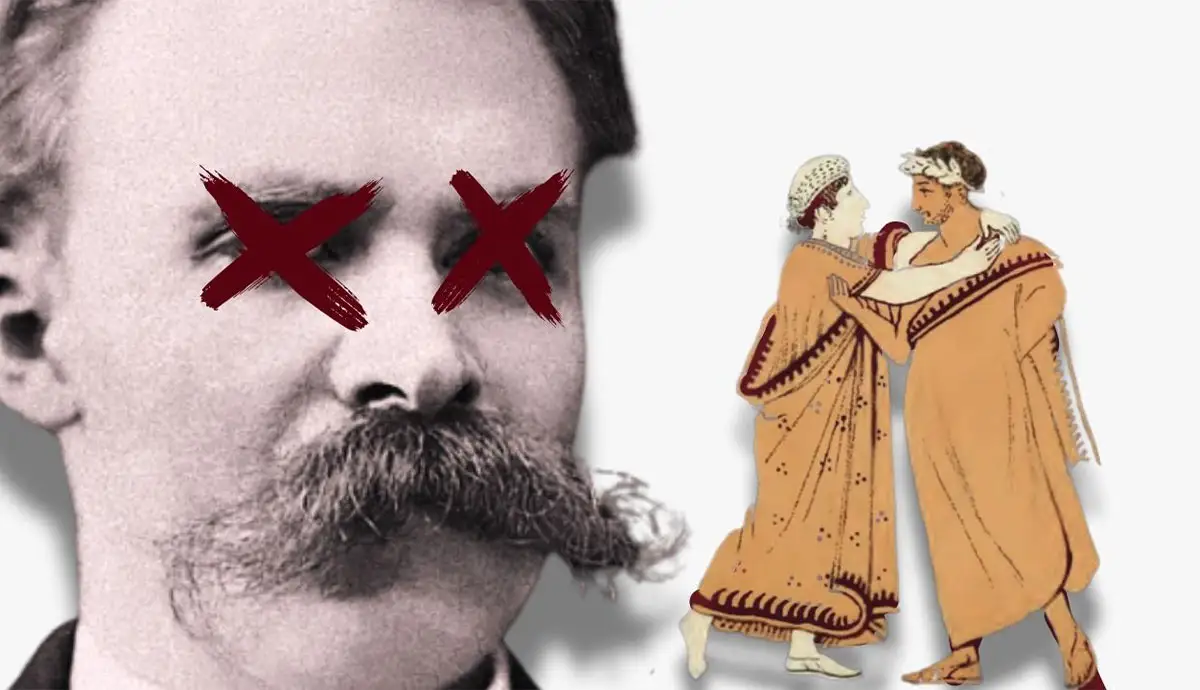
Would you die in your partner's place? Euripides' ancient Greek tragedy Alcestis is the perfect introduction to Nietzsche’s concept of amor fati.
Summary
- In Euripides’ Alcestis, King Admetus cheats death by allowing his wife, Alcestis, to take his place in the grave.
- Admetus discovers that the guilt makes his life worse than death. However, Heracles brings Alcestis back from the dead resolving the tragic dead end.
- Friedrich Nietzsche’s philosophy of amor fati which championed the radical acceptance of one's fate works well with Euripides' message.
Imagine that your partner comes home with the following news: they are going to die tomorrow. But, there’s hope, he says. Apollo just told him that if can find someone willing to literally die in his place, he will live. "Do you want to do it?", he asks. So, would you?
What you just read is the premise of the Greek tragedy Alcestis by Euripides; a play whose message can be summarized with Nietzsche's concept of "amor fati", the radical acceptance of one's fate.
Also read: The Unexpected Epigram of Aeschylus' Tomb
Alcestis by Euripides
| Work | Alcestis |
| Playwright | Euripides |
| Genre | Tragedy / Tragicomedy |
| Main Characters | Alcestis (Queen), Admetus (King), Heracles, Thanatos (Death), Apollo |
| Setting | The royal palace at Pherae in Thessaly |
| Premiere | 438 BCE (City Dionysia festival, Athens) |
First performed in 438 BC, Alcestis is Euripides' oldest extant work and certainly not your typical Greek tragedy.
Its premise is closer to a domestic drama based on a thought experiment. Essentially, the story is about a queen who sacrifices herself for her husband and is later resurrected.
Interestingly the play contains comic elements. Heracles works as sort of the comic relief of the play but also, at the same time, the deus ex machina that resolves the tragic dead end with an impossible resolution.
This mix of tragic and comic elements has earned Alcestis the title of the "problem play", as it's hard to situate it firmly within the field of either the tragedy or that of the comedy.
So what's the plot?
The Plot
| Section | Key Events |
| I. Apollo and Admetus | Banished to work for the mortal King Admetus, Apollo tricks the Fates into letting Admetus avoid death if he finds a substitute. When his parents refuse, his wife Alcestis volunteers. |
| II. Apollo Confronts Thanatos | Apollo tries to persuade Thanatos (Death) to spare Alcestis but fails. Apollo prophesies that Thanatos will eventually have to surrender her. |
| III. Final Moments of Alcestis | As Alcestis dies, she asks Admetus to never remarry and inflict a stepmother on their children. Admetus agrees and is consumed by grief. |
| IV. Heracles Arrives | Heracles stops by during his labors. To maintain perfect hospitality, Admetus hides his wife's death, allowing Heracles to feast and drink in ignorance. |
| V. Pheres Enters | Admetus blames his father, Pheres, for not dying in his place. Pheres argues he owes his son no such debt and blames Admetus for selfishly letting Alcestis die. |
| VI. Heracles Learns the Truth | A servant reveals the truth about the mourning. Deeply ashamed of his partying, Heracles resolves to ambush Thanatos at Alcestis' tomb to repay his host. |
| VII. Admetus Realizes His Mistake | Admetus recognizes his terrible error. He realizes that by avoiding his own fate, he has condemned himself to a life of sorrow worse than death. |
| VIII. Alcestis Returns | Heracles brings back a veiled woman, forcing Admetus to accept her. She is revealed to be Alcestis, rescued from Death. However, she remains hauntingly silent, leaving her true feelings unresolved. |
I. Before Alcestis: Apollo and Admetus
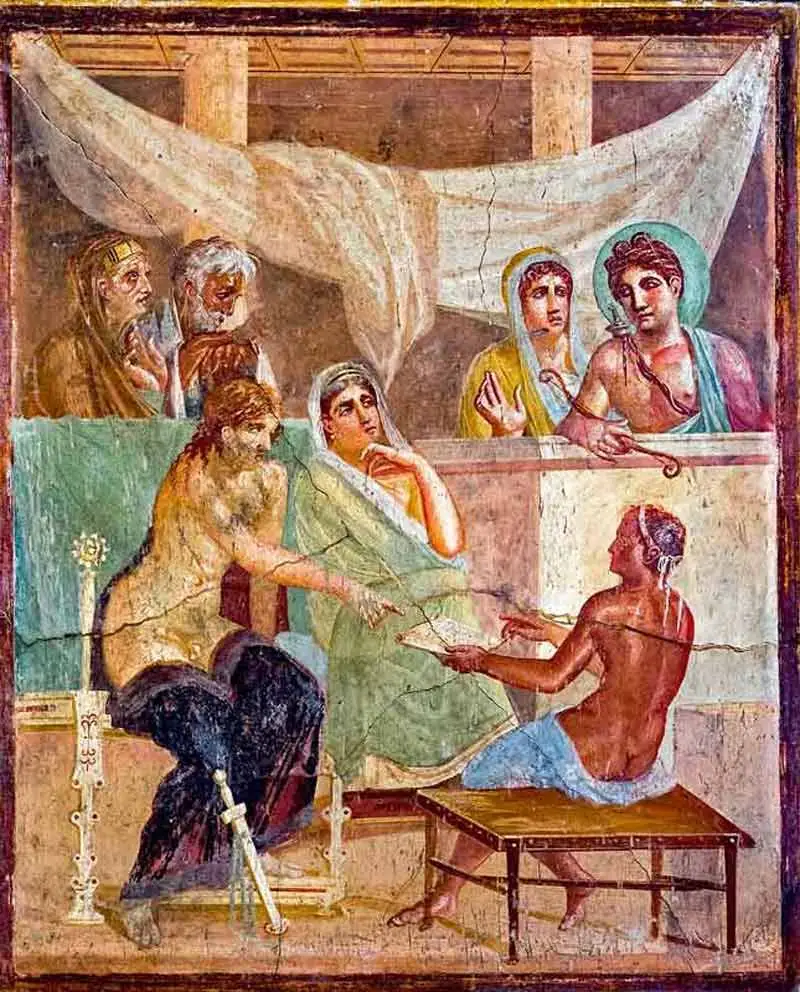
A few important events have transpired before the start of the play.
After Apollo killed, depending on the tradition, either the Python of Delphi or the Cyclopes, Zeus banished him from Olympus. The god was sentenced to work as a mortal for one whole year and he found refuge at the home of the king of Thessaly Admetus, who was known for his hospitality.
Apollo became sort of Admetus' patron god since. According to multiple ancient traditions the two were involved romantically but still the god helped Admetus win the hand of the beautiful and noble Alcestis, daughter of Pelias and princess of Iolcos.
Apollo saved Admetus' life more than once but his most important feat was convincing the Fates (aka Moirae) of something that was previously unheard of. The god of light and prophecy got the goddesses of fate drunk and tricked them into allowing Admetus to live beyond his predetermined day of death.
However, there was a catch: Admetus had to find someone to die in his stead.
Admetus asked his parents but they refused. Then, unexpectedly, Alcestis volunteered.
Euripides' tragedy begins at this point.
II. Apollo confronts Thanatos
In the first scene of Alcestis, Apollo meets Thanatos, the god of death, to ask him to spare Alcestis. Thanatos however is unmoved. The god of death will not give up another soul for Apollo's hake.
Apollo, as the god of prophecy, foresees that Thanatos will eventually have to give up the soul of Alcestis.
III. The final moments of Alcestis
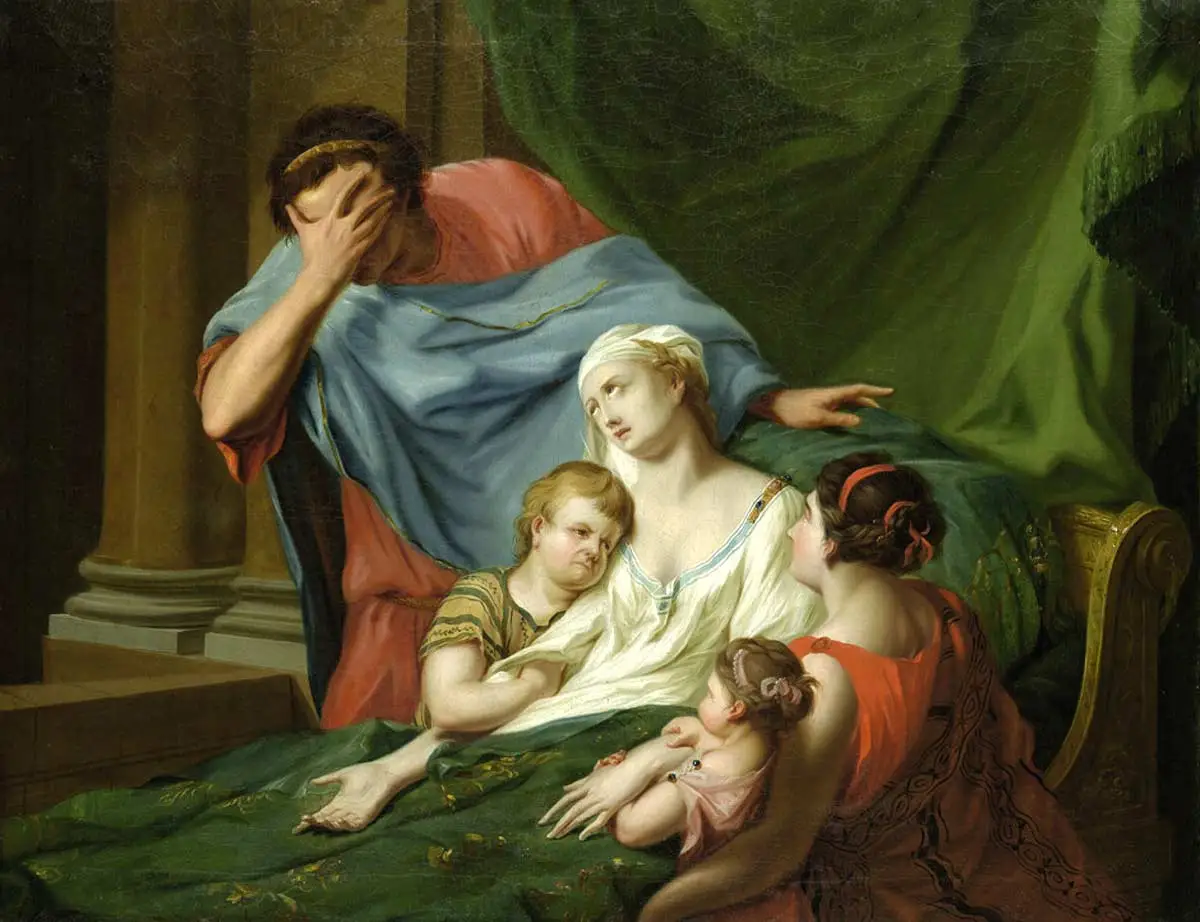
The chorus (fifteen men of Pherae) appear confused as to whether they should lament the death of Alcestis which is about to occur. A maid shows up from the palace and narrates how Alcestis prepares to depart from the world of the living and abandon her two children while Admetus is consumed by sorrow.
Next, we find Admetus with Alcestis and their two children awaiting the arrival of Thanatos. As Alcestis feels life abandoning her she asks Admetus to respect her final wish: never to remarry.
...Keep them [our children] to be masters here
In my old house; and bring no stepmother
Upon them...
Admetus accepts and as Alcestis finally dies he is consumed by sorrow.
The chorus begins to lament the death of the Queen.
IV. Heracles arrives
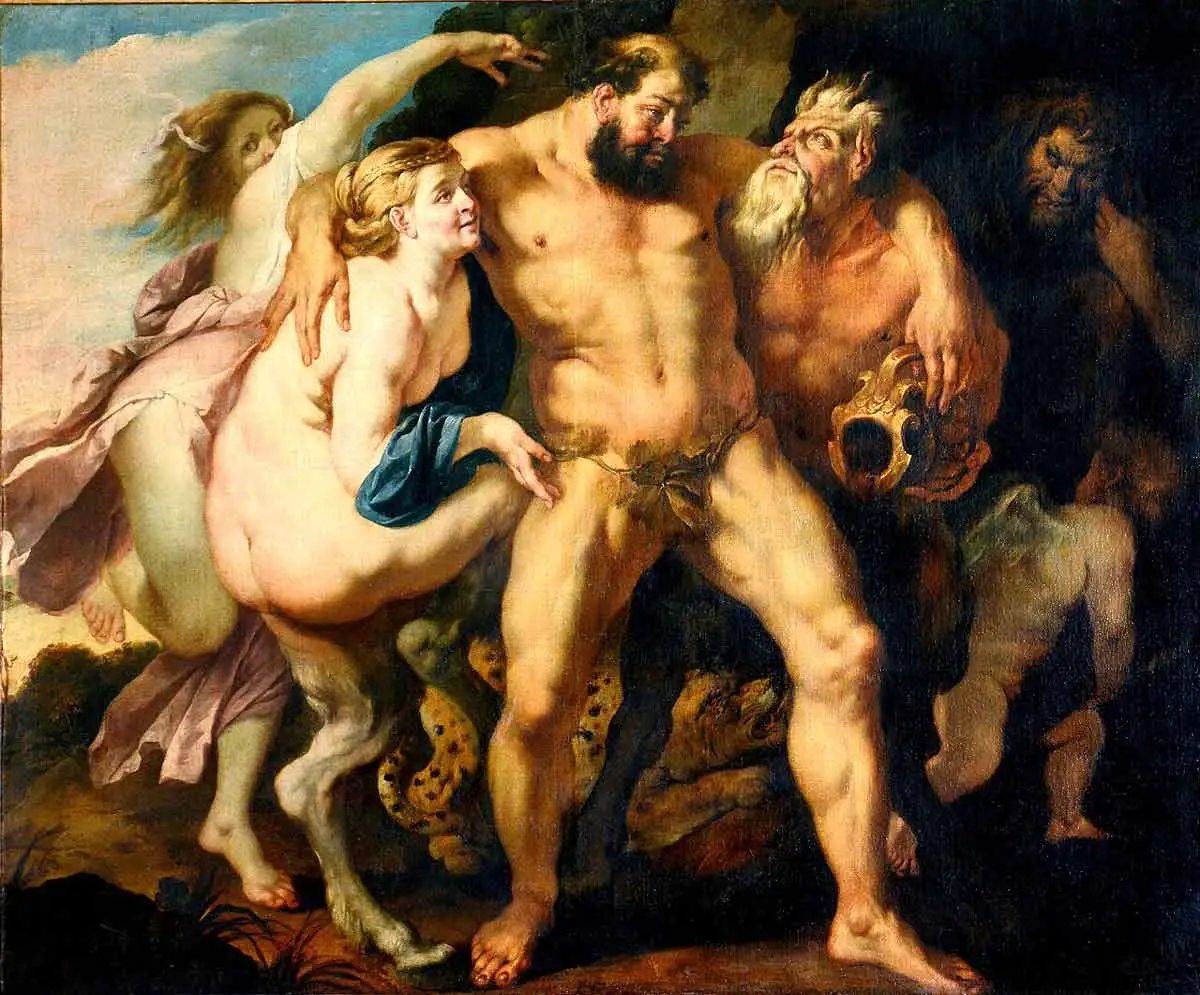
Suddenly, the great hero Heracles arrives at the palace. He says that he is on his way to perform one of his labors, to steal the horses of Diomedes, and as he was passing through Thessaly he decided to visit his old friend Admetus.
Admetus, obsessed as he is with being a good host, takes in Heracles, but does not tell him that his wife just passed.
Heracles, oblivious to the circumstances, enjoys the hospitality of Admetus. The hero begins a great feast, consuming more food than expected and getting overwhelmingly drunk.
V. Pheres enters
In the next scene, Pheres, the father of Admetus arrives to pay his tribute. He offers a gift to Admetus and tells him how saddened he is by Alcestis' passing.
Admetus however is furious with his father who let Alcestis die and did not take his place. Why did he not want to die for his son?
What Pheres says next is unexpected. He argues that he has given everything he should have to Admetus. He brought him up, provided good education, and even gave him his own throne.
However he owes him no debt.
His life is his own just as his death is. Life is no less enjoyable to an old man, as it is to a young one. It's not the father who is to blame for Alcestis' death but the son who cherished his own life so much that he allowed his own wife to die in his place!
VI. Heracles learns the truth about Alcestis
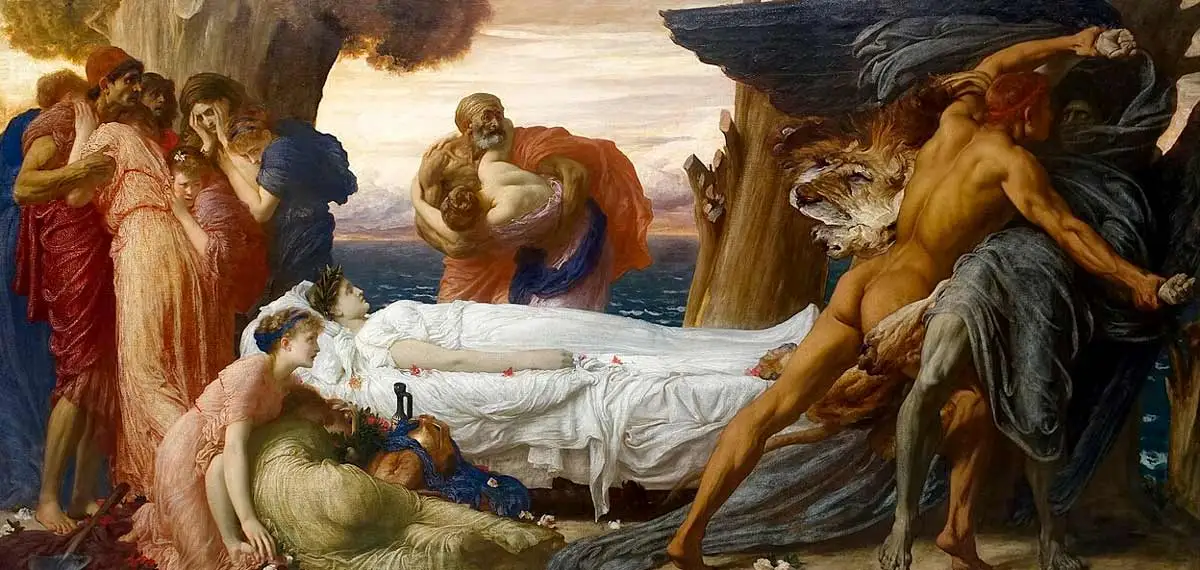
Back at the palace Heracles parties hard. The music annoys the servants who are still mourning for Alcestis and eventually, one of the servants reveals the truth: the reason why everyone is sad is that the wife of Admetus just died.
Heracles is devastated. He immediately feels shame for partying like there was no tomorrow. But understands that Admetus did not tell him the truth so as not to send him away.
Heracles feels that he owes a debt towards his selflessly hospitable host, so, he decides to visit Alcestis' tomb and ambush Thanatos as he takes the funerary sacrifices.
VII. Admetus realizes his mistake
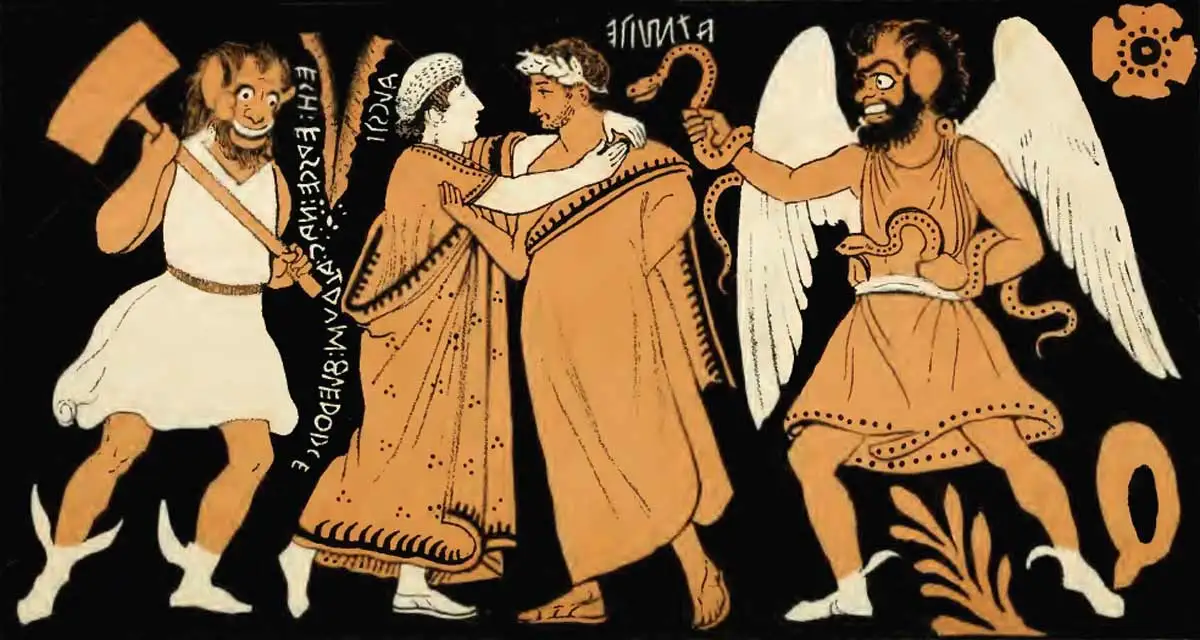
In the next sequence, Admetus mourns his fate with the chorus. He realizes that he should have died as was his fate and Alcestis should have lived. He chose wrongly and suffers for it.
Behold, I count my wife's fate happier,
Though all gainsay me, than mine own. To her
Comes no more pain for ever; she hath rest
And peace from all toil, and her name is blest.
But I am one who hath no right to stay
Alive on earth; one that hath lost his way
In fate, and strays in dreams of life long past….
Friends, I have learned my lesson at the last.
VIII. Alcestis returns but something is off
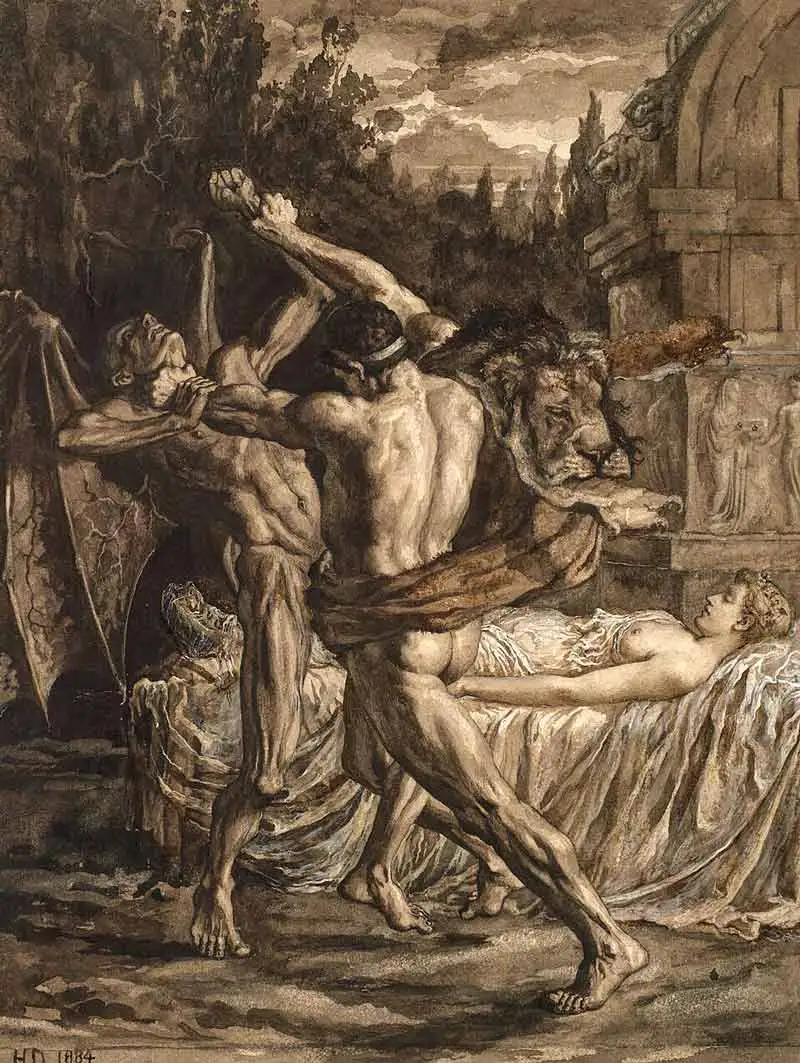
Heracles finally returns to the palace with a veiled woman and tells Admetus that he won her at a competition. After an intense back and forth he forces Admetus to keep the woman until the hero returns from his next labor.
As Admetus approaches the woman, however, it is revealed that she is Alcestis. Heracles managed to fight death and bring her back.
But something is off.
Alcestis cannot talk. As Heracles explains:
She hath dwelt with Death. Her voice may not be heard
Ere to the Lords of Them Below she pay
Due cleansing, and awake on the third day.
As the play ends, Alcestis' silence is haunting. What did she think about all this?
Is she happy to be back? Is she angry at Admetus for accepting her into his house back when he thought that she was an unknown woman? Did she regret dying for Admetus or would she do it again? Euripides does not tell us.
So what's Alcestis about?
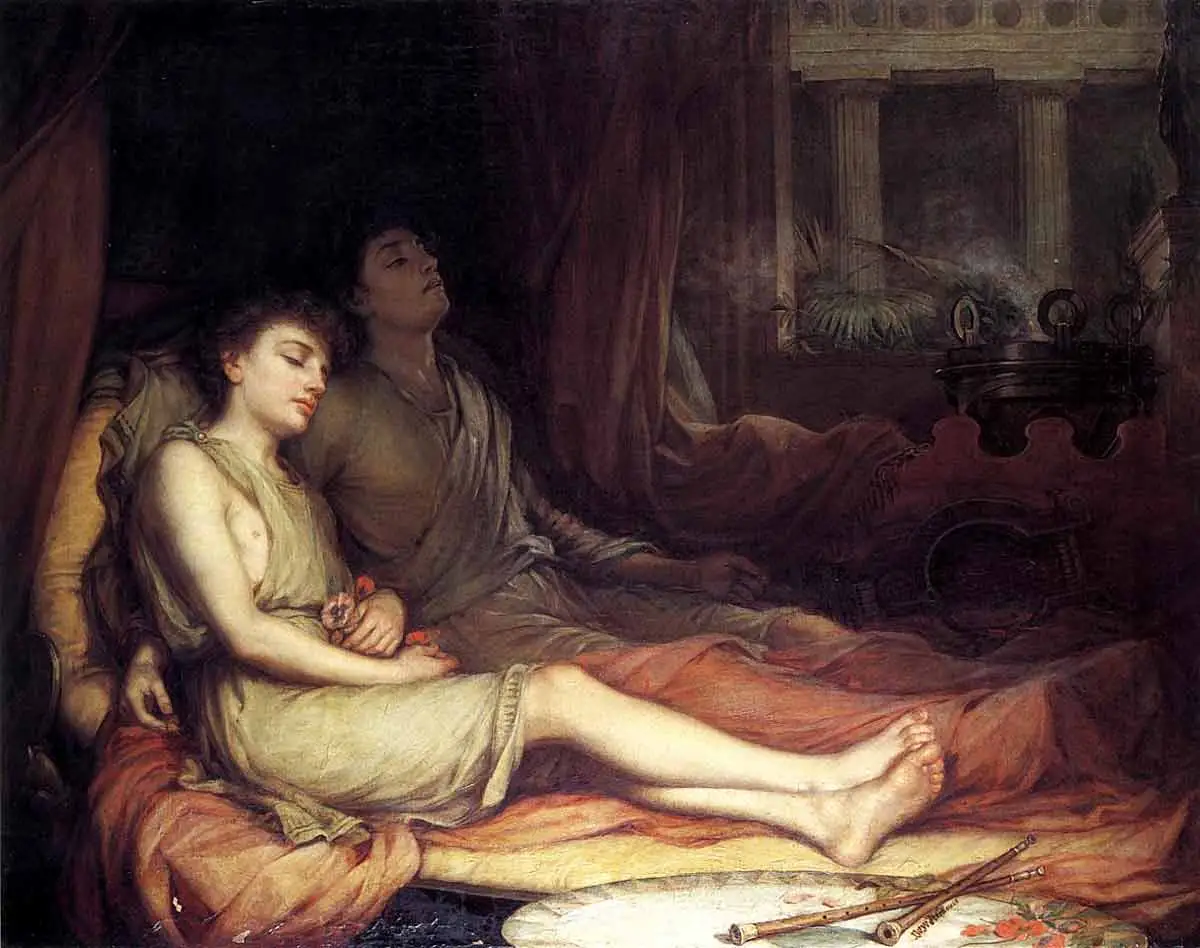
Alcestis is brilliant exactly because it refuses to give us a clean ending. Throughout the play Alcestis is constantly praised by everyone for being an ideal woman-wife. She is devoted, willing to even sacrifice herself for her husband. But this ideal is challenged here. The fact that Alcestis is willing to do all this, does not mean that she should.
Admetus is also a strange character. He is a friend of Apollo and Heracles, and hospitable beyond reason (as he allows guests to party during his wife's funeral). However, he is also uniquely cowardly. He goes after life but at the end realizes that he made the wrong choice by allowing Alcestis to die. He has become a coward, someone being pointed at for practically murdering his own spouse. This life is worse than death.
Without the intervention of Heracles the play would be a deadend; an unresolved drama. But Heracles acts as the deus ex machina. He magically solves everything by bringing Alcestis back to life. The deadend is resolved and Admetus gets to have his cake and eat it too.
But real life is not like that. No Heracles will magically solve your problems.
The Greeks believed that a good life could be achieved if someone was both kalos (beautiful) and agathos (good/virtuous). This ideal of kalokagathia (καλοκαγαθία) goes at least as far back as the father of history himself and Admetus's cowardly survival clearly fails to live up to tis ideal.
At the end of the play it is clear that Admetus took the wrong course of action. The virtuously correct path would have been to accept his fate and welcome the god of death, allowing his wife to live her life.
By refusing to accept his fate, he did escape death, got exactly what he wanted (to live), but learned that he should be careful what he wishes for (Obsession vibes here...).
Why Nietzsche would tell Admetus to Amor his Fati
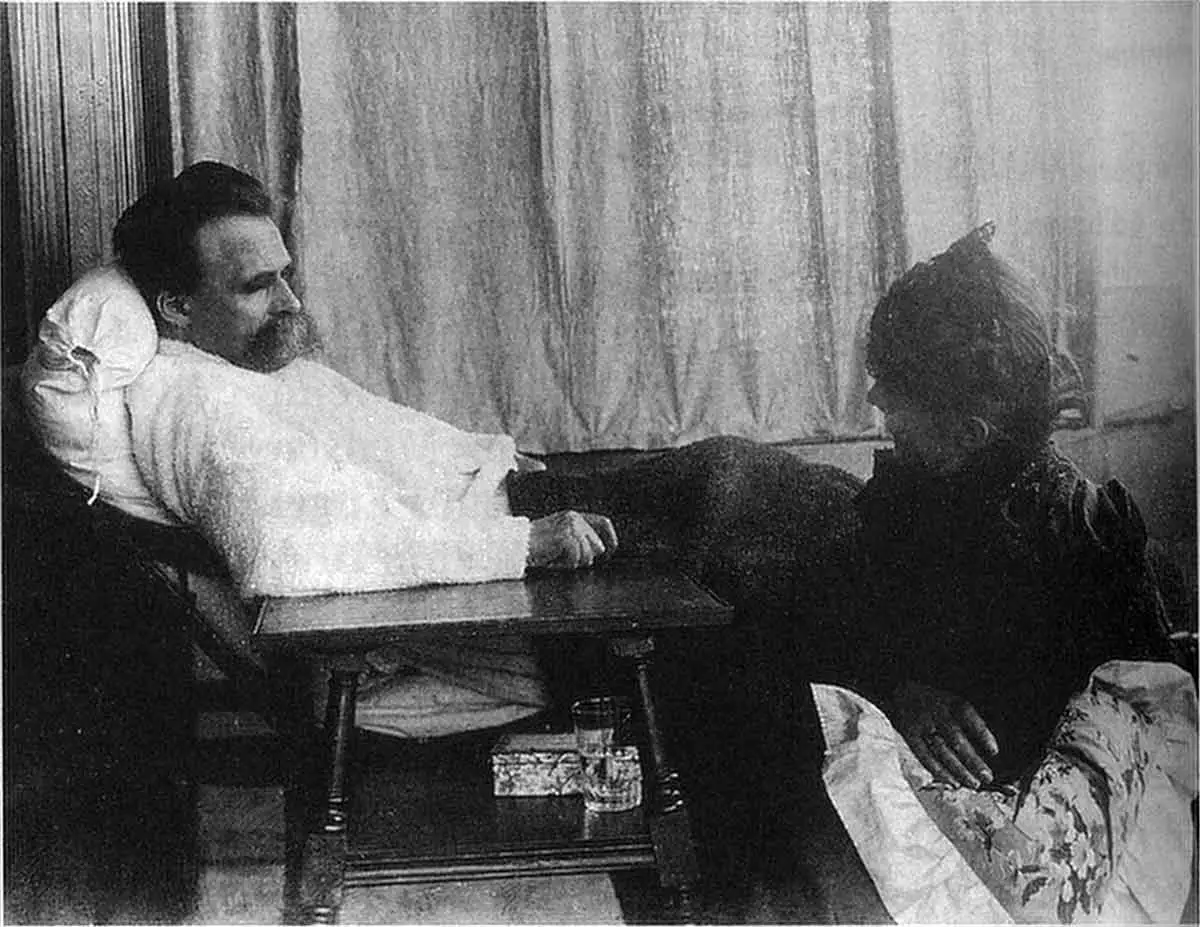
In Ecce Homo, his final and most accessible work, Friedrich Nietzsche presented the pillars of his philosophy. Among them is the concept of amor fati which he described as "the core of [his] essence".
The latin term comes from the Greek philosopher Epictetus and roughly translates to "love of fate". Here's how Nietzsche describes it:
My formula for greatness in man is! amor fati: the fact that a man wishes nothing to be different, either in front of him or behind him, or for all eternity. Not only must the necessary be borne, and on no account concealed,—all idealism is falsehood in the face of necessity,—but it must also be loved.... (Nietzsche, Ecce Homo, XII)
So the German philosopher is not asking to lay down and accept everything. He is asking us to love our fate despite adversities. Radically accept the past and what the future holds. This is a concept that pairs well with Nietzsche's eternal recurrence, the idea that one should live life as if it would endlessly repeat itself; as if every moment was going to take place again.
Euripides would agree with Nietsche that Admetus should have loved his fate; even if his fate meant his life's end.
In another line from Twilight of the Idols, Nietzsche writes something that seems perfectly appropriate for the case of Admetus, and perhaps exactly what Euripides wanted to convey with Alcestis.
One should die proudly when it is no longer possible to live proudly. Death should be chosen freely,—death at the right time, faced clearly and joyfully and embraced while one is surrounded by one’s children and other witnesses. It should be affected in such a way that a proper farewell is still possible, that he who is about to take leave of us is still himself, and really capable not only of valuing what he has achieved and willed in life, but also of summing-up the value of life itself. (Nietzsche, Twilight of the Idols, 89)
Bibliography
- Aristotle. Nicomachean Ethics.
- Euripides. Alcestis. translated by Gilbert Murray.
- Nietzsche, Fr. 1911. Ecce Homo. translated by Anthony Ludovici.
- Nietzsche, Fr. 1889. Twilight of the Idols. translated by Anthony Ludovici.
Also read