Why Hegel's Aesthetics Rejected Imitation (& Disliked the Greek Painter Zeuxis)
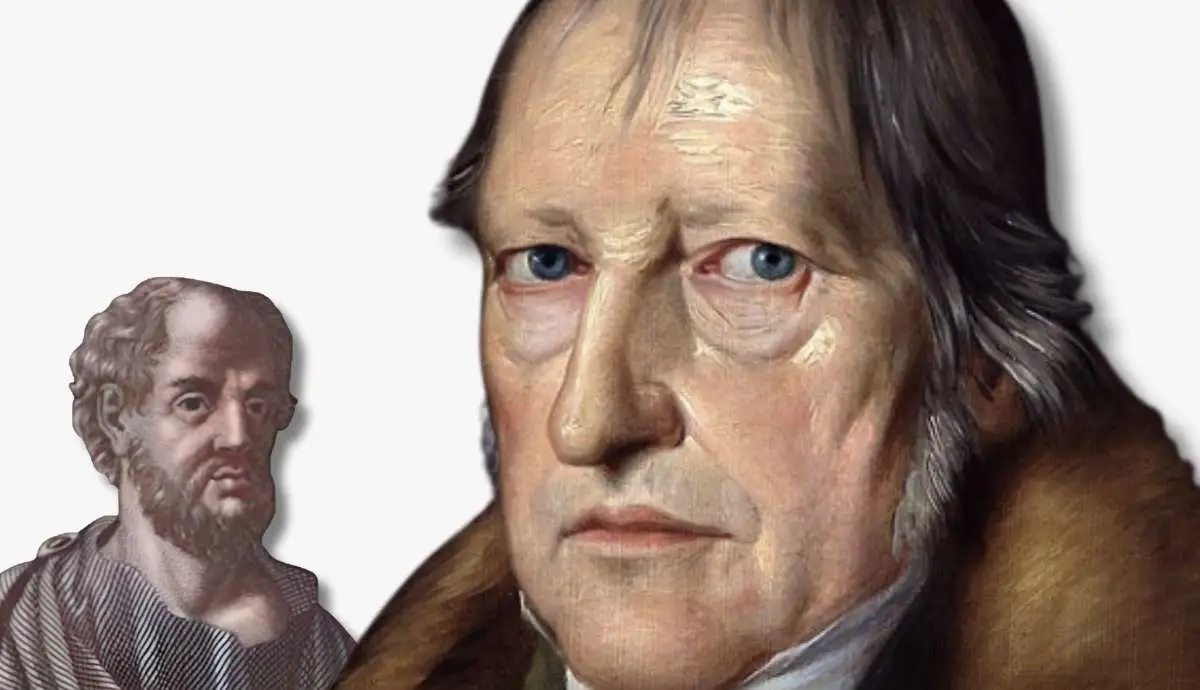
Hegel's philosophy of art rejected mere imitation in favor of an understanding of beauty as a sensuous expression of human freedom.
Summary
- Hegel rejected art as mere imitation of nature, arguing that copying reality is superfluous.
- Using stories like Zeuxis’s hyperrrealistic grapes, Hegel argued that realism is not a viable goal for art.
- For Hegel, art's true purpose lies in pursuing beauty which serves as a sensuous expression of freedom.
Georg Wilhelm Friedrich Hegel (1770-1831) presented two stories in his attempt to prove that imitation is not art's primary purpose. One of these stories concerned the ancient Greek painter Zeuxis who was said to be so skilled in his art, that he once painted grapes that tricked birds into pecking them.
Idealism, Hegel, and Art
The often unbridgeable distance between the artist and the art theorist is the reason why American artist Barnett Newman once proclaimed that ‘aesthetics is for the artist as Ornithology is for the birds'!
Although 20th-century works on aesthetics, especially after Adorno, attempted to bridge this distance and find a point where the theory can meet the practice, Hegel did not take such issues into consideration while lecturing in the 1830s.
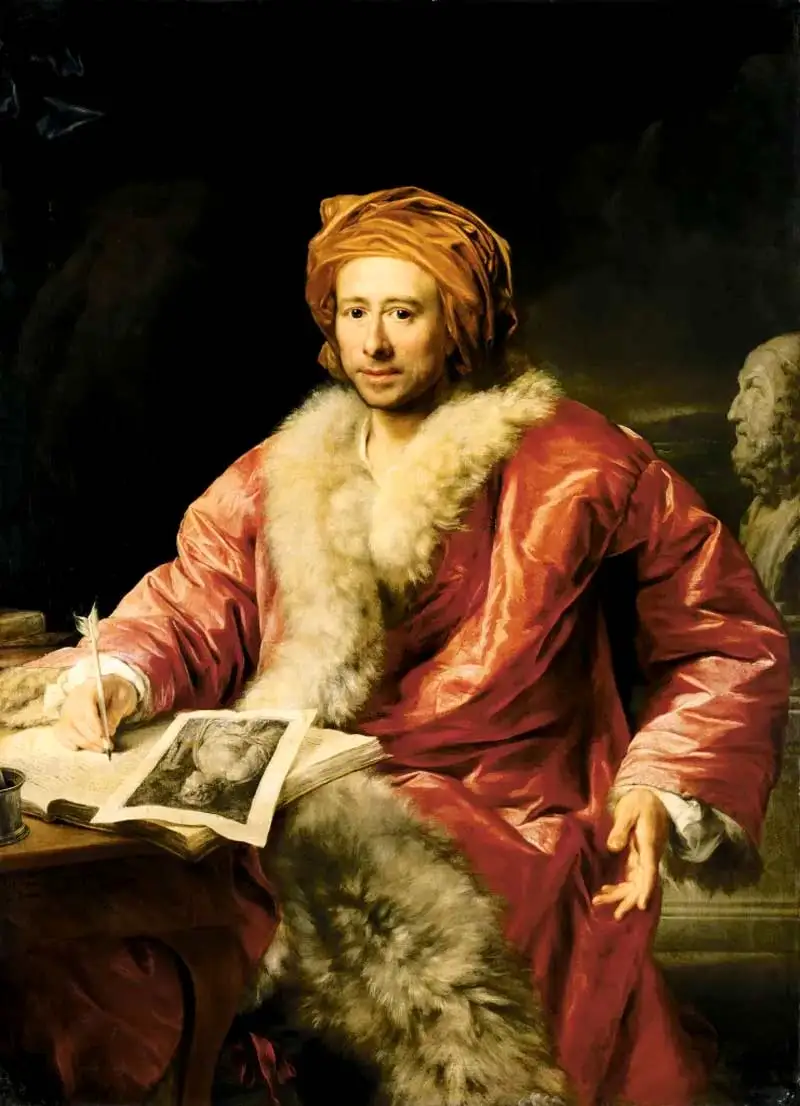
One of the focuses of his lectures was the purpose of art. Hegel briefly entertained the possibility of imitation as art's purpose, only to reject it in favour of a more idealistic view, which he inherited from another German, Johann Joachim Winckelmann (1717-1768), whose History of Ancient Art (1764) gave birth to the fields of Archaeology and Art History as we know them today.
This idealistic view accepted the pursuit of beauty as art's purpose. Beauty for Hegel is understood as a means of sensuously expressing the concept of freedom. In short, for Hegel art points towards a path of freedom which is a higher purpose in itself. I should also mention here that I have previously written about Hegel's end of art theory and his approach to Heraclitus.
Why Hegel Disliked Art That Imitates Nature
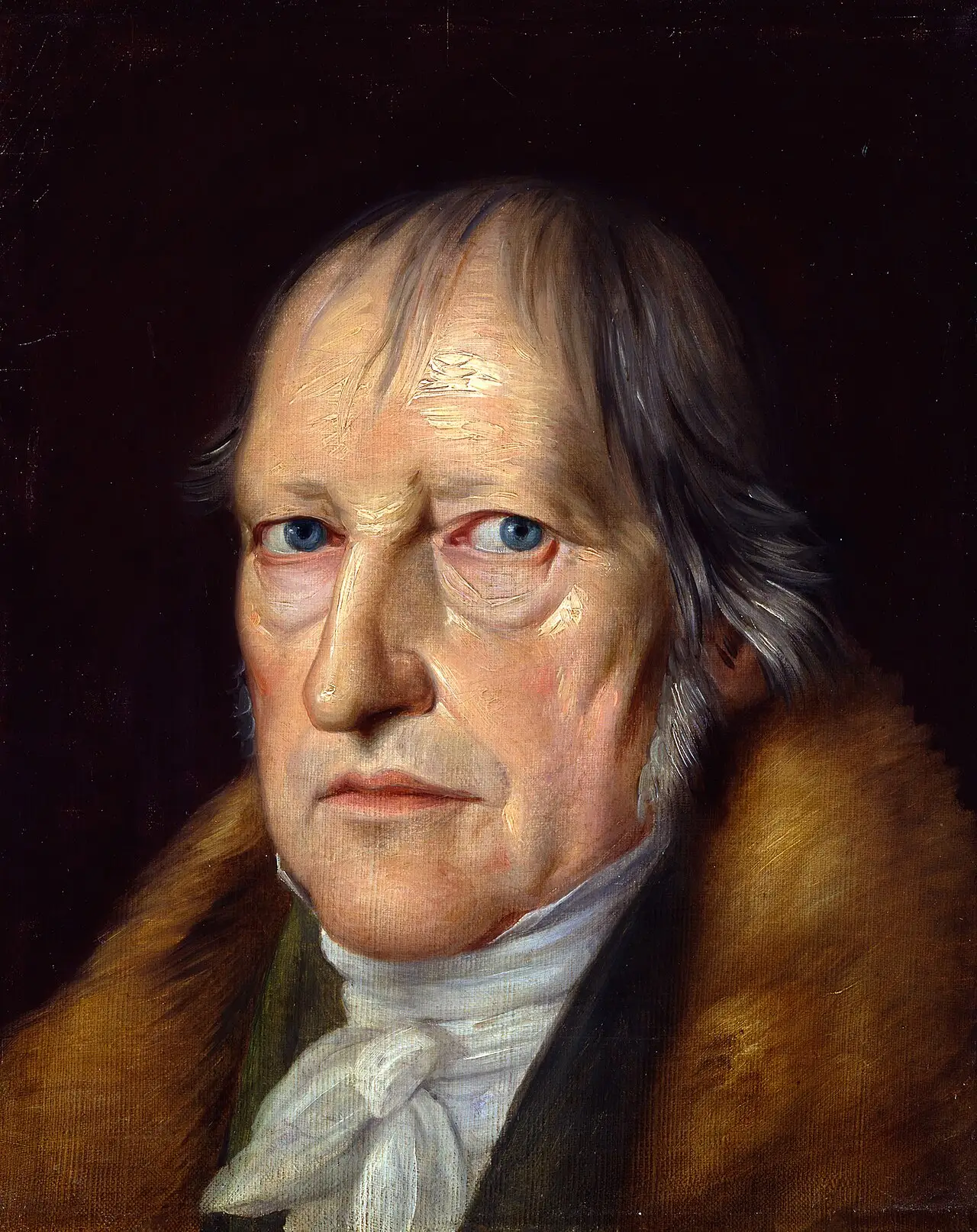
So for Hegel, art that imitates nature, what can be termed as realism, is a dead-end because it cannot live up to his ideological standards of an art that embodies the high ideal of freedom.
Mere imitation means that whatever already exists is made a second time by man as a copy of the already existing. This is a superfluous labor because man tries to compete with nature in its own game.
Man will never be able to beat nature due to the restrictions in the means of representation (e.g. a painting exists only in two dimensions, music engages only with the sense of hearing, but nature is free from such restrictions).
The Story of the Turk
Hegel shares two stories to further explain why imitation cannot be the purpose of art.
The first story refers to the Scottish traveller James Bruce, who travelled to Abyssinia (present-day Ethiopia) and showed the painting of a fish to a Turk:
The Turk was impressed at first but then asked Bruce: If this fish shall rise up against you on the last day, and say "you have created for me a body , but no living soul", how will you defend yourself against such an accusation?
This story, reflecting the dominant iconoclasm of the east, serves to show that imitation is unable to reproduce the essence of life. Humans can mimic nature in detail, but the 'soul' of things is beyond replication, an idea that we also encounter in Benjamin's concept of the aura (although his aesthetics took a completely different path than Hegel's).
The Story of Zeuxis
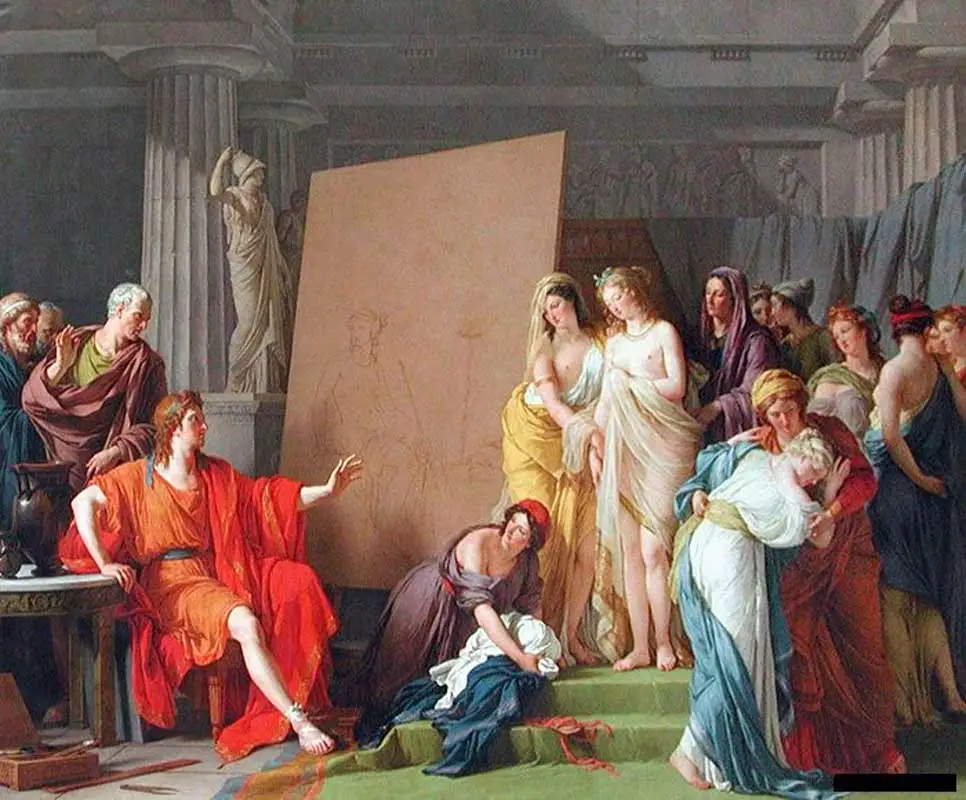
The second story concerns the Greek painter Zeuxis.
Zeuxis was such a good painter that he could draw grapes which living doves pecked. Hegel does not provide the whole story of Zeuxis, but I think it deserves a closer look.
The following passage can be found in Pliny the Elder's Natural History 35,29:
[Parrhasius, a prominent Greek painter] entered into a pictorial contest with Zeuxis, who represented some grapes, painted so naturally that the birds flew towards the spot where the picture was exhibited. Parrhasius, on the other hand, exhibited a curtain, drawn with such singular truthfulness, that Zeuxis, elated with the judgment which had been passed upon his work by the birds, haughtily demanded that the curtain should be drawn aside to let the picture be seen. Upon finding his mistake, with a great degree of ingenuous candour he admitted that he had been surpassed, for that whereas he himself had only deceived the birds, Parrhasius had deceived him, an artist.
There is a story, too, that at a later period, Zeuxis having painted a child carrying grapes, the birds came to peck at them; upon which, with a similar degree of candour, he expressed himself vexed with his work, and exclaimed:
" I have surely painted the grapes better than the child, for if I had fully succeeded in the last, the birds would have been in fear of it."
A Spanish Zeuxis of the 17th Century
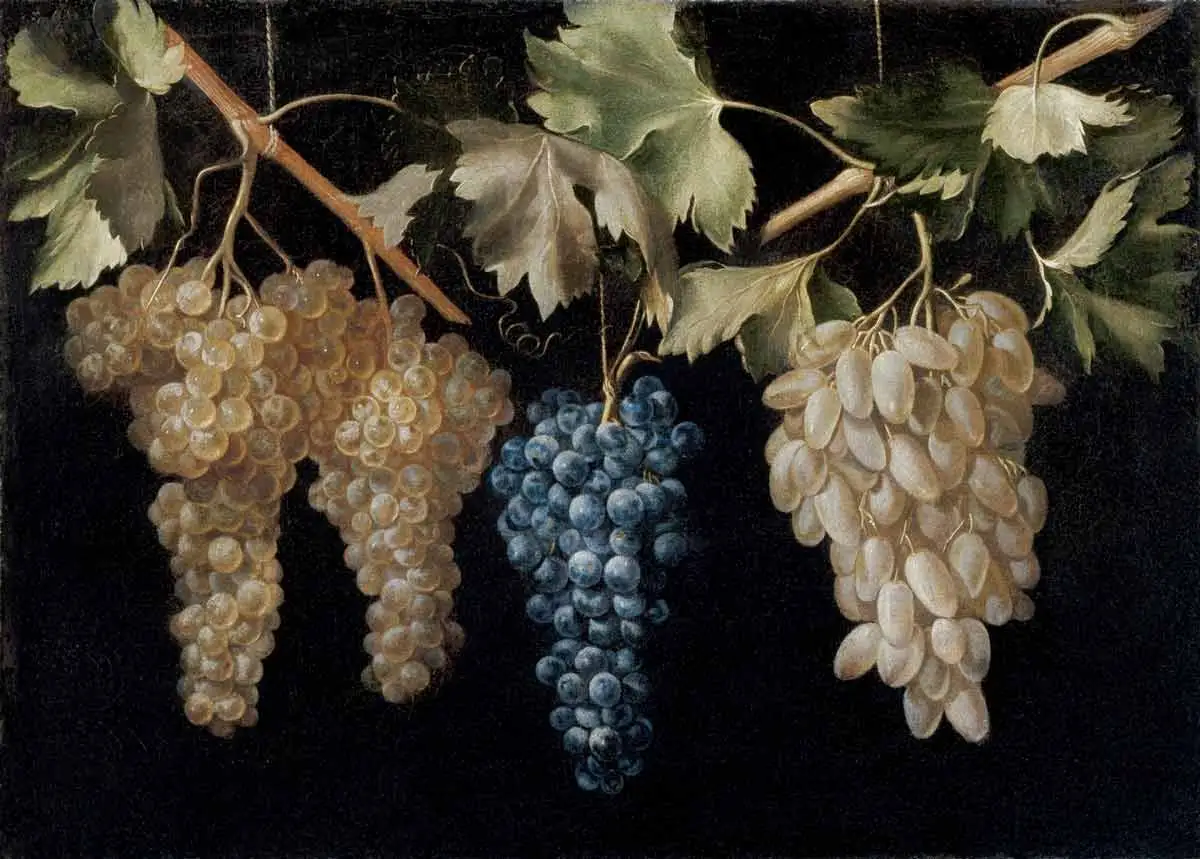
Is the picture above a 17th century attempt at besting Zeuxis? Juan Fernández el Labrador was a Spanish painter whose early work was focused on grape painting. Using chiaroscuro to create a dramatic effect, Fernandez' grapes 'imitate' nature perfectly. Although I don't think birds pecked any of his paintings, it is certainly not a coincidence that Fernandez was called the 'modern Zeuxis's.
In any case, Hegel would probably not appreciate modern Zeuxis's work, the same way he did not appreciate the old one's.
Hegel Contra Zeuxis
Hegel sees in Zeuxis' art the best of imitation and finds it insufficient. Such art eventually "looks like a worm trying to crawl after an elephant", he says.
This imitation for the sake of imitation represented by Zeuxis reminds Hegel of the man that threw lentils through a small opening without missing, and whom Alexander the Great presented with a bushel of lentils, as a reward for his "frivolous and meaningless art".
The End
This is not the end of Hegel's 'attack' against the art of imitation, but is certainly the end of the most entertaining bit of his critique.
Hegel saw beauty as a means for representing freedom and mediating between the material world and the spiritual (the world of the Geist, the spirit). For the German thinker, art's purpose cannot also be decorative or a mere call to moral or political action. Hegel's ideal art is a tool for progressing history and a reflection of the evolving human spirit.
This apolitical stance would raise the objections of the members of the Frankfurt School a few decades later. Walter Benjamin in "The Work of Art in the Age of Mechanical Reproduction" wrote that fascism introduces aesthetics into politics (aestheticizes politics), and communism responds by politicizing art. Adorno, in his "Aesthetic Theory", also criticized Hegel's aesthetics and more specifically his "end of art" theory.
Bibliography
- Hegel, G.W.F. 1975. Aesthetics: Lectures on Fine Art. translated by T. Knox. Oxford: Clarendon Press. (pages 41-54 for the part on imitation)
- Houlgate, S. 2016. ‘Hegel’s Aesthetics’, The Stanford Encyclopedia of Philosophy, edited by E.N. Zalta.
Also read: