The Unexpected Epigram of Aeschylus' Tomb
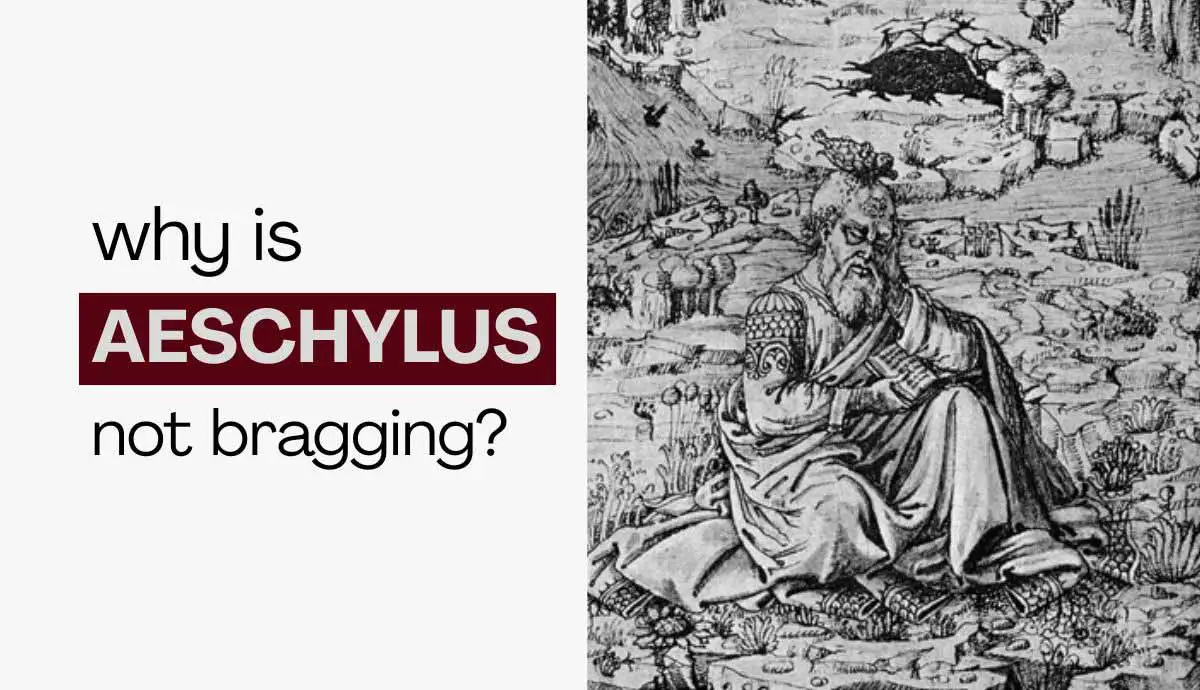
Why did Aeschylus, Greece’s greatest tragic playwright, erase his theater career from his own tombstone?
Key Takeaways
- The Omission: The famous epigram on Aeschylus' tombstone ignores his work as a playwright.
- The Marathon Paradox: The epitaph celebrates Aeschylus' participation at the Battle of Marathon while completely omitting the more decisive battles at Salamis and Plataea.
- The Citizen Ideal: The omission reveals a classical worldview prioritizing democratic collective duty and citizenship over individual artistic achievements.
If you were the father of Greek tragedy, you would likely want people to remember you for your masterpieces like The Persians or Prometheus Bound. Yet, the ancient epigram attributed to Aeschylus ignores his work entirely. It commemorates only one thing: his participation at the Battle of Marathon. But why?
Also read: How Herodotus Became Known as the Father of Lies.
The epigram on Aeschylus' Tomb
Aeschylus and his brother Cynegeirus fought at the battle of Marathon (490 BC) against the Persian army led by Datis and Artafernes.
Toward the end of his life, Aeschylus went to Gela of Sicily. After his death, the Geloans are said to have carved the following epigram on his tombstone:
This memorial holds Aeschylus the Athenian, son of Euphorion,
who died in grain-bearing Gela.
The grove of Marathon could speak of his famous courage and the Mede with thick long hair who knows of it.
And the original Greek:
Αἰσχύλον Εὐφορίωνος Ἀθηναῖον τόδε κεύθει μνῆμα καταφθίμενον πυροφόροιο Γέλας·
ἀλκὴν δ᾽ εὐδόκιμον Μαραθώνιον ἄλσος ἂν εἴποι
καὶ βαρυχαιτήεις Μῆδος ἐπιστάμενος.
This story is told in Athenaeus' Deipnosophists (14.6) and the epigram is repeated in other sources about Aeschylus' life like Pausanias and the anonymous author of Vita Aeschyli.
Now the reality is that Aeschylus' tomb has not been found and we cannot know whether this epigram is a legend created years after Aeschylus' passing or an actual epigram commissioned by the tragic poet himself.
Some scholars have even claimed that the epigram's language belongs to the Hellenistic Period (not Aeschylus' Classical). However, recent research (see Sommerstein 2010) disagrees and claims that the epigram was either commissioned by Aeschylus or by his family.
Why it is strange
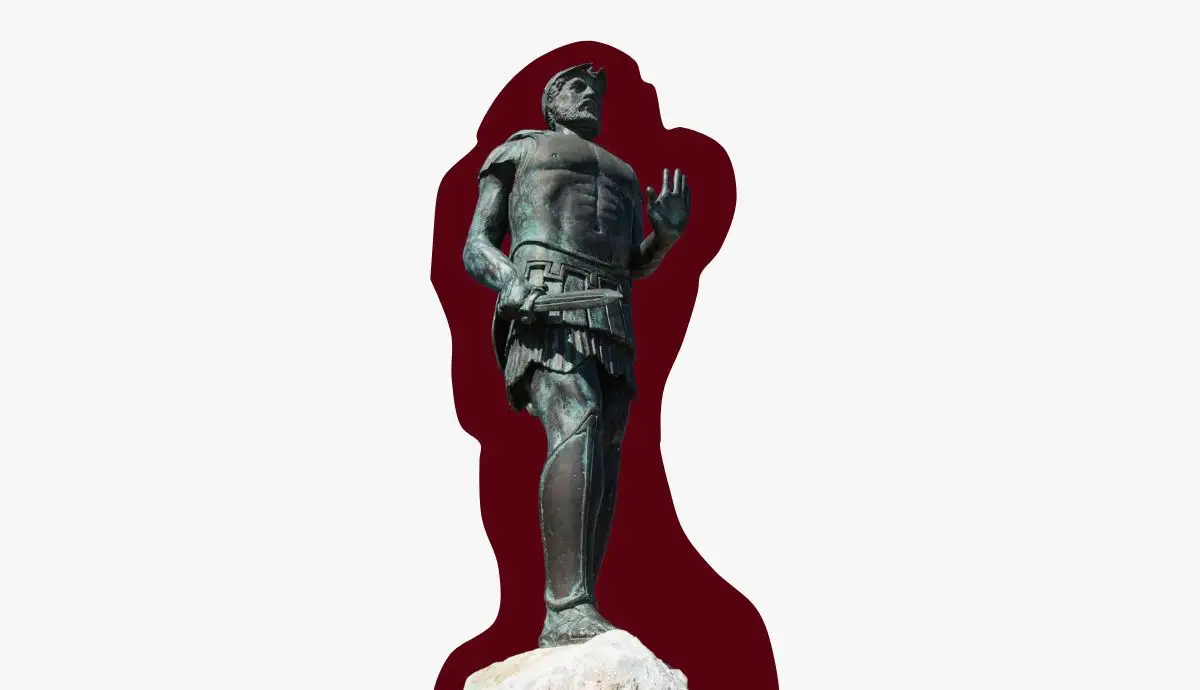
The epigram is strange because it doesn't mention Aeschylus' achievements as a tragic playwright.
It also doesn't mention other battles in which Aeschylus took place, like Salamis and Plataea.
Both Pausanias (1.14.5) and Athenaeus (14.627) appear to wonder why Aeschylus chose only Marathon to be commemorated on his tombstone. So the matter doesn't only seem strange to us, but also to the ancients.
It does not mention Aeschylus' work as a playwright
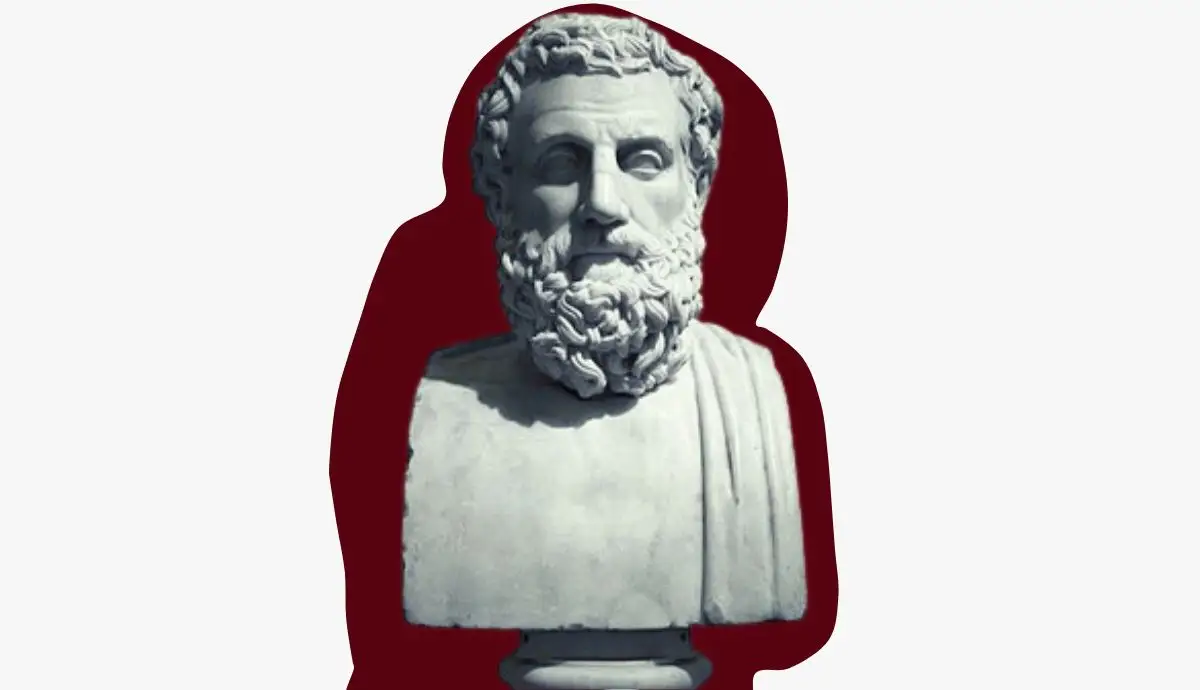
Aeschylus is traditionally regarded as the first great tragic playwright. In Aristophanes' Frogs he is judged as the superior poet compared to Sophocles and Euripides.
In total he wrote between 70 and 90 plays and won the first place at the Dionysia (the competition where each playwright presented three tragedies and one satiric drama) a total of 13 times.
Aeschylus' Persians were performed in 472 BC, just eight years after Salamis, and it is the oldest surviving Greek tragedy and the only one with a historical theme (and not a religious-mythological).
Today only seven of his tragedies survive intact and not fragmented. These are:
- The Persians
- Seven Against Thebes
- The Suppliants
- The trilogy known as The Oresteia consisting of:
- Agamemnon
- The Libation Bearers
- The Eumenides
- Prometheus Bound
Also read: How Shelley's Hellas Reimagined Aeschylus' Persians.
It does not mention Salamis or Plataea
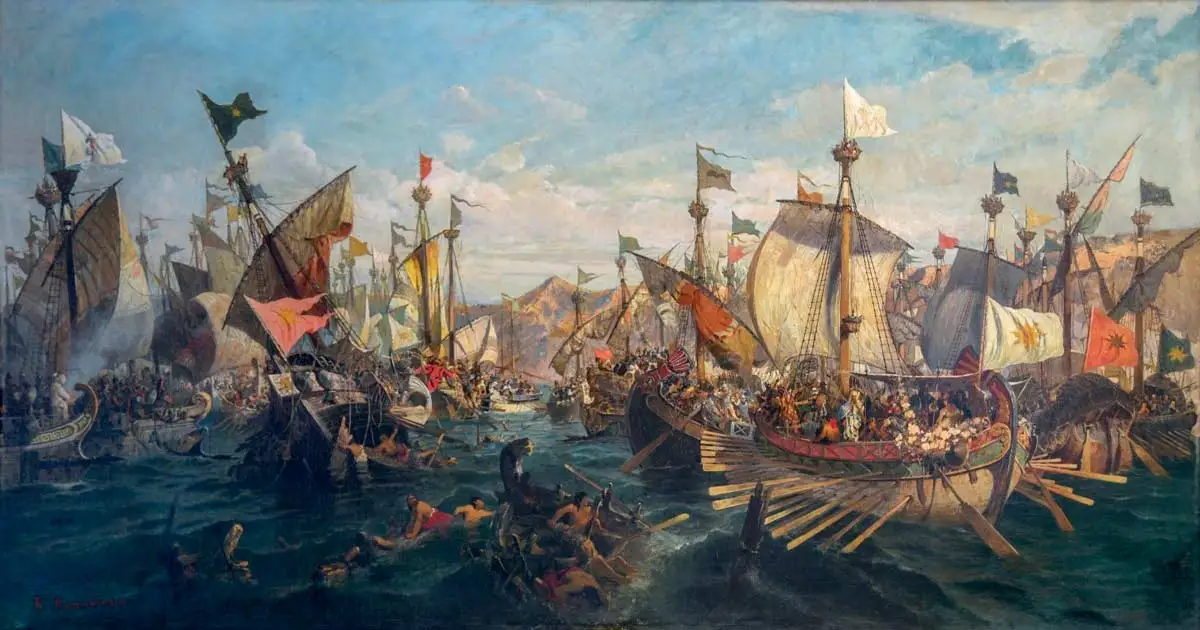
Aeschylus is said to have fought at Salamis and Plataea. Even though it's not certain, he was alive at the time and his age was such that would not excuse him from participating in the Athenian military.
So why does the epigram not mention any other battles?
Besides, Salamis (480 BC) and Plataea (479 BC) were the decisive battles that ultimately repelled the Persian threat.
Marathon was not as decisive. There, the Athenians, with significant Plataean aid forced the Persians out of Attica in 490 BC, but the Persians returned stronger ten years later. It was only with Salamis and then Plataea that the Persians finally abandoned their aspirations to conquer the Greek mainland.
A possible answer
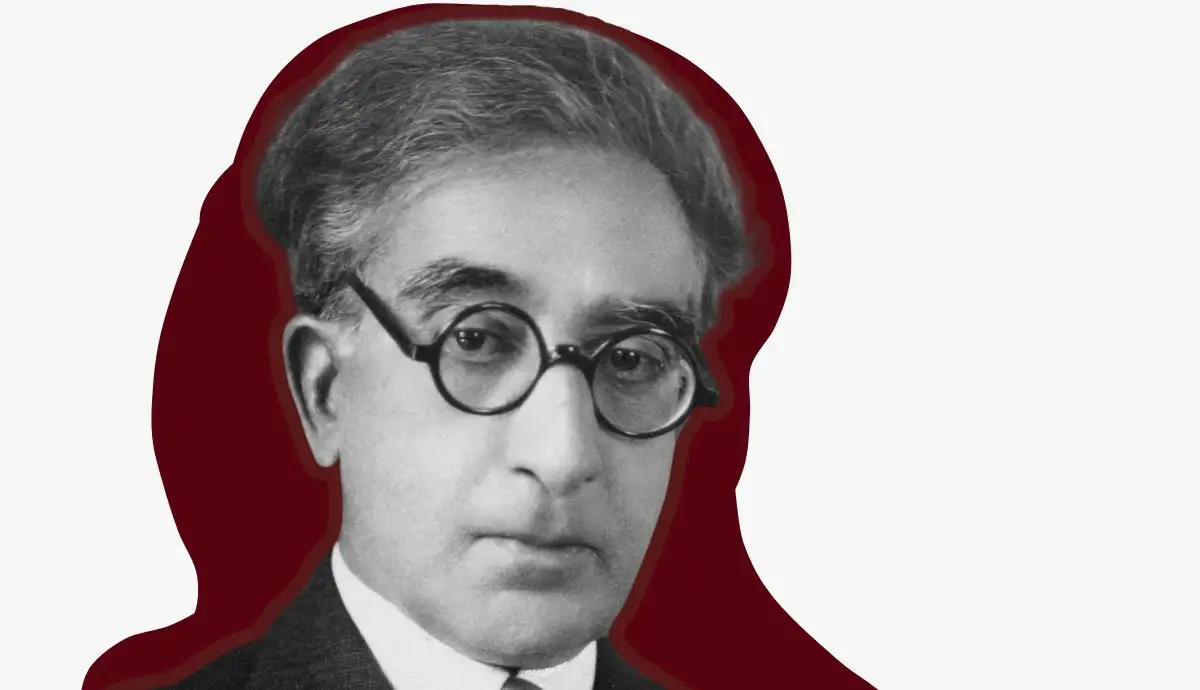
One answer to the problem comes from a modern Greek poet named Constantinos Cavafy. In his poem titled Young Men of Sidon (400 A.D.) Cavafy imagines that some young men at the city of Sidon a whole 800 years after Marathon cannot understand why Aeschylus did not mention his work in his epigram.
Cavafy brilliantly contrasts an individualist worldview where one's personal achievements are not only a priority but their moral compass, while on the other a more social, collective understanding of the world, where participation in a common struggle is more important than a personal success.
Besides, Marathon was a triumph of Athens and its democracy. By repelling the Persians, without help from the Spartans or other major allies, the Athenians became a leading city-state, and the Athenian democracy gained momentum.
Within such a context being a good citizen was synonymous with excellence, and what greater citizen is there, than a veteran of Marathon, the battle that essentially saved and propelled democracy to new heights?
Here is the full poem, and as always, I would love to read your takes on it.
“I don’t like that quatrain at all.
Sentiments of that kind seem somehow weak.
Give, I say, all your strength to your work,
make it your total concern. And don’t forget your work
even in times of trial or when you near your end.
This is what I expect, what I demand of you—
and not that you completely dismiss from your mind
the magnificent art of your tragedies—
your Agamemnon, your marvelous Prometheus,
your representations of Orestes and Cassandra,
your Seven Against Thebes—to set down for your memorial
merely that as an ordinary soldier, one of the herd,
you too fought against Datis and Artaphernis.”
You can read this and more poems by Cavafy at the Cavafy Archive.
Bibliography
- Petrakos, V. 1995. Marathon (original: Μαραθών).
- Sommerstein, A. H. 2010. '13 Aeschylus' epitaph', The Tangled Ways of Zeus: And Other Studies In and Around Greek Tragedy. https://doi.org/10.1093/acprof:oso/9780199568314.003.0014
Also read: What Is Kleos? Ancient Greek Fame, Memory & Modernity