Shelley's Hellas vs. Aeschylus' Persians: Reimagining Antiquity
Percy Shelley’s last work titled "Hellas" mirrored Aeschylus’ Persae. Let's compare the two works.
Key Takeaways
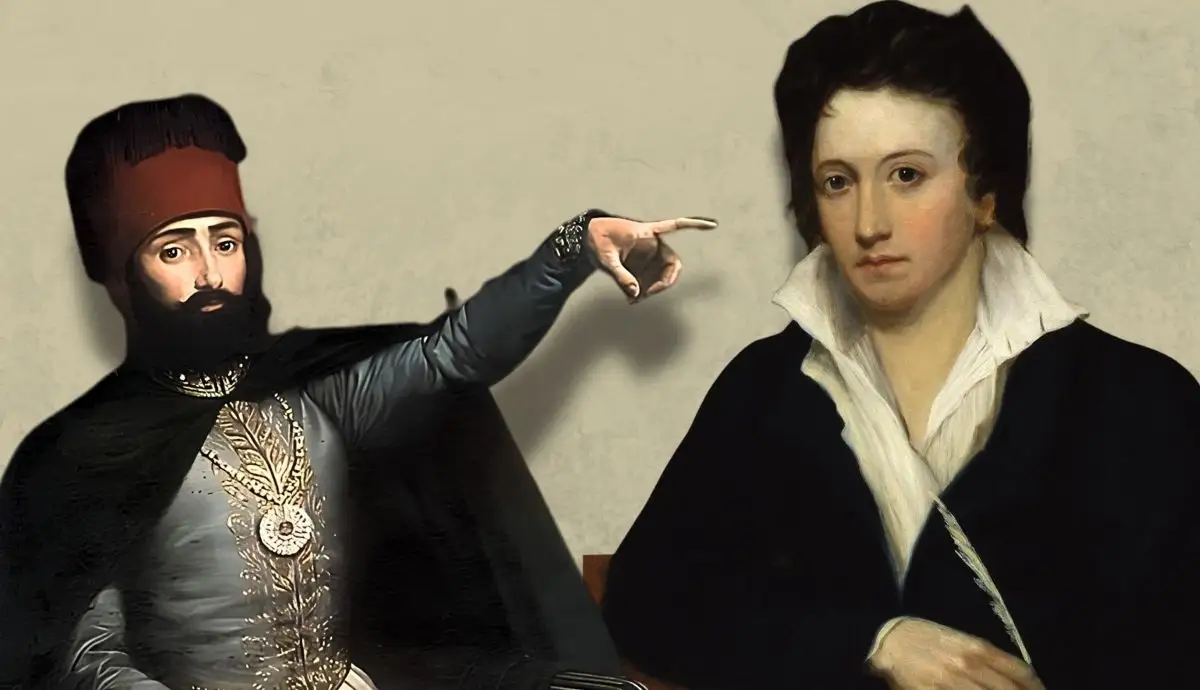
- Percy Bysshe Shelley’s Hellas adapts Aeschylus's The Persians, comparing the ancient Persian defeat to the Ottoman Empire's anticipated fall.
- Written to fund the Greek War of Independence, the closet drama reflects Romantic Philhellenism and Western civilization's debt to ancient Greece.
- Hellas perceives time as cyclical and foretells the return of a new Greek golden age.
Hellas is a classical-style tragedy by Percy Bysshe Shelley (1792-1822). It was written in 1821 and published in 1822 by Charles and James Ollier in London. Shelley wrote it while living in Pisa to raise money for the Greek War of Independence (1821-1832). It was to be Shelley's last published poem during his lifetime.
The poem owes much to Aeschylus' Persians, so there is a lot to unpack here.
| Feature | Fact |
| Publication | Written in autumn 1821; published in 1822. It was the last poem Shelley published during his lifetime. |
| Genre | Closet drama (a play intended to be read rather than performed on stage). |
| Context | Written in direct support of the Greek War of Independence (begun in 1821) against the Ottoman Empire. |
| Inspiration | Directly modeled on Aeschylus’s The Persians (Persae). |
| Preface | Contains Shelley’s famous declaration, "We are all Greeks," arguing that modern European arts, laws, and literature are rooted in ancient Greece. |
| Dedication | Dedicated to Prince Alexander Mavrocordatos, a prominent Greek political and military figure known personally to Shelley. |
Hellas Was Dedicated to...
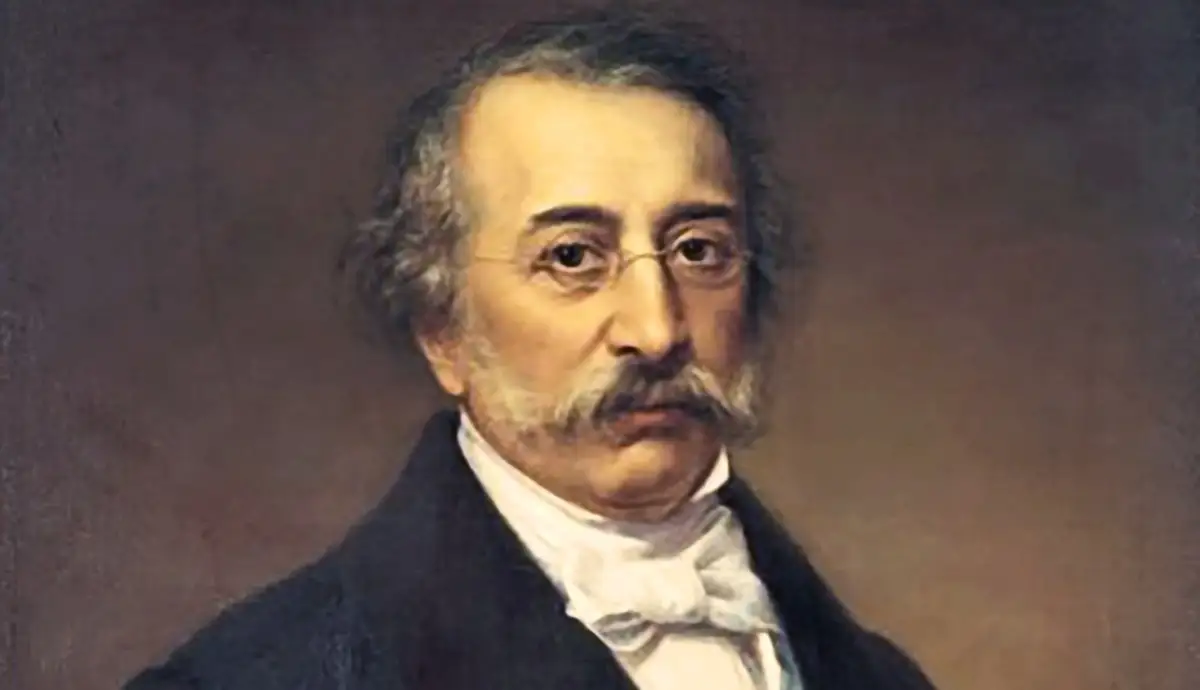
"To Ηis Εxcellency Prince Alexander Mavrocordato late secretary for foreign affairs to the Hospodar of Wallachia the drama of Hellas is inscribed as an imperfect token of the admiration, sympathy, and friendship of the author. Pisa, November 1, 1821."
In the preface, Shelley informs us that the drama is dedicated to Alexandros Mavrokordatos (1791-1865), a leading figure of the Greek Revolution. Post-independence, Mavrokordatos would serve as prime-minister of the newfound Greek state four times.
Mavrokordatos had met Shelley and his wife, Mary Shelley, during his stay in Pisa from 1818 to 1821. The Shelleys had developed a close friendship with Mavrokordatos and helped him access and influence British cycles.
Why Did Shelley Write Hellas?
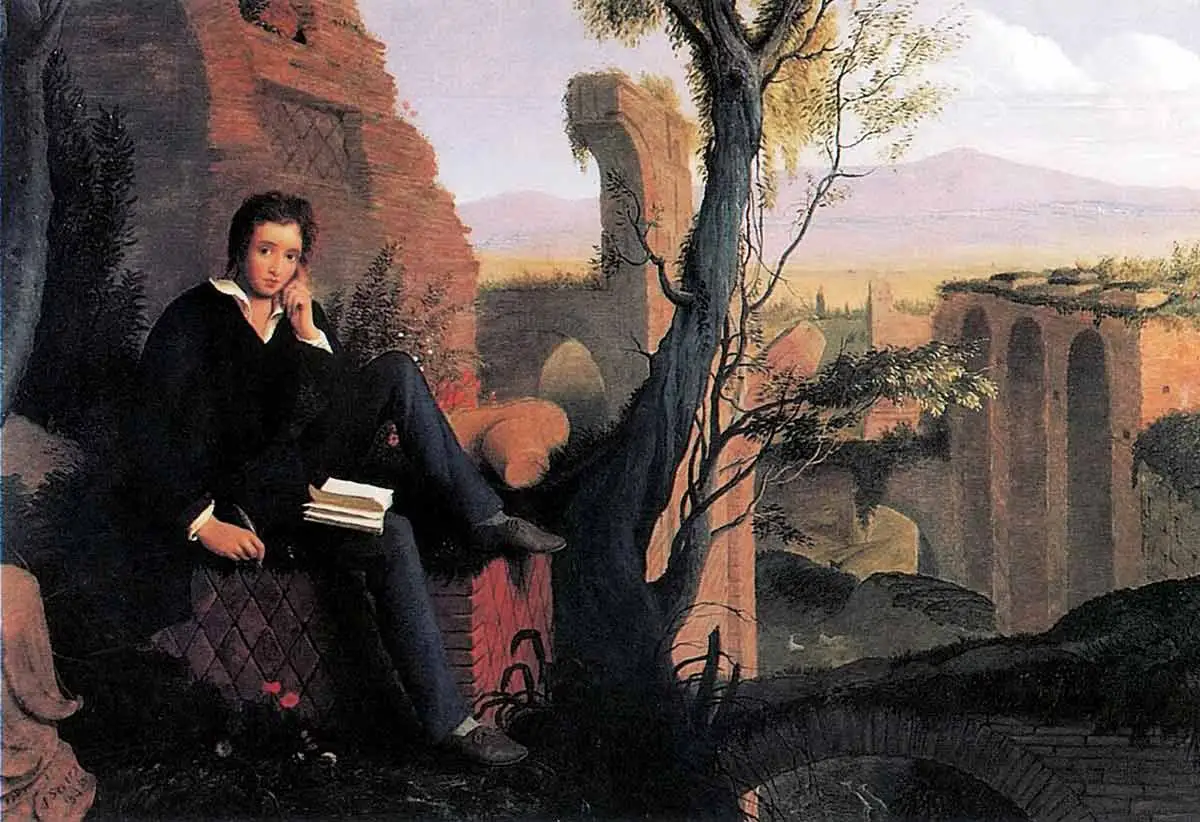
Key definition: Philhellenism was a prominent strand of the romantic movement that aimed to promote Greek, primarily ancient, culture.
A proper romanticist, and a proper philhellene, Shelley projects his vision of an idealized ancient Greece upon the insurgents who are facing the Ottomans demanding independence.
His Hellas is an exercise in philhelenism. Shelley uniquely adapts Aeschylus' Persians, an ancient Greek tragedy about the Persian defeat at the battle of Salamis to talk about the present.
His work aims to raise awareness and financial aid for the Greek revolutionary cause.
Shelley's is a great example of a romantic understanding of what Hellas is. I have further explored this theme in a previous article about Hellas as a heterotopia. However, if you are not familiar with the term heterotopia, I reocommend you read this guide first.
Aeschylus' Persians and the Battle of Salamis
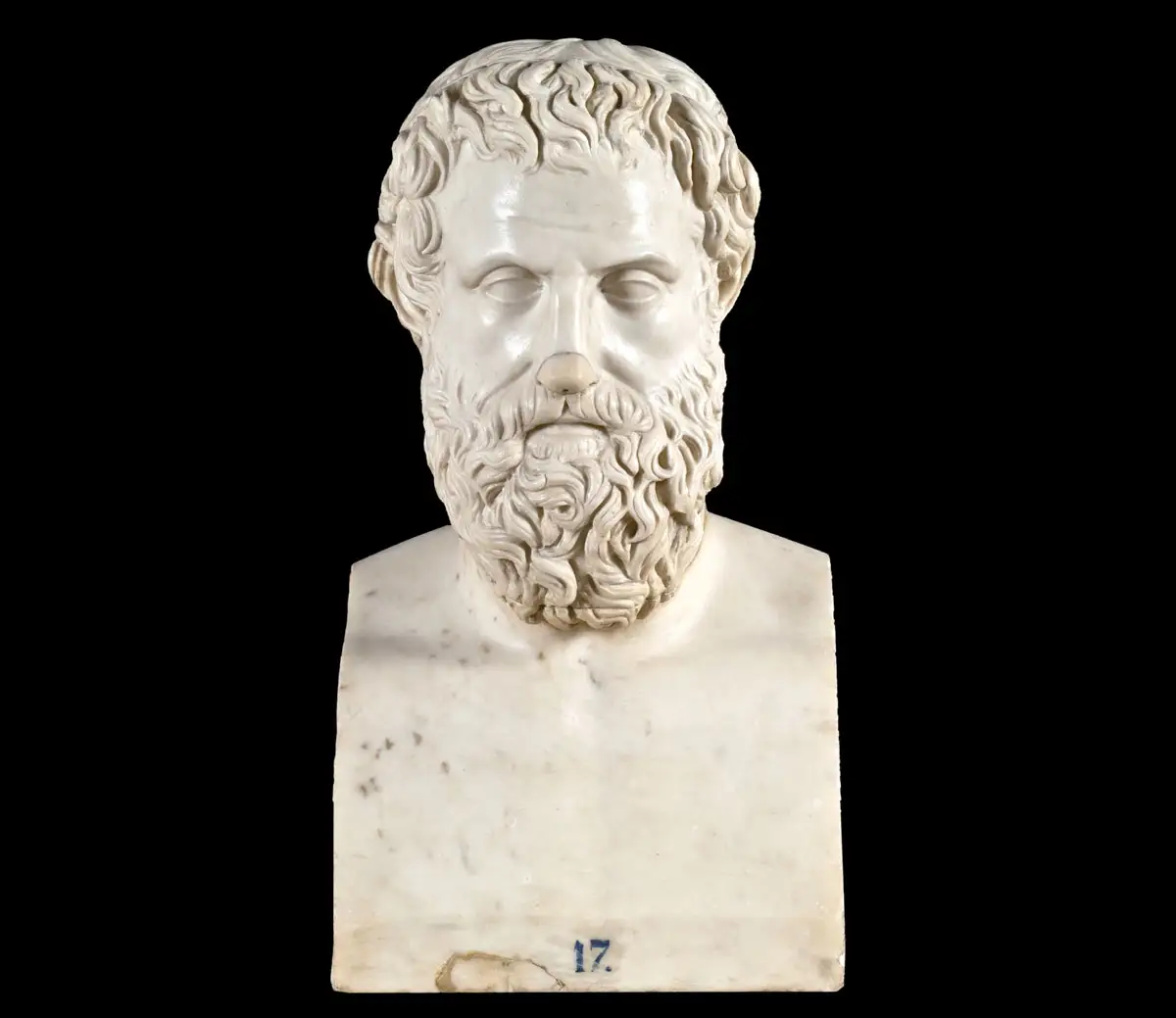
"The «Persae» of Aeschylus afforded me the first model of my conception, although the decision of the glorious contest now waging in Greece being yet suspended forbids a catastrophe parallel to the return of Xerxes and the desolation of the Persians."
The choice to adapt a Greek tragedy to talk about the modern Greek Revolution is not random. It highlights the continuity of the Greek nation as understood by Shelley.
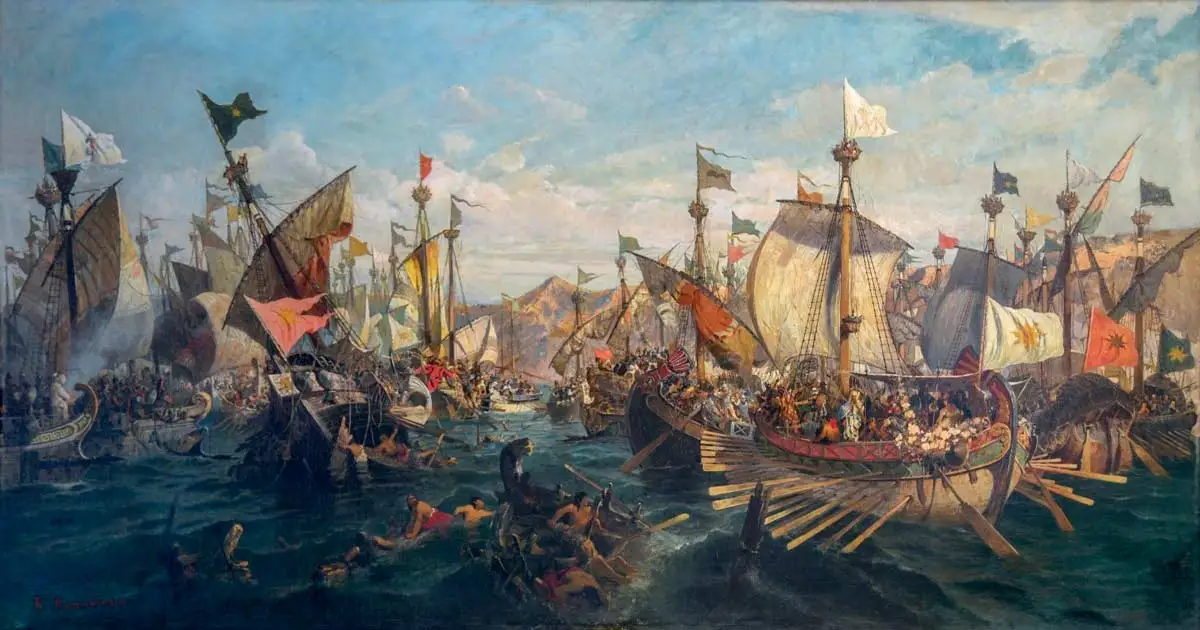
As the battle that "saved" or "birthed" the western world, Salamis is an appropriate theme to remind western rulers the "debt" that the West owes to Greece:
"The apathy of the rulers of the civilised world to the astonishing circumstance of the descendants of that nation to which they owe their civilisation, rising as it were from the ashes of their ruin, is something perfectly inexplicable to a mere spectator of the shows of this mortal scene."
But for Shelley this is more than a mere debt. As a continuation of Greece, as its direct descendant, the West has a moral obligation to assist the Greeks against the Ottomans.
| Feature | Aeschylus' The Persians (Persae) | Shelley's Hellas |
| Written/Performed | 472 BC | 1821 (Published 1822) |
| Historical Context | The Greco-Persian Wars (specifically the tattle of Salamis in 480 BC). | The Greek War of Independence (1821-1832). |
| Core Subject | The defeat and collapse of the Persian Empire at the hands of the Greeks. | The anticipated defeat of the ruling Ottoman Empire by Greek revolutionaries. |
| Protagonist/Ruler | King Xerxes (and his mother, Atossa) | Sultan Mahmud |
| Chorus | Persian Elders | Captive Greek women |
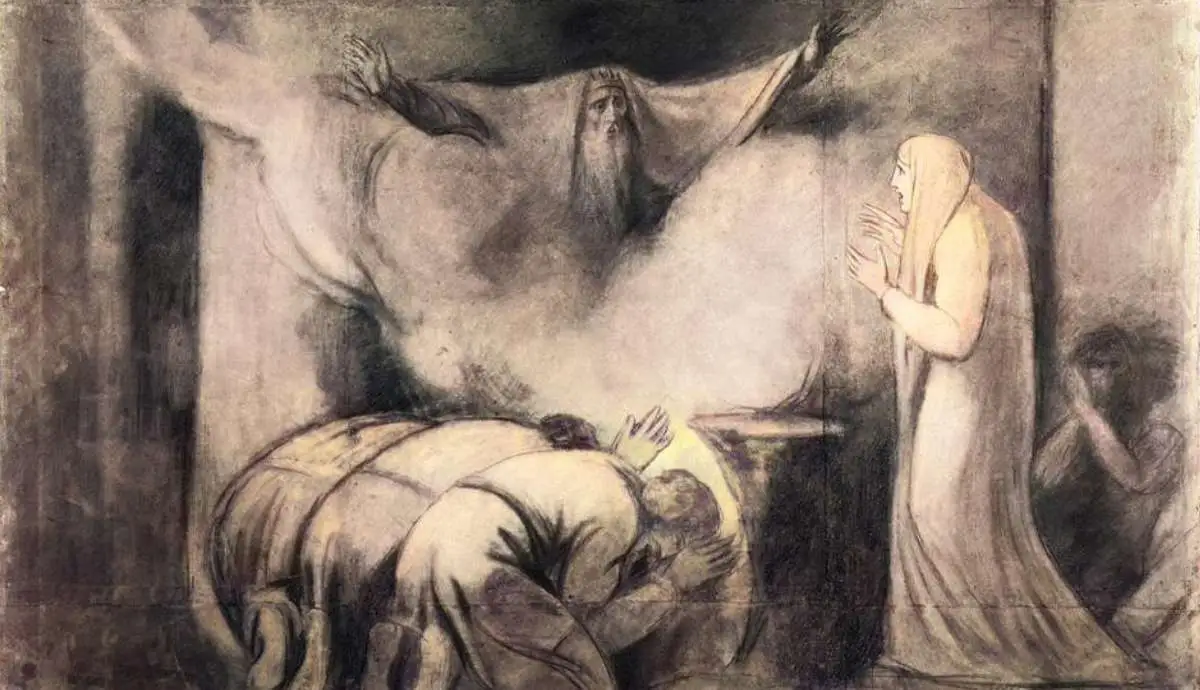
| Supernatural Element | The Ghost of King Darius | The Phantom of Mahomet II and Ahasuerus (the Wandering Jew) |
"We Are All Greeks"
It is within this context that Shelley wrote his famous words in Hellas' preface:
"We are all Greeks. Our laws, our literature, our religion, our arts have their root in Greece. But for Greece—Rome, the instructor, the conqueror, or the metropolis of our ancestors, would have spread no illumination with her arms, and we might still have been savages and idolaters..."
It's a strange conflict, and one that would occupy western thought for the next few decades. The West perceives itself as the descendant of ancient Greece. But also sees modern Greeks this way too.
Shelley doesn't seem to see a conflict though. He moves easily from one to the other:
The modern Greek is the descendant of those glorious beings whom the imagination almost refuses to figure to itself as belonging to our kind, and he inherits much of their sensibility, their rapidity of conception, their enthusiasm, and their courage. (Preface of Hellas)
Characters
- Ottoman Sultan Mahmud
- Wandering Jew Ahasuerus
- Phantom of Mahomet the Second
- Chorus of captive Greek women
- The Ottoman officer Hassan
- Other messengers
- Other characters like the unnamed Indian slave.
It's interesting to see how they compare to the characters from Aeschylus' tragedy.
The main protagonist is Mahmud who at the same time is what Atossa and Xerxes were in Aeschylus. He is the one whose end we anticipate and the one who is informed of the bad news.
Also, where Aeschylus had an unnamed messenger deliver the message of the empire's fall, Shelley has four successive messengers deliver news of rebellion and decline with Ahasuerus, the wandering Jew, offering a vision of the empire's final end.
Interesting is also the choice to place captive Greek women in the chorus, who serve as the antagonist, whereas the Persian elders of Aeschylus sort of amplified the tragedy and lamented with the Persian protagonists.
As in Aeschylus' work the setting was the Persian capital of Susa, here it is Istanbul (Constantinople).
Mahmud II
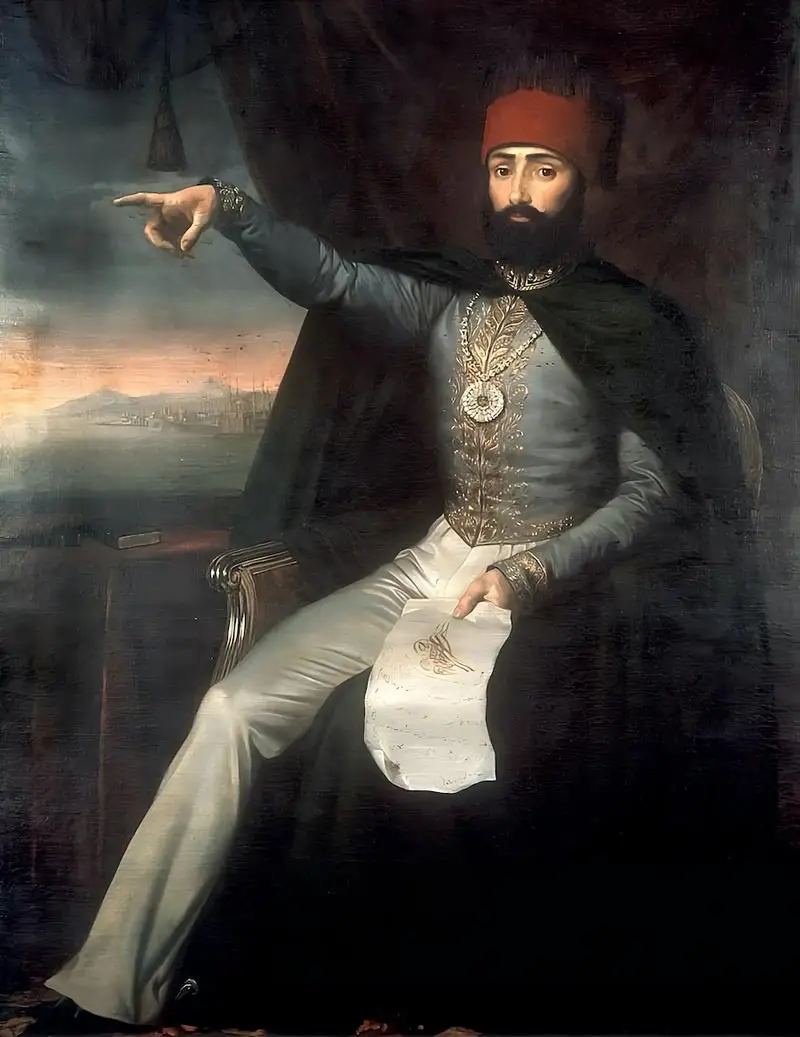
Mahmud II was the Ottoman Sultan from 1808 to 1839. It was under his reign that the empire suffered its first major blow, when Greece broke away and became an independent state. However, the empire was in decline already before Mahmud's reign.
A series of revolts had taken place, such as the Serbian Revolution (1804-1817) that had led to Serbia's autonomous state. Also the enemies of the empire had gotten stronger and bolder. Russia was a continuous nuisance and the balance of the Great Powers (Britain, France, Russia) was delicate.
In Hellas Mahmud slowly realizes that the empire is trapped in a downward spiral of revolts and financial hardship. The empire has become but a shadow of its former self and the fall is inevitable.
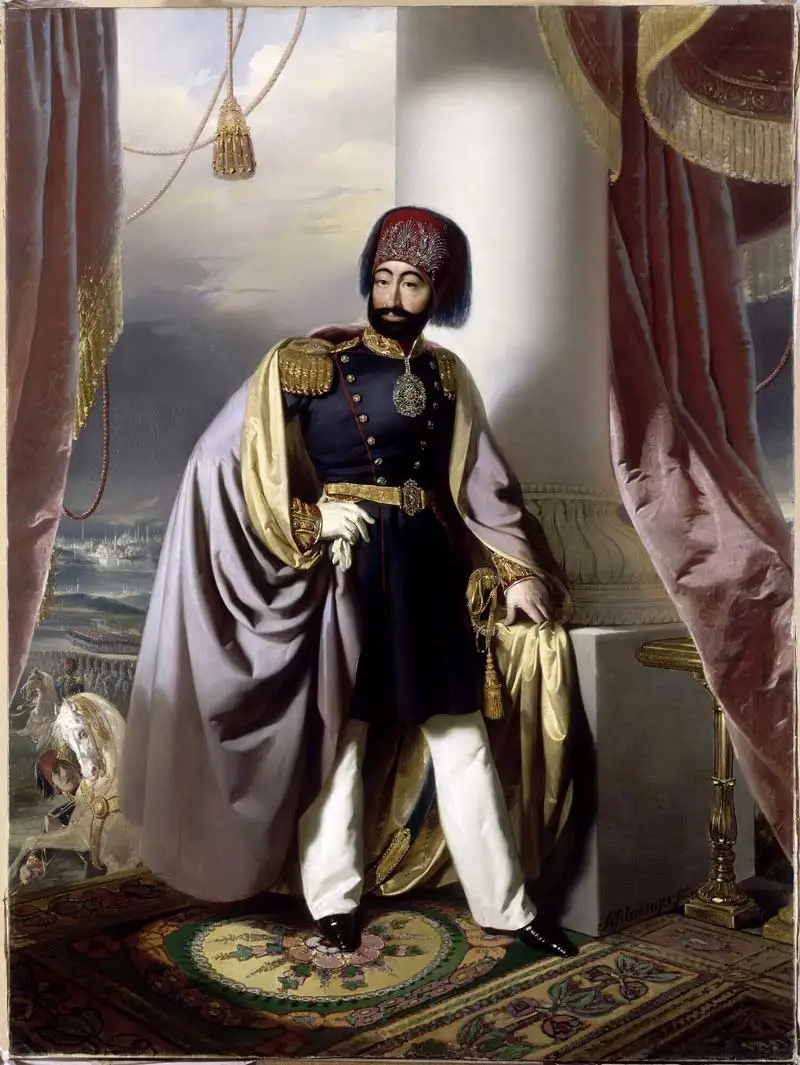
At some point, when Hassan (an officer) tells Mahmud that the treasury is running thin Mahmud replies:
"Then, take this signet,
Unlock the seventh chamber in which lie
The treasures of victorious Solyman,--
An empire’s spoil stored for a day of ruin.
O spirit of my sires! is it not come?"
As four successive messengers deliver news of rebellion and danger, Mahmud turns to Ahasuerus.
Ahasuerus Enters the Stage
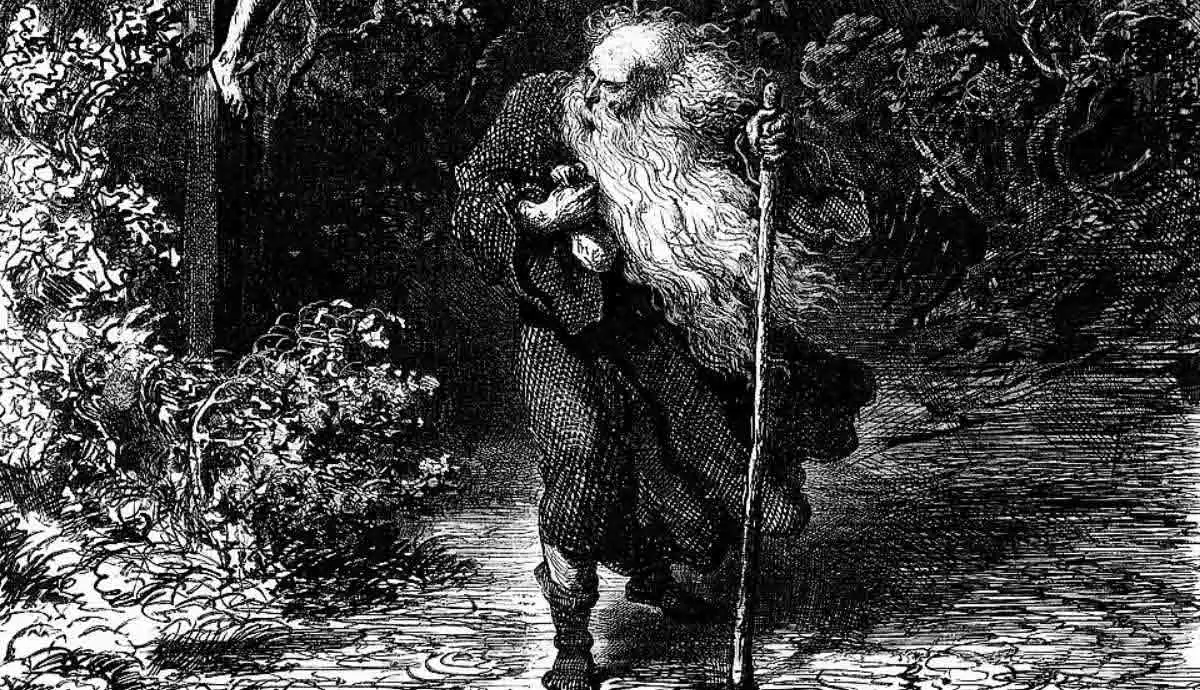
Ahasuerus is an interesting character. He is shrouded in mystery. Shelley introduces him as "the wandering Jew":
...whom the great prophet
Jesus, the son of Joseph, for his mockery,
Mocked with the curse of immortality.
Some feign that he is Enoch: others dream
He was pre-adamite and has survived
Cycles of generation and of ruin.
Ahasuerus can see both the past and the future and speaks a cryptic language of mystical unity and prophecy:
"Mistake me not! All is contained in each.
Dodona’s forest to an acorn’s cup
...
The coming age is shadowed on the Past
As on a glass."
Ahasuerus essentially presents a cyclical universe where everything is born only to die and be reborn anew. He helps Mahmud see the future and the future is not pleasant. It seems to contain an almost biblical catastrophe with Istanbul as the last bastion of the Ottomans:
"AHASUERUS:
What succeeds?
MAHMUD:
The sound
As of the assault of an imperial city,
...
The mingled battle-cry,--ha! hear I not
'En touto nike!' 'Allah-illa-Allah!'?
The Myth of Ahasuerus
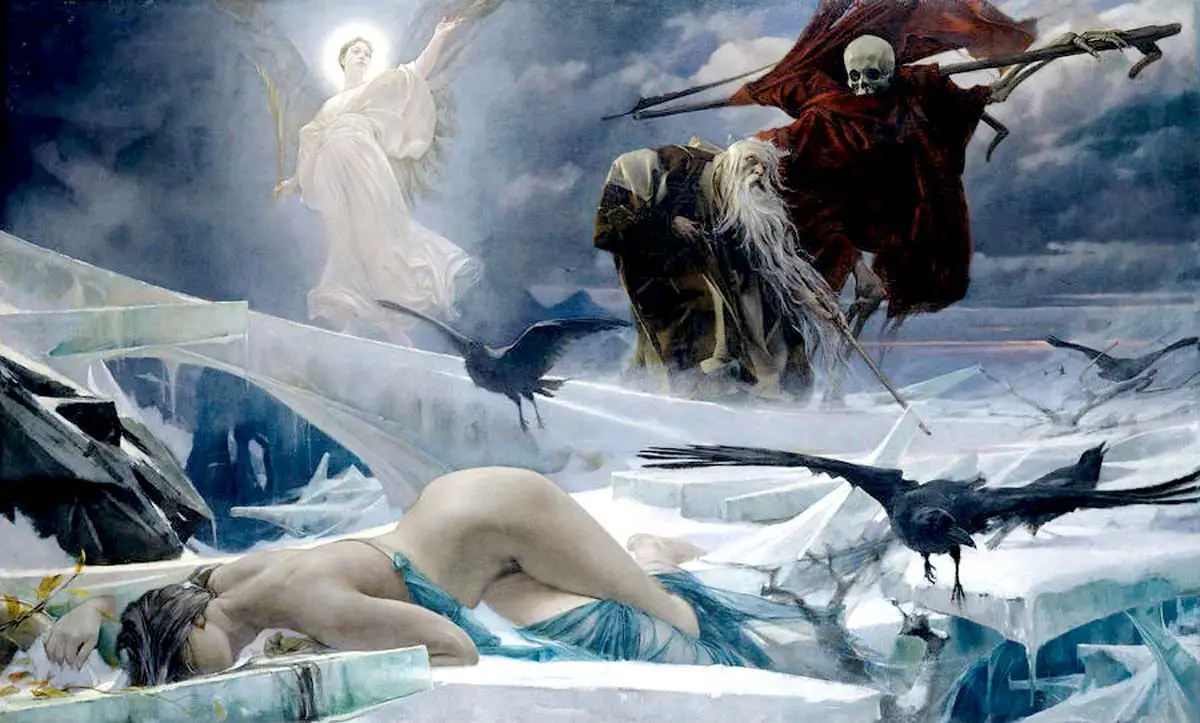
Historically Ahasuerus is a name that the Hebrew bible uses to describe some Persian kings, most notably Xerxes I who also appears in Aeschylus' Persians. However, Shelley here is not bringing Xerxes on his stage. His Ahasuerus is based on a popular myth that spread to Europe during the 13th century.
The story goes that there is an immortal wandering Jew named Ahasuerus. His immortality was not a blessing but a curse because he had taunted the about-to-be-crucified Jesus.
Ahasuerus, the wandering Jew, also appeared in the following of Shelley's works:
- The Wandering Jew (1877)
- Queen Mab: A Philosophical Poem (1813)
The Phantom of Mohamet II Arrives
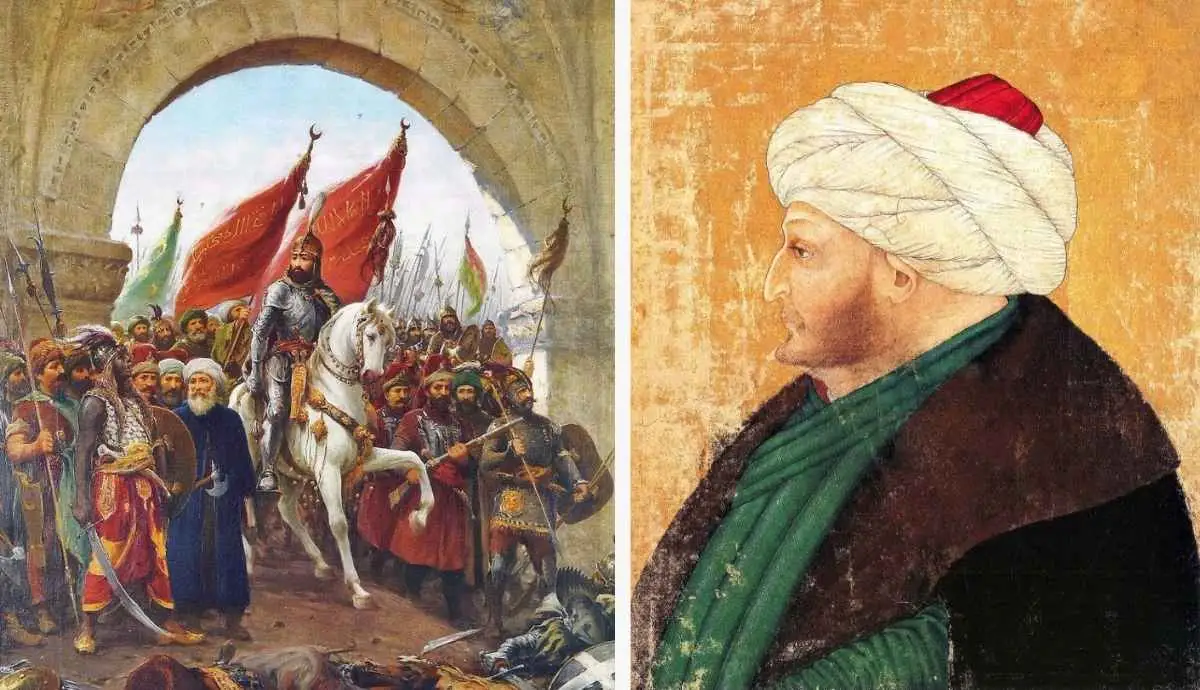
As Ahasuerus leaves the stage, the phantom of Mohamet II appears. To understand the characters significance, one has to look into Ottoman history.
Mohamet II (also Mehmed II "the Conqueror") is the Ottoman ruler who took Constantinople in 1453, essentially ending the Eastern Roman Empire (also known as Byzantine). Mohamet II represents the glorious past of the empire.
A similar character in Aescylus' tragedy is the ghost of Darius the Great. In the tragedy, Darius appears as the wise king who helped built an empire. He returns as a ghost to lament the empire's fall at the hands of his incompetent successor Xerxes.
The parallel is clear. Mohamet's phantom signals the fall of the empire and contrasts its past glories with its present hardships.
Ending
Where Aeschylus' tragedy ends in lamentation with Xerxes and the chorus of Persian elders occupying the stage in Bacchic-like cries, Shelley's tragedy ends in an ambivalent way.
The captive Greek women anticipate the return of a renewed Greece.
Through the walls of our prison;
And Greece, which was dead, is arisen!
A utopian vision is presented. The golden age of Greece is about to begin once again.
The world's great age begins anew,
The golden years return,
The earth doth like a snake renew
Her winter weeds outworn:
Heaven smiles, and faiths and empires gleam,
Like wrecks of a dissolving dream.
But wait...
If rebirth is due and the golden years are next, then the decline is also destined to repeat itself. In Shelley's work, the future is but a repetition of the past which means that the rebirth of Greece anticipates it's second death:
Oh, cease! must hate and death return?
Cease! must men kill and die?
Cease! drain not to its dregs the urn
Of bitter prophecy.
The world is weary of the past,
Oh, might it die or rest at last!
The Theme
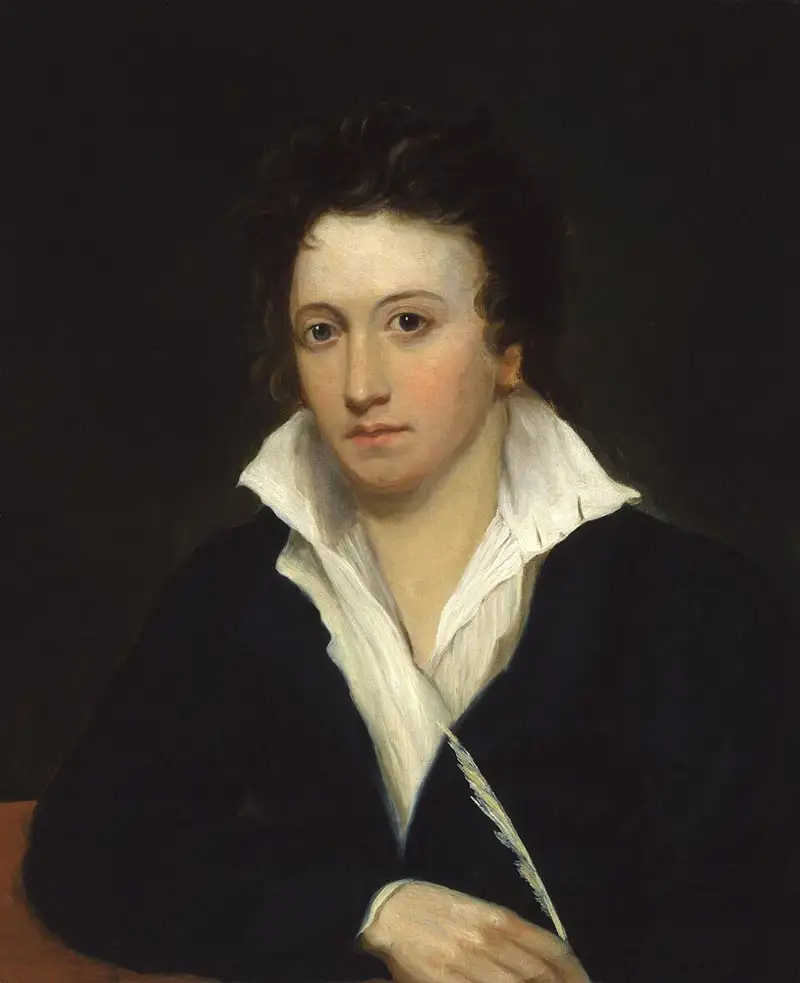
Whereas in Aeschylus' work, the overarching theme was that of hubris, and the audience is led to sympathize with the Persians who lament for their dead, in Shelley's Hellas the prevailing theme is that of cyclical time, the eternal rebirth of the world.
In this regard, it's hard to sympathize with the Sultan whose time is over. Besides, that wouldn't help Shelley's cause, which is to raise funds for the Greek Revolution. The Ottomans appear doomed. They didn't do anything wrong. It's just that their golden age is over, and the age of Greece has returned.
The feeling we get as the work ends is no one can stop time and go against fate. There is a quality to this cyclical time that certainly reminds us of Nietzsche's "eternal recurrence" as Nabugodi (2022) correctly points out.
Also as the same scholar has pointed out, it's interesting how easily Shelley brushes off slavery as an institution and even features an Indian slave in Hellas while posing his work as a monument to freedom. This all goes to show how difficult it is to escape a colonial, imperialist mindset once you are enmeshed in it.
There are more issues worth discussing here and I highly recommend reading Nabugodi's work which also discusses theories by Achille Mbembe, whose necropolitics I recently covered.
Kind of a troubling ending, but interesting, right?
The Prince of Wales?
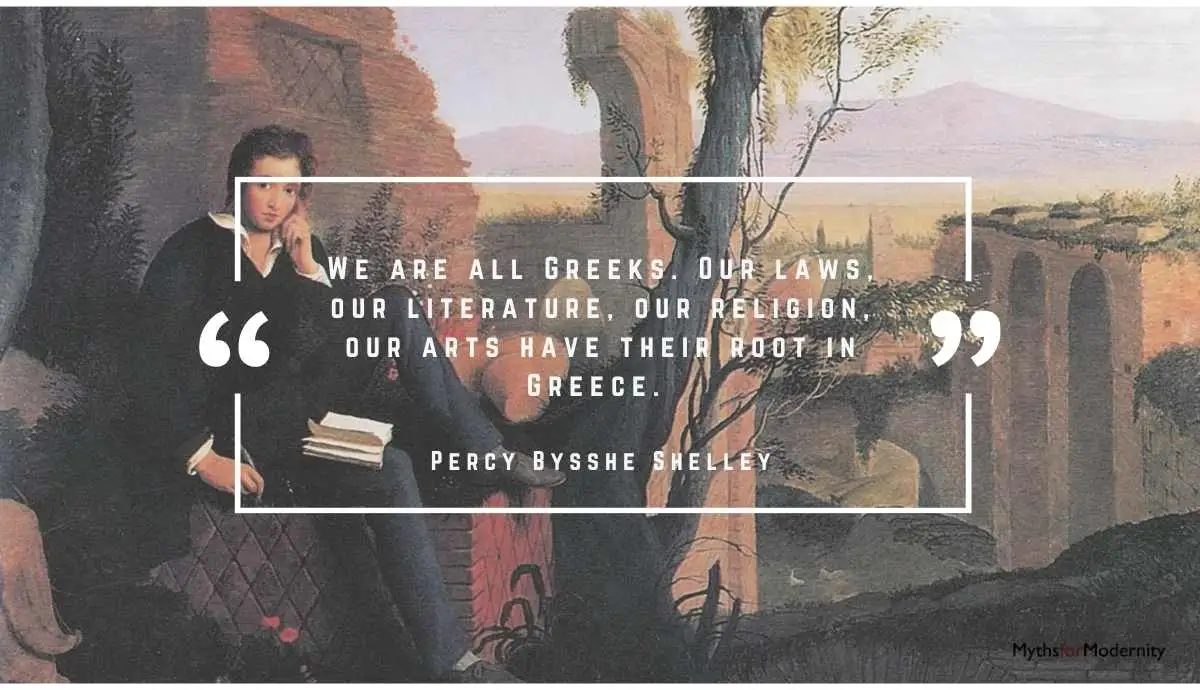
In 2018, the Prince of Wales, used Shelley's famous words from the preface of Hellas to proclaim that "We are all greek...our laws, our literature, our religion, our arts have their root in Greece". Of course as Nabugodi (2022) says, Shelley did not mean it as literally as Prince Charles, whose ancestry is literally connected to Greece...
In the Greek internet you will often encounter various parts of Shelley's preface to Hellas to inspire nationalist pride which may not have been exactly what Shelley hope for, but still it shows the enduring influence of Shelley's work.
Bibliography
- Erkelenz, M. 1997. Inspecting the tragedy of empire: Shelley's 'Hellas' and Aeschylus' 'Persians'. Philological Quarterly, 76(3), 313–337.
- Hall, E. 1989. Inventing the barbarian: Greek self-definition through tragedy. Clarendon Press.
- Nabugodi, M. 2022. Old Anew: Hellas. European Romantic Review, 33(5), 639–652. https://doi.org/10.1080/10509585.2022.2114209
- Shelley, P. B. 1822. Hellas. Available here: https://en.wikisource.org/wiki/Hellas_(1822)