The Banquet of Simonides and the Art of Memory in Classical Antiquity
The art of memory started with Simonides' famous banquet and was later developed by the Romans with the "method of loci".
Key Takeaways
- The art of memory (mnemonics) began as a technique of memorization which has its roots in ancient Greece.
- The technique was based on the idea that spatial relations are easy to memorize, as the story of Simonides demonstrated.
- Roman orators (the anonymous author of Rhetorica ad Herennium, Cicero, Quintilian) expanded on the method.
In previous blogs, I have extensively discussed issues related to memory (such as collective memory, memory sites, and more). However, I have not yet discussed the more concrete techniques of memory exercised in the ancient world. The art of memory, as it is commonly referred to today, begins with the story of Simonides' banquet and the idea that constructing mental spaces can help the mind remember things.
About Memory in Ancient Greece
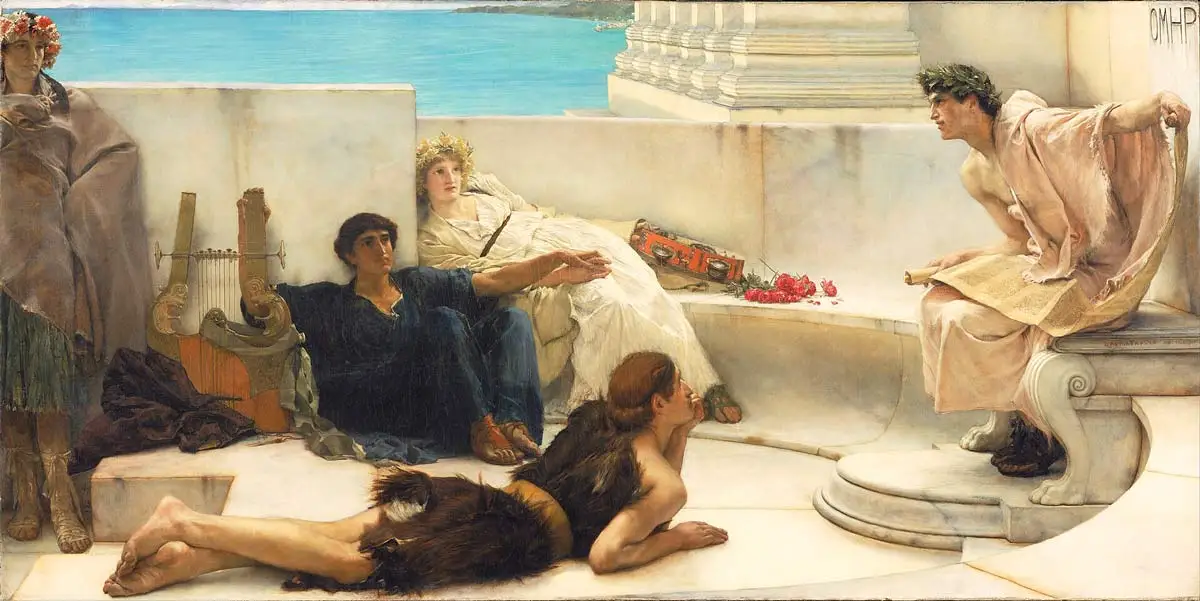
In ancient Greek mythology, memory, known as Mnemosyne, was a Titaness, daughter of Uranus and Gaia. Her daughters were the Nine Muses, the beloved goddesses of the arts. So the arts were perceived as forms of memory, which is particularly clear in the cases of the Homeric heroes who equated the memory of their glorious deeds (their kleos) with the epic song sung by a rhapsode.
Homer and Hesiod, the great poets of the Greek world, began their poems with an invitation to the muses. So, memory in the beginning was a quality of the divine. But the Greeks also knew that memory could not be left to chance. The rhapsodes who knew the poems of Homer by heart were using various mnemonic devices. If you've read the Iliad or the Odyssey, you must have found strange the repetition of epithets such as "swift-footed" for Achilles and "bright-helmeted" for Hector.
This repetition was just one of the multiple methods used by the rhapsodes who undertook the incredibly difficult task of memorizing entire poems that most of us today can hardly read in one sitting.
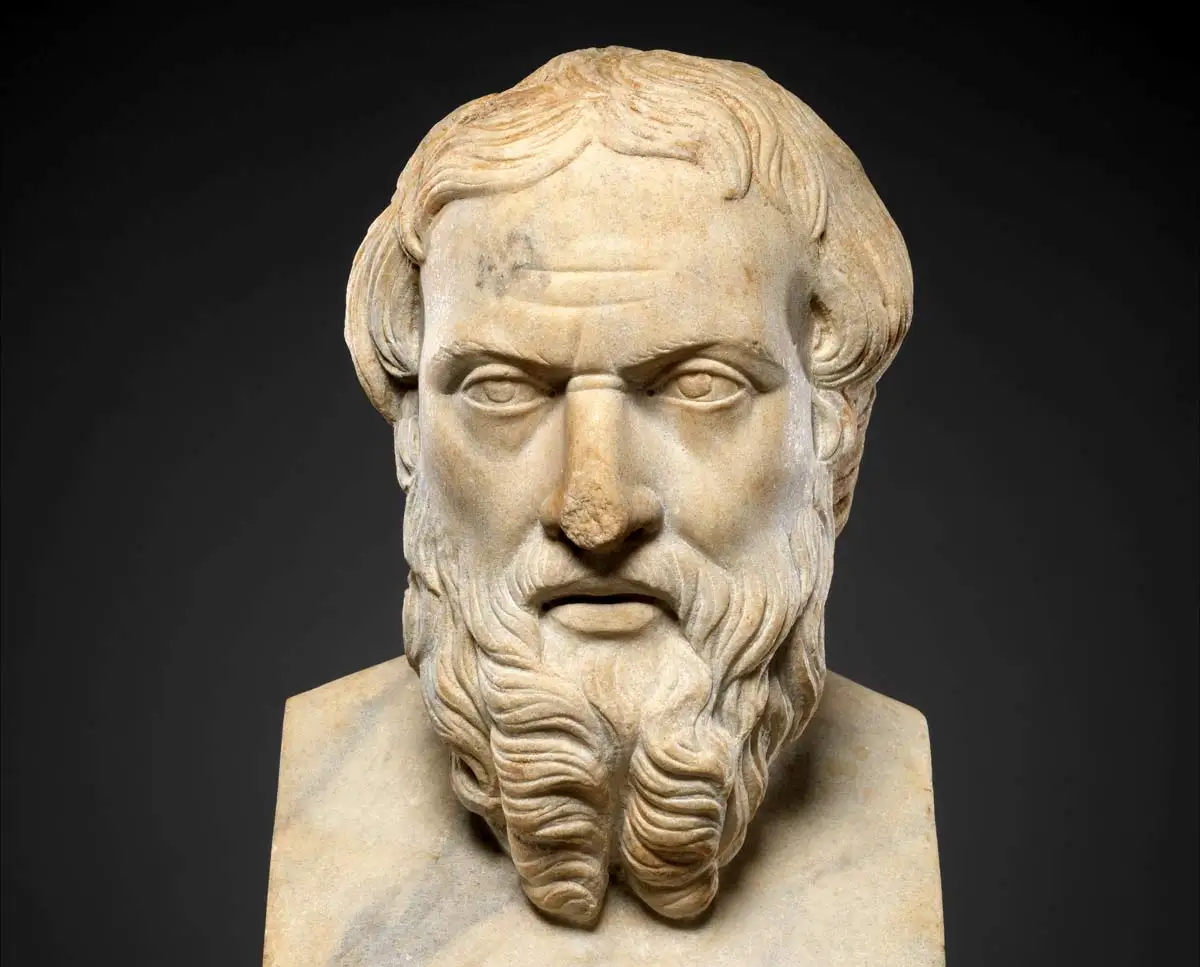
In the fifth century BC, Herodotus wrote that his inquiry into the causes of the Persian Wars was all about preserving the memory of the wars and the glorious deeds performed by Greeks and "barbarians".
By the time of Herodotus, however, a new institution had been established, one that was not there in the time of Homer and Hesiod. This institution was the democratic assembly, the Ecclesia. There, any citizen (male, landowning, and Athenian by birth) was able to publicly address the assembly.
It is easy to understand that public speaking was important even before the Athenian democracy. Addressing armies, assemblies, bodies of workers, slaves, and so on, was always necessary in the ancient world. A charismatic speaker was always esteemed and valued by the community, but in 5th century Athens, where everyone could address the citizens and influence the policy of the city, public speaking was an essential skill that separated the influential from the inconsequential.
Within this environment, therotic (the art of public speaking) bloomed. The rich paid dearly to be trained by the best philosophers and rhetors, and an important aspect of this education became the training of memory.
By this point, memory had become democratized. It was not the gift of the capricious muse or the privilege of the enlightened poet. Memory was now a techne, an art that could be taught to anyone.
But what exactly was this art form? How could someone train their memory?
As we saw previously, the rhapsodes used a range of mnemonic devices to memorize the thousands of lines they had to sing in front of their audiences.
But if we want to follow the traditional historical accounts, the art of memory as a discipline took shape sometime in the 5th century BC in a notoriously gruesome banquet in Thessaly.
The Banquet of Simonides
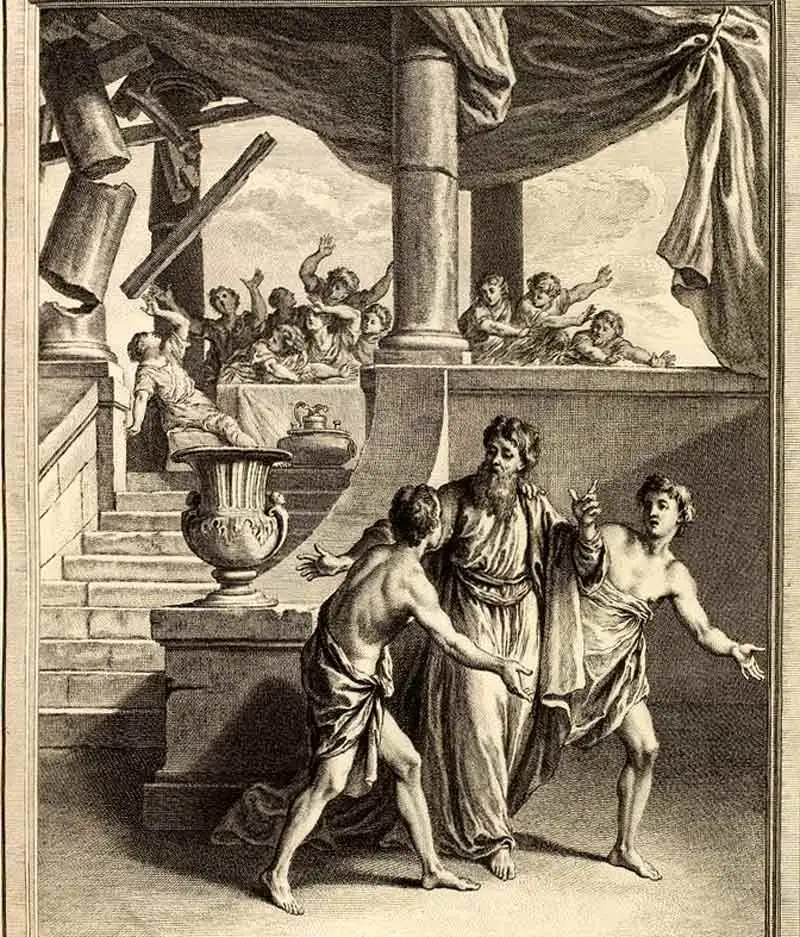
According to the famous account presented by Cicero in De Oratore (and later expanded by Quintilian), Simonides of Ceos (c. 556–468 BC), one of antiquity's most famed poets, was commissioned to chant an ode in honor of Scopas, a wealthy Thessalian nobleman.
In his poem, Simonides praised Scopas, as he was supposed to, but also gave more praise than Scopas expected to the divine twins Castor and Pollux, also known as the Dioscuri.
Now Scopas was not the best of lads because he refused to pay Simonides in full for his services. Besides, Scopas argued, why pay in full when he had not received the full attention of the poet?
Moments later, a servant told Simonides that two young horsemen were requesting to see him outside.
Simonides went outside, but no one was there. Suddenly, the banquet hall collapsed, crushing Scopas and his guests beneath heavy stone beams. So the poet was saved by these two mysterious horsemen, who may or may not have been the Dioscuri.
When family members arrived to bury their dead, the bodies were unidentifiable. Then, Simonides performed a feat that stunned the crowd and essentially birthed the art of memory.
The poet identified every single corpse by remembering the exact order in which they had been reclining around the banquet couches.
Simonides had discovered that, when attached to a spatial arrangement, memory is enhanced.
Hippias and Plato
During the Classical era, the sophist Hippias of Elis, a contemporary of Socrates, was famous for his sharp memory.
In the Platonic dialogue Hippias Major, the Sophist Hippias boasts that if he hears a list of fifty names only once, he can repeat them all from memory without hesitation. Socrates ironically refers to Hippias’s "device of memory" (mnemonikon tekhnema).
For Plato, memory was important, but in a different way. In Phaedrus, he famously warned against writing, which made people forgetful by depending on external scripts instead of their internal memory.
Also, Plato associated memory with recollection (anamnesis). This is associated with Plato's theory of forms (or ideas). Plato thought that the soul, before being born into the body and clouded by the senses, knew the true form of everything. Philosophy, as an inquiry leading to the truth, was a way of remembering what the soul already knows.
Aristotle
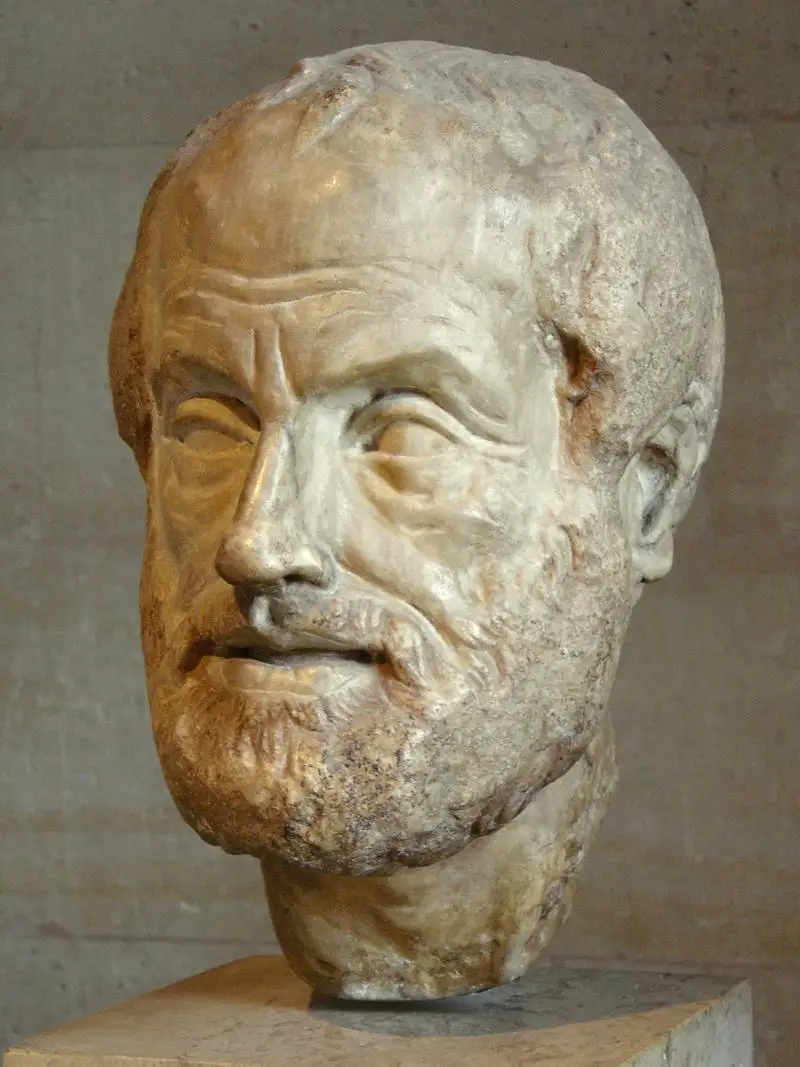
In his treatise On Memory and Recollection, Aristotle made a crucial distinction between:
- Mneme (Memory): The passive retention of a past experience, shared by humans and animals alike. It is like an impression stamped by a seal into warm wax.
- Anamnesis (Recollection): An active, deliberate, and uniquely human search. It is an intellectual hunt (thera) for a missing thought.
Aristotle argues that recollection works through chains of association:
"Whenever therefore, we are recollecting, we are experiencing certain of the antecedent movements until finally we experience the one after which customarily comes that which we seek. This explains why we hunt up the series (of kineseis) having started in thought either from a present intuition or some other, and from something either similar, or contrary, to what we seek, or else from that which is contiguous with it." (Aristotle, De Memoria)
We recall things best when they are tied to a fixed order. If the starting point is clear, the mind follows the sequence automatically. He also recommends using starting points, mnemonic loci, to aid recollection:
But one must get hold of a starting-point. This explains why it is that persons are supposed to recollect sometimes by starting from mnemonic loci. The cause is that they pass swiftly in thought from one point to another, e.g. from milk to white, from white to mist, and thence to moist, from which one remembers Autumn (the ‘season of mists’), if this be the season he is trying to recollect. (Aristotle, De Memoria)
In this sense, Aristotle was very close to what Simonides had earlier discovered.
Rhetorica Ad Herennium
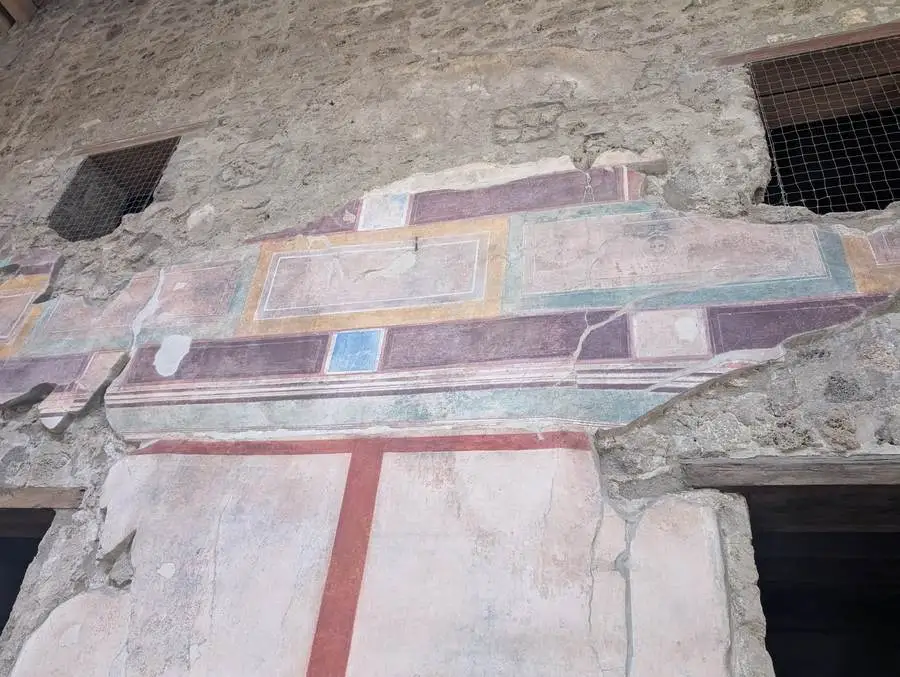
In Rome, memoria was one of the five canonical pillars of rhetoric (alongside inventio, dispositio, elocutio, and pronuntiatio).
An orator who consulted written notes was not a capable one. A good orator had to remember lengthy speeches and complex arguments by heart.
It is during this time that the anonymous Rhetorica ad Herennium (c. 85 BC), long misattributed to Cicero, was written.
"the guardian of all the parts of rhetoric, the Memory." (Rhetorica III.XVI)
In this work, the author introduces the famous Roman distinction, based on Aristotle's previous one:
- Memoria Naturalis: The raw capacity of the mind to passively remember.
- Memoria Artificiosa: The trained, artificial memory built through discipline.
This second artificial memory rested on two technical concepts:
- Places / Backgrounds (Loci): "By backgrounds I mean such scenes as are naturally or artificially set off on a small scale, complete and conspicuous, so that we can grasp and embrace them easily by the natural memory" — for example: a house, an intercolumnar space, a recess, or an arch.
- Images (Imagines): "An image is, as it were, a figure, mark, or portrait of the object we wish to remember." For example, if we wish to recall a horse, a lion, or an eagle, we must place its image in a definite background.
The author shares elaborate ways of selecting and using loci and filling them with images to facilitate memory. The idea is that, for example, you imagine your speech as a Roman villa, filled with people (your arguments). Once you memorize, you create a new villa for your next speech. In your mind, you now have a locus (the villa) and images (the people) which will help your memory remember the whole speech!
One of the most interesting parts, in my view, is when the author discusses how one can select memorable images. His (or her?) recommendation is fascinating: we should select striking, memorable things, not everyday, ordinary ones:
Now nature herself teaches us what we should do. When we see in everyday life things that are petty, ordinary, and banal, we generally fail to remember them, because the mind is not being stirred by anything novel or marvellous. But if we see or hear something exceptionally base, dishonourable, extraordinary, great, unbelievable, or laughable, that we are likely to remember a long time.... A sunrise, the sun’s course, a sunset, are marvellous to no one because they occur daily. But solar eclipses are a source of wonder because they occur seldom, and indeed are more marvellous than lunar eclipses, because these are more frequent. (Rhetorica III.XXII)
Cicero
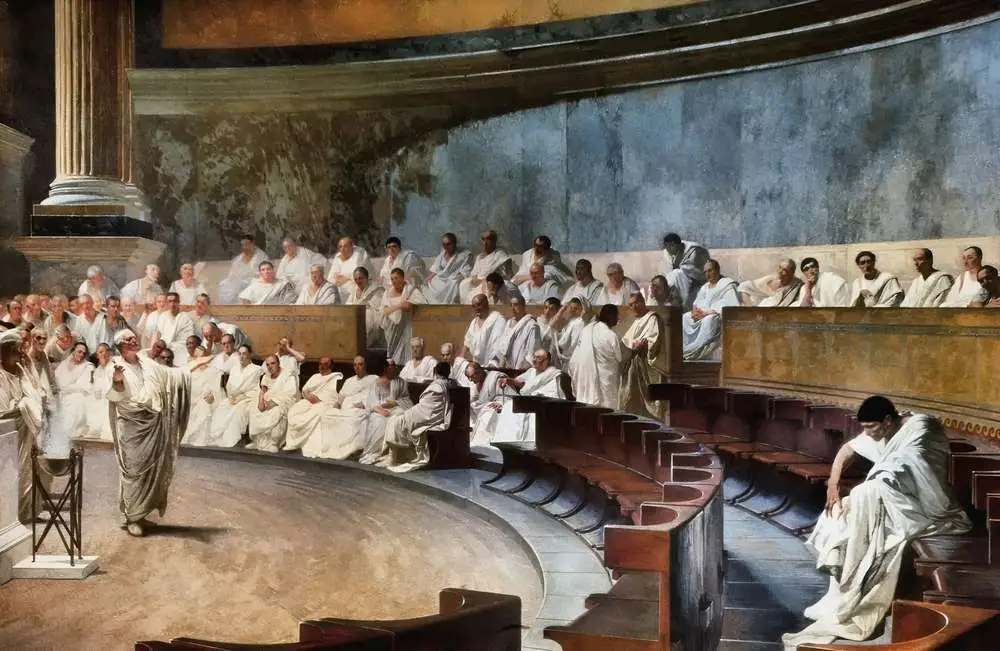
it is chiefly order that gives strength to memory (Cicero, De Oratore, II.354)
In De Oratore (Book II), Marcus Tullius Cicero calls memory the "treasury of all things" (thesaurus omnium rerum). Through the voice of the orator Marcus Antonius (the grandfather of Mark Antony), Cicero recounts the story of Simonides' banquet and describes the method of the poet:
"The best guide to memory is spatial arrangement: anyone who wishes to cultivate this faculty must select places, form mental images of the things he wishes to remember, and deposit those images in those places. The order of the places will preserve the order of the things, and the images of the things will denote the things themselves." (Cicero, De Oratore, II.354)
Cicero, however, makes an essential distinction between Memoria Rerum (memory for things, arguments, and legal points) and Memoria Verborum (memory for exact words verbatim).
Cicero considered verbatim recall to be an exhausting burden suitable only for actors. The true statesman needed memoria rerum: the ability to hold the entire architecture of an argument firmly in mind while adapting his phrasing dynamically to the emotional temperature of the courtroom.
Training would be essential to develop and hone this artificial memory.
Quintilian
Writing in the first century AD during the Flavio-Trajanic era, Quintilian (Institutio Oratoria, Book XI) provides a vivid description of how an ancient speaker actually inhabited what many people today call a "memory palace".
He instructs the student to mentally walk through a real, physical aristocratic Roman house:
- The Vestibule: Place the opening argument (exordium) right at the entrance threshold.
- The Atrium: Move into the central hall; place your first major piece of evidence by the impluvium water basin.
- The Bedrooms (Cubicula): Deposit supporting legal points in the private rooms flanking the hallway.
- The Statues and Artwork: Use the ancestral portrait busts (imagines maiorum) and bronze statues as specific anchor points.
- The Dining Hall (Triclinium) and Gardens (Peristylium): Traverse the colonnades and courtyard for the concluding emotional appeals (peroratio).
Quintilian explains that if a single house is insufficient, the orator can expand his canvas indefinitely:
"We may also imagine a long journey, the ramparts of a city, or even a public forum... I can recall how, when I was still a young man, a man of great learning, Charmadas of Athens, used to recite from memory whole books of philosophy just as if he were reading them, by having mapped out the text across such places." (Quintilian, Institutio Oratoria, XI.ii.20–26)
The Memory of Seneca the Elder
How effective was this training? The historical records of Roman memory border on the superhuman.
Seneca the Elder (c. 54 BC – AD 39), the father of the Stoic philosopher Seneca the Younger, writes in the preface to his Controversiae that in his youth he could listen to a list of two thousand names recited only once and repeat them back in exact order. Furthermore, when a class of two hundred students each recited a line of poetry, Seneca could recite all two hundred verses backwards, from the last student to the first.
Now, how true these stories were is a matter of debate. But as many people have attested on fora (yes, this is the plural of forum), like Reddit, Simonides' method works. A memory palace, as the practice is called, can greatly enhance one's memory.