How Societies Remember: Connerton and Memory as Performance
Paul Connerton's How Societies Remember explained: how incorporating practices, habit-memory, and commemorative ceremonies sustain social memory beyond texts and monuments.
Key Takeaways
- Social (collective) memory lives in the human body.
- We remember collectively through habit-memory: (automatic) bodily routines that turn social rules into second nature.
- Social memory can be found in rituals and commemorative ceremonies.
In 1989, British anthropologist Paul Connerton published How Societies Remember. Connerton posed the following question: How is social memory conveyed and sustained?
His answer was that the human body is the primary vessel of social memory. Societies remember by performing the past in commemorative ceremonies.
How Is the Memory of Groups Conveyed and Sustained?
This is exactly the question that Connerton's book seeks to answer.
By memory, he, of course, refers to what previous thinkers termed collective or social memory. Connerton's thesis stands on two axioms about individual memory and social memory:
- About individual memory: The past and the present are entangled in our everyday actions.
- About social memory: The past is commonly used to legitimate a present social order.
Let's unravel these two ideas further:
- Connerton describes how our experience of the present depends on our understanding of the past. We constantly link present moments to people, objects, and events that are not present, that belong to the past. This means that it is very difficult to disentangle the present from the past, even when it comes to everyday things.
- If you participate in any kind of group, you are typically required to share a set of memories with the other members of the group. For example, if you are part of the American nation, you must have learnt about the 1776 Revolution at school. If you are a Christian, you know about the Crucifixion. But if the members of the group have different memories of the group's past, then the members can share "neither experiences, nor assumptions".
These two points are not novel. Halbwachs had talked about both points already in his Memoire Collective a few decades before.
Connerton however goes further to claim that "the past and recollected knowledge of the past...are conveyed and sustained by (more or less ritual) performances." (Connerton 1989)
Essentially, this theory brings recollection and bodies together to explain how collective memory is conveyed and sustained.
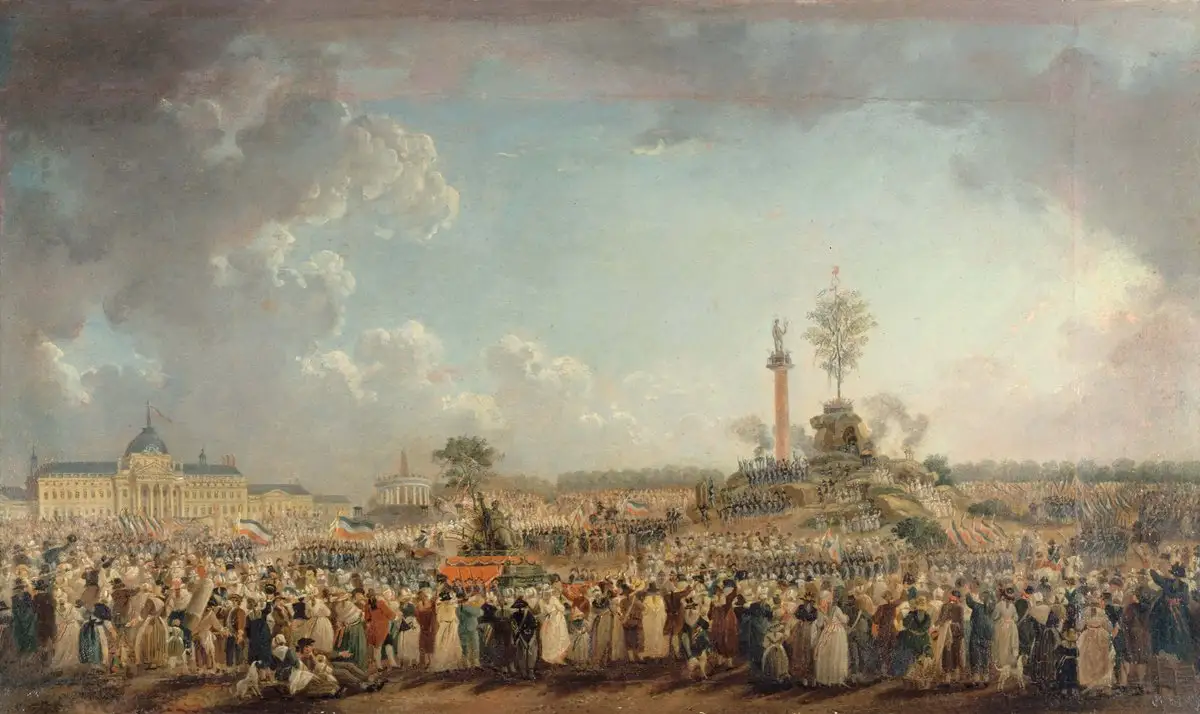
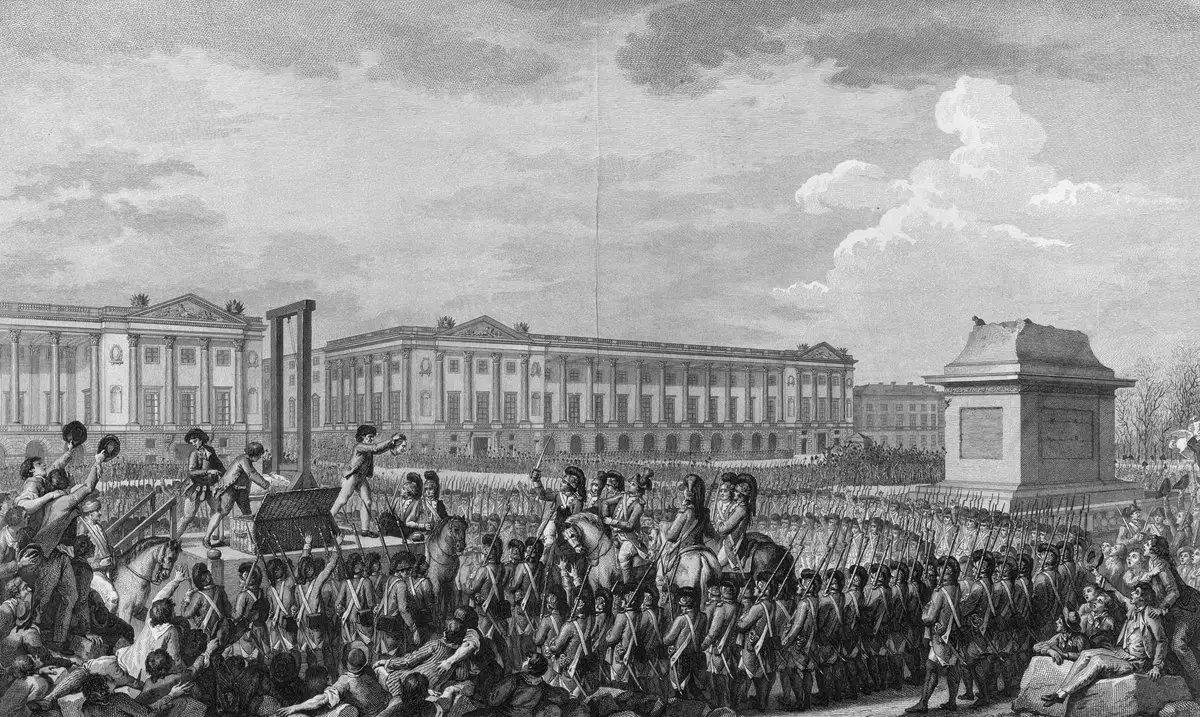
The essay brings the example of the French Revolution. Here one could rightfully wonder how memory was ritualized during the upheaval of a great revolution. But Connerton's answer is interesting:
"...one thing that tends to get forgotten about the French Revolution is that like all beginnings it involved recollection. Another is that it involved the severing of a head and a change in the clothes people wore." (Connerton 1989)
The 'Inscriptive Bias' of Hermeneutics
For centuries, Western thinkers have operated under the assumption that culture is fundamentally a text waiting to be read. Manuscripts, inscriptions, linguistic systems, and so on.
Texts have been disproportionately at the center of scholarly attention while the ceremonial, performative aspect of culture has been neglected (in Connerton's time).
This is the essence of Connerton's theory summed up in a few lines:
"If there is such a thing as social memory, we are likely to find it in commemorative ceremonies; but commemorative ceremonies prove to be commemorative only in so far as they are performative; performativity cannot be thought without a concept of habit; and habit cannot be thought without a notion of bodily automatisms." (Connerton 1989)
In other words, it is the performance of memory that allows it to be sustained. When we stand still for the flag as the national anthem plays in the background we are engaging in a ritual that is not a by-product of national culture that facilitates memory, but a core, essential aspect of whatever it is that sustains a nation and its memory.
The Three Forms of Memory
Connerton distinguishes between three types of memory:
- Personal Memory (Autobiographical): The recollection of specific events from our own personal past, located in time and space (e.g., 'I remember my first day of university in Athens').
- Cognitive Memory (Semantic): The recollection of general knowledge which are not situated in a specific past time or space (e.g., 'I know that Paris is the capital of France,' or 'I know that 7 × 8 = 56').
- Habit-Memory: Our ability to reproduce a certain performance. In this case, we are able to prove that we remember something by performing it (e.g., swimming, riding a bicycle, playing an instrument, bowing, or shaking hands). The remembering here is automatic.
Habit Memory
Connerton draws on Henri Bergson and Bertrand Russell to describe habit memory as a memory that relies on habit, that is almost spontaneous, and is always there even when we do not realize it.
For example, knowing how to politely nod or wave is a memory that is almost as spontaneous as knowing how to use a verb in a sentence.
Connerton also mentions Bergson's example of learning a lesson by heart. When a student learns a lesson by heart, he will claim to remember it, but he is not remembering himself studying in his room. He simply remembers the streak of words he memorized. This essentially is an acquired habit.
Social Memory Is a Form of Habit Memory
For Connerton social memory is a form of habit-memory.
When we learn how to carry ourselves in public, how to address an elder, how to hold a utensil, or when to lower our eyes, we are not consulting a mental handbook or recollecting a past conversation. Culture feels like second nature precisely because our body remembers it; it is embodied.
"Social habits are essentially legitimating performances. And if habit-memory is inherently performative, then social habit-memory must be distinctively social-performative." (Connerton 1989)
Commemorative Ceremonies
Connerton disagrees with the use of the word ritual to imply an activity of symbolic character that often has little to no meaning.
This is why he uses the term ritual action and lists a series of axioms:
1. Rituals are not merely expressive. They are formalised acts, and tend to be stylised, stereotyped and repetitive.
2. Rituals are not merely formal. To be baptized is not merely a formality for a pagan.
3. Rituals are not limited in their effect to the ritual occasion. Rites tend to permeate non-ritual behaviour and mentality. They can give value and meaning to the lives of people performing them.
Connerton further states that all rites are repetitive. Repetition merely implies continuity with the past. But there are certain rites which have an explicitly backward-looking and calendrical character which do not simply imply but specifically claim this continuity with the past (think of national holidays or the commemorations of a religion's founding event).
Rites are not a privilege of traditional societies. Modernity continuously invents new ones (recalling Hobsbawm's invented traditions). However, these rites are not a sign of our times. The very opposite. They exist despite the global capitalist current that sees everything as replaceable, temporary, and recognizes profit as the sole value.
Capitalism... tears down all social immobility, every ancestral confinement and feudal restriction; and invented rites, however implicated they often are in that very process of modernisation which capitalism drives remorselessly on, are palliative measures, façades erected to screen off the full implications of this vast worldwide clearing operation. Newly invented rites spring up and are instantly formalised in acknowledgement of the global historical break.
The Rhetoric of Re-Enactment
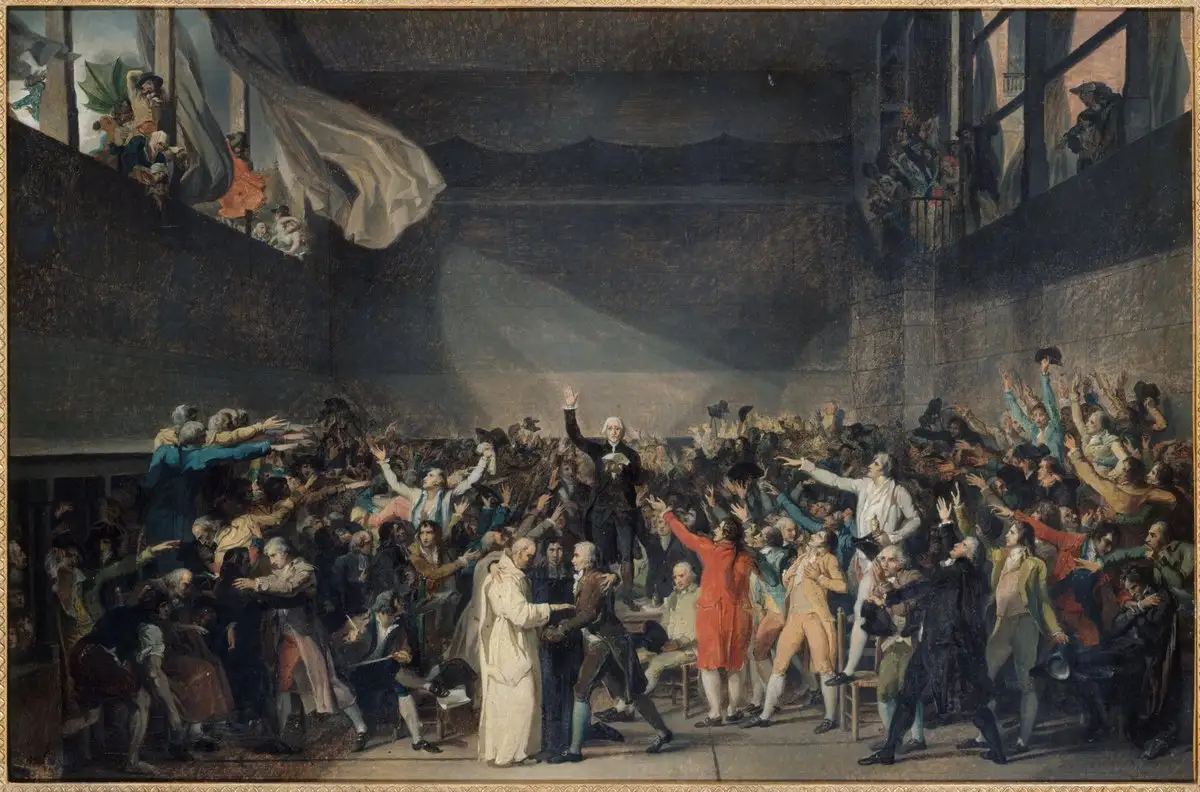
What makes rites possible is the idea that life is a series of exemplary events. Connerton calls this the rhetoric of re-enactment. This rhetoric employs three modes of articulation:
- calendrical re-enactment: time is experienced as cyclical as the same rites take place each year.
- verbal re-enactment: for example in religious settings, the rites contain readings of passages from sacred texts which remain consistently the same.
- gestural re-enactment: movements and gestures are repeated in rites to re-enact events of the past. In this way the participants "become" the ones they represent. The past comes to life.
Commemorative ceremonies remind the community of its identity "as represented by and told in a master narrative".
But there is one more dimension to Connerton's theory and that is the bodily aspect as all commemorative ceremonies are commemorative only to the extent to which they are performative.
Inscribing Practices vs. Incorporating Practices
"We may not remember how or when we first learned to swim, but we can keep on swimming successfully – remembering how to do it – without any representational activity on our part at all." (Connerton 1989, 3.1)
To explain how habit-memory is bodily, Connerton introduces a key dichotomy: the distinction between inscribing practices and incorporating practices.
1. Inscribing Practices
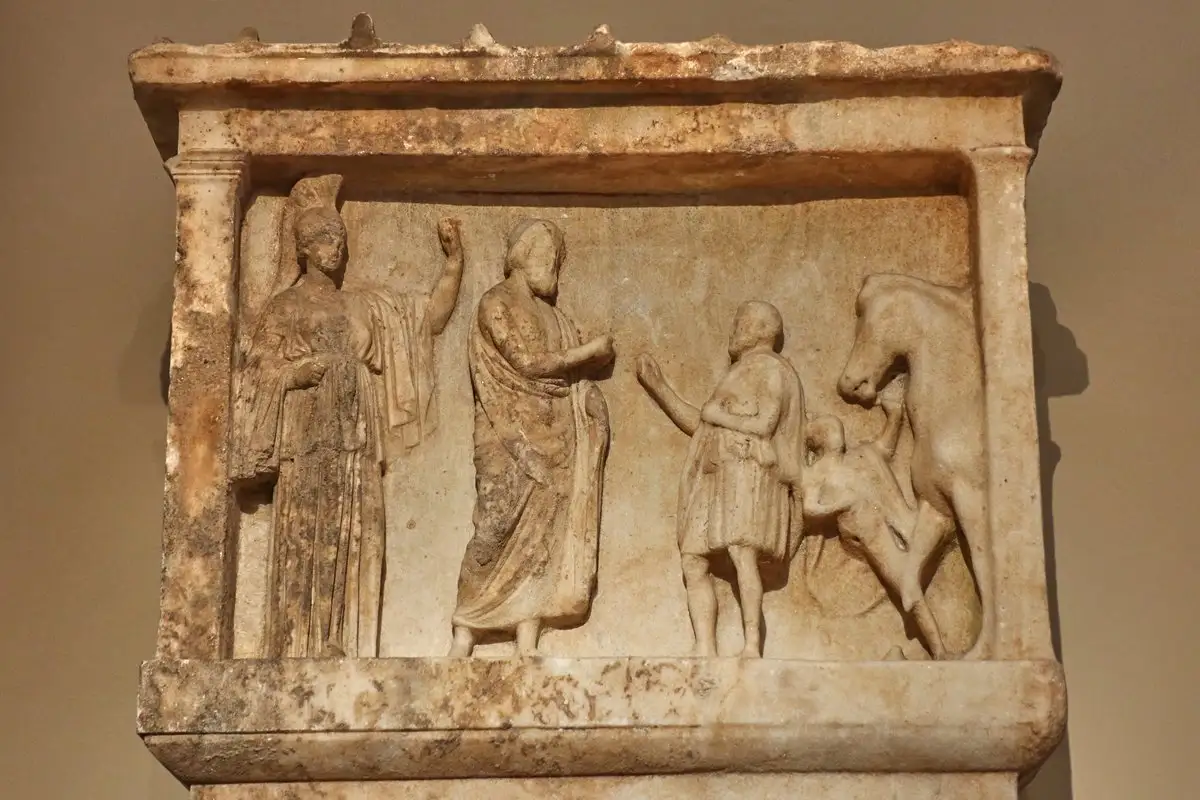
Inscribing practices are technologies that store, trap, and transmit information across time and space independently of the living human body. These include:
- Writing, printing, and typography
- Stone carvings, monuments, and plaques
- Audio recordings, photographs, and films
- Digital servers, cloud databases, and search engines
Inscribing practices are durable and retain their reach. An inscription from classical Athens can survive four millennia and speak to a modern scholar. However, their weakness is inertia. A text requires a reader to be read and be activated.
2. Incorporating Practices
Incorporating practices, by contrast, are messages sent and "absorbed" by the living physical body. They are embodied activities where the medium of transmission is the physical human being itself. Examples include:
- Gestures, handshakes, bows, and facial expressions
- Gait, posture, and styles of walking or sitting
- Table manners, eating habits, and bodily hygiene
- Vocal cadence, pronunciation, and social intonation
- Ceremonial kneeling, standing, marching, and dancing
Incorporating practices form what Pierre Bourdieu called the habitus: essentially our social habits. However, such practices are ephemeral. If a generation ceases to perform something, its memory vanishes without a trace.
Inscriptions Need Bodies
Connerton emphasizes both practices can coexist:
"Many practices of inscription contain an element of incorporation, and it may even be the case that no type of inscription at all is conceivable without such an irreducible component of incorporation."
Also social memory employs both practices: both texts and bodies are necessary. This places Connerton in dialogue with the foundational thinkers of the field—from Maurice Halbwachs' social frameworks and Pierre Nora's lieux de mémoire to Jan Assmann's cultural memory:
| Theorist | Core Concept | Primary Medium | Key Question |
| Maurice Halbwachs | Collective Memory & Social Frameworks | Social groups, family, discourse | Who shapes our personal recollections? |
| Pierre Nora | Lieux de Mémoire (Sites of Memory) | Monuments, archives, museums, anniversaries | Where does memory reside after traditions die? |
| Jan Assmann | Cultural vs. Communicative Memory | Canonical texts, priesthoods, monuments | How does memory survive across millennia? |
| Paul Connerton | Bodily Memory & Incorporating Practices | Gestures, posture, rituals, habit-memory | Through what physical vessel is memory enacted? |
Bibliography
- Connerton, Paul. 1989. How Societies Remember. Cambridge: Cambridge University Press.
Also read
- The Tragic Life of Maurice Halbwachs and the Social Frameworks of Memory
- Pierre Nora's "Lieux de Mémoire": Definition & Examples
- Jan Assmann: Cultural Memory vs. Communicative Memory Explained
- What Is Collective Memory? Definition & History
- The Banquet of Simonides and the Art of Memory in Classical Antiquity
- Memory Studies Glossary: 58 Key Terms & Concepts Explained